

KUALA LUMPUR – The government has rescinded its plan to implement a diagnostic test for six-year-old children entering Year One, cancelling the requirement for mandatory testing as part of the registration process.
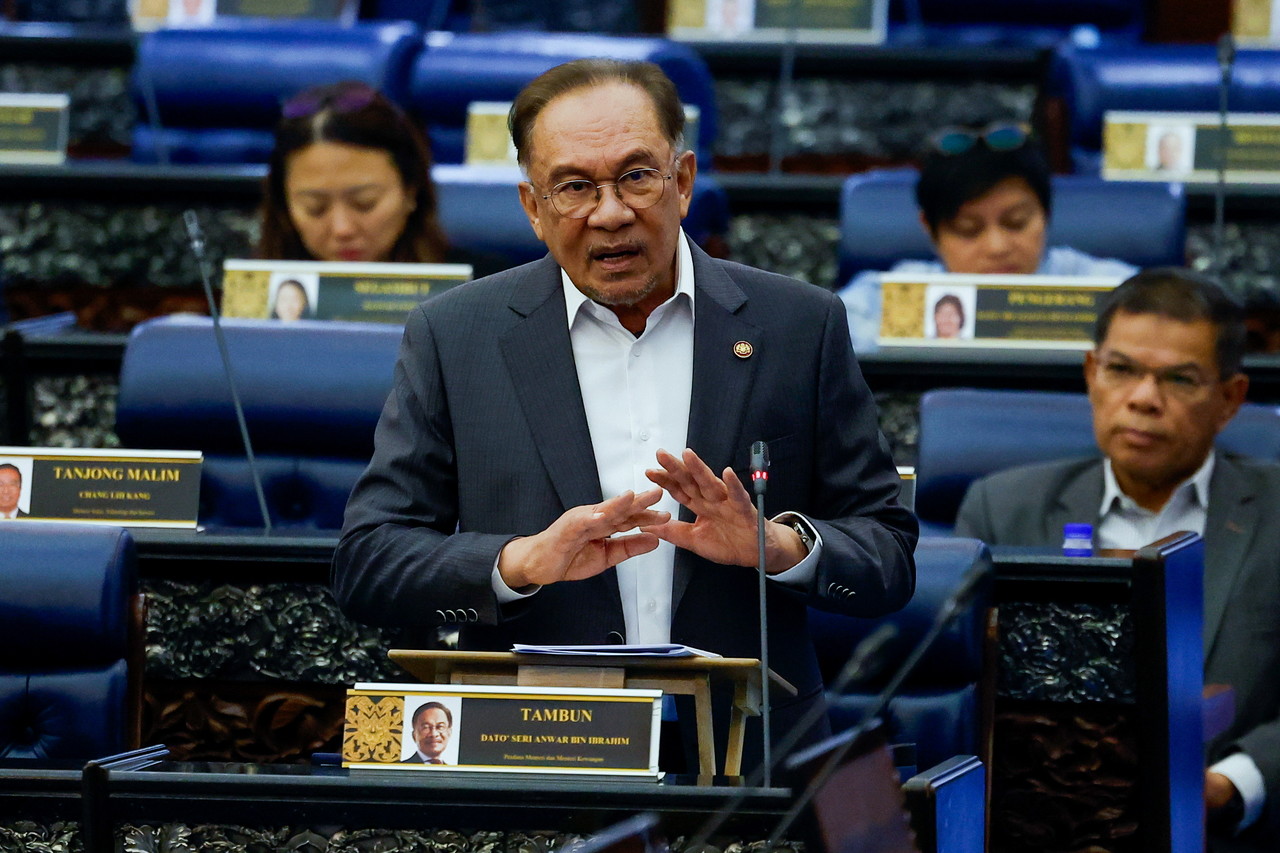
Prime Minister Datuk Seri Anwar Ibrahim explained that concerns arose over the possibility of the diagnostic tool being discriminatory and its potential psychological impact on young children.
“However, I want to emphasise that the initial proposal had merit as it included a system of assessment before children entered school,” Anwar said in parliament today.
“But after careful consideration, it was deemed potentially discriminatory. This would mean some children could be allowed to enter Year One, while others would be placed in preschool, which could be seen as being ‘unqualified’ or ‘less intelligent’. This could have psychological repercussions.”
Following a review, Education Minister Fadhlina Sidek recommended abolishing the diagnostic test. Anwar agreed with the recommendation, stating that it would simplify the process. “After consulting various stakeholders, we decided to cancel it to make the system easier to implement. However, it remains the responsibility of teachers and parents to monitor the children’s readiness,” he added during a session in the Dewan Rakyat.
Anwar made these comments in response to a suggestion by Syed Saddiq Syed Abdul Rahman (MUDA-Muar), who called for a reassessment of the diagnostic test.
Last week, Anwar launched the Malaysia Education Development Plan 2026-2035, which included a new policy allowing parents to register their children for school at six, one year earlier than the current minimum age of seven.
The government has now agreed to remove the diagnostic test requirement for six-year-olds entering Year One to avoid burdening the education system and simplify the process.
Anwar stressed that the decision was made after considering various opinions, with priority given to continuous monitoring of student progress by both teachers and parents. “Therefore, we have decided to scrap the test to simplify the process,” he said.
Earlier, Minister Fadhlina Sidek had announced that the diagnostic test would be introduced in 2027 to assess whether six-year-olds are eligible for Year One. Only those who passed the test would be eligible for early school entry.
Anwar also highlighted that the introduction of a Year Four assessment would allow stakeholders time to make necessary improvements before students move on to Form One.
“There will always be some controversy around any proposal. Whether it’s a Year Three test, Year Four, or Year Six, it will be criticised. If nothing is done, it is criticised. So, we decided to go ahead with the Year Four test and then assess its effectiveness,” he said.
He emphasised that education should be dynamic, with continuous evaluation from an early stage, and encouraged the public and parents to support these initiatives.
Syed Saddiq had previously warned that the diagnostic test for six-year-olds might lead to discrimination, exacerbating social inequalities, and increasing the burden on schools. He argued that pre-school education is still inaccessible to many families, particularly those in lower-income groups, which would create a learning gap for those who cannot afford it.
“As a result, children who attend pre-school are usually from higher-income families,” he said. “Those with access to pre-school education are more likely to pass the diagnostic test.”
Syed Saddiq also expressed concerns that children who are allowed to enter Year One early may be labelled as “smart,” while others could face bullying or stigma. He pointed out that the age gap might contribute to the growing problem of bullying in schools.
“The increase in bullying cases, including violent incidents, makes it hard to justify creating an additional one-year gap between students,” he said.
He also feared that pre-schools could become more focused on preparing children for the diagnostic test, turning early education into an exam-oriented system, to the detriment of play, character development, and enjoyment of learning. “We are taking away the fun of education,” he lamented.
Additionally, Syed Saddiq raised concerns about the strain on teachers, with the introduction of psychometric and skills-based assessments likely leading to an overwhelming number of individual evaluations each year. Given the existing shortage of teachers and overcrowded classrooms, he cautioned that the policy could place further pressure on the education system. – January 27, 2026