

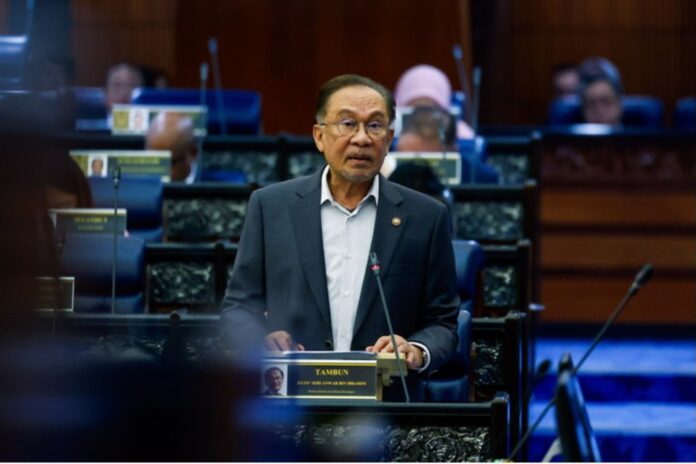
LET me state my position clearly from the outset: the failure to secure a two-thirds majority to pass the Prime Minister’s tenure limit Bill is not an embarrassment to the Madani government. If anything, it may prove to be a blessing in disguise.
Much has been said about how the inability to push through the proposed two-term limit reflects political weakness. I beg to differ.
Structural reforms must be necessary, practical, and aligned with the realities of governance. A rigid two-term limit for the Prime Minister does not meet that threshold.
If a Prime Minister is performing well and delivering stability and growth, why should leadership be arbitrarily restricted to a fixed period? Leadership is not a perishable commodity with an expiry date. It is measured by competence, vision, and results.
More importantly, imposing a fixed two-term ceiling risks creating a “lame duck” scenario. Once a Prime Minister enters a second and final term, political actors will inevitably begin positioning themselves for succession. Authority may gradually erode. Allies may grow distant. Even members of the Prime Minister’s own party may shift loyalties in anticipation of the next leadership contest. A leader who is constitutionally barred from continuing may find it increasingly difficult to command full respect and discipline within government.
The psychological dimension should not be underestimated either. A Prime Minister who knows there is no political future beyond a fixed endpoint may experience a natural decline in urgency. The fire to make or break difficult reforms could diminish in the final stretch of a second term. Governance may shift from bold transformation to cautious preservation.
Meaningful democratic and institutional reforms often take longer than two terms to implement fully. If someone without the same level of commitment as Datuk Seri Anwar Ibrahim were to assume office midway through unfinished reforms, the country risks losing momentum, or worse, reversing progress.
History offers a compelling illustration. Imagine if Tun Dr Mahathir Mohamad had been limited to just two terms in office. Would Malaysia have witnessed the sweeping transformation of the 1980s and 1990s? Would we have seen the birth of Proton, the establishment of Kuala Lumpur International Airport, the global prominence of the Sepang International Circuit, or the development of strategic townships across the country?
More crucially, would Malaysia have had the continuity of leadership needed to navigate the 1997 Asian financial crisis?
Nation-building is not a five-year project; it is generational work. Mahathir required 22 years to fundamentally reshape Malaysia’s economic and infrastructural landscape. No serious observer believes that deep-rooted structural challenges can be resolved within a single parliamentary term or even two.
This is not to suggest that Anwar Ibrahim needs 22 years in office. Rather, it is to acknowledge that genuine reform requires time: time to lay foundations, implement policy shifts, strengthen institutions, and allow economic adjustments to take effect.
The early years of any administration are typically devoted to stabilisation and recalibration. Tangible dividends often emerge later.
Consider the strengthening of the ringgit. Critics may debate the causes or magnitude, but the currency’s improved performance during Anwar Ibrahim’s tenure suggests that steady stewardship matters. Leadership should be assessed on trajectory and institutional resilience and not on arbitrary deadlines.
Above all, Malaysia is a democracy. Governments should rise and fall through the ballot box, not through engineered collapses or rigid term caps that constrain voter choice. If the rakyat are dissatisfied, they possess the ultimate power to decide at the polls. That is the essence of democratic accountability.
Imposing a strict two-term rule assumes the electorate cannot exercise sound judgment on continuity. It suggests that our existing institutional safeguards, including Parliament, the judiciary, the media, and civil society are insufficient. That underestimates the maturity of Malaysia’s democratic framework.
Reform must be substantive, not symbolic. Structural changes that sound appealing in theory but ignore political realities risk unintended consequences. In uncertain global times, stability should not be casually traded for cosmetic reform.
Let leadership be tested through democratic processes. Let performance determine longevity. And let Malaysia’s future be shaped by the will of its people — not by an arbitrary clock. — March 4, 2026
T. Vignesh is the Executive Editor of Scoop.my