

THE year began on a positive note when prime minister Datuk Seri Anwar Ibrahim pledged to get four key reforms through Parliament.
These included bills to separate the powers of the public prosecutor and attorney general, a 10-year term limit on the prime minister, an ombudsman and a freedom of information bill.
However on Monday, the term limit bill was torpedoed when the Madani government narrowly failed to get the required 148 votes in the Dewan Rakyat. This reminded me that aside from the proposed reforms the government is trying to get through, we are in the midst of a critical electoral delineation exercise.
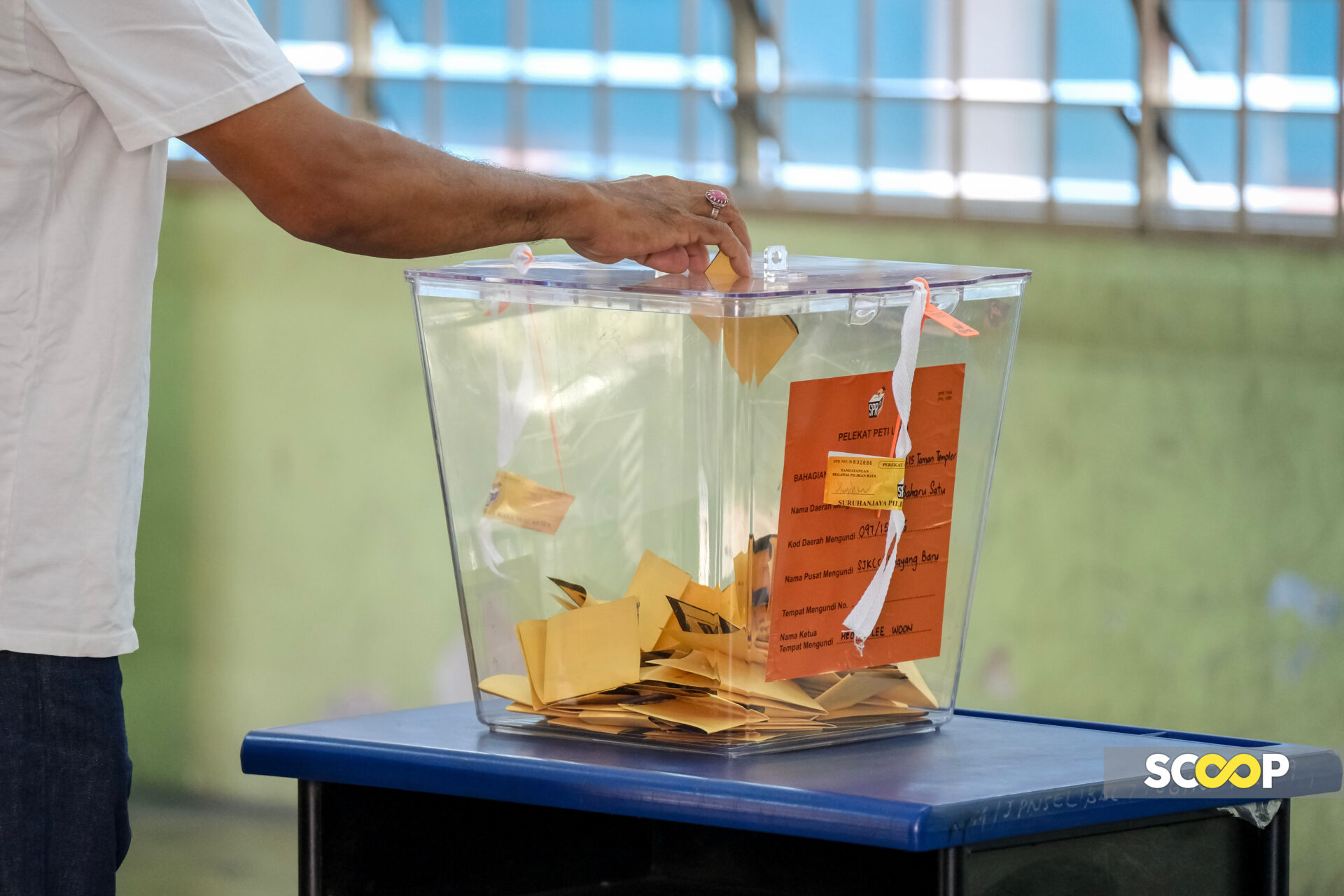
The truth is that there currently exists a gross disparity in terms of the number of voters packed into parliamentary constituencies. Thus while constituencies in rural areas of Sarawak, Sabah and parts of the peninsula are largest in terms of land area, they are often sparsely populated compared to the densely populated, small-area constituencies in a more developed state like Selangor.
These smaller constituencies demonstrate significant voter weight inequality, with a vote in smaller, rural areas sometimes worth three times more than a vote in densely populated urban constituencies, a phenomenon known as malapportionment.
For examples in the 2022 election, we can look at Jerlun and Sik in Kedah which had a registered electorate of between 60,000 to 70,000 at the last election and voter turnout of just over 50,000. Jerlun voters returned Abd Ghani bin Ahmad of PAS, while Ahmad Tarmizi Sulaiman of the same party won in Sik.
In Jeli, Kelantan PN’s Zahari Kachin won with a turnout of just 43,732. These are paltry figures compared to massive Klang Valley constituencies in Bangi, Kota Raja, Damansara and Petaling Jaya (among others). Bangi is the largest constituency in the country with a massive 303,430 registered electors and a whopping – 246,795 voters.
This mean that DAP’s Syahredzan Johan won with a huge majority of 69,701 votes. The majority itself was significantly larger than the entire size of the smaller seats.
This was matched elsewhere in Kota Raja where Amanah President Mat Sabu won with a majority of 73,998.
In Petaling Jaya, PKR’s Lee Chean Chung won by 50,575 and in Damansara, Gobind Singh Deo romped home by a scarcely believable margin of 124,619! This is repeated throughout urban areas like Shah Alam, Titiwangsa, Setiawangsa, Wangsa Maju, Bandar Tun Razak, Seputeh and Ampang.
Dear fellow Malaysians, these are not merely amusing anecdotes or tantalising trivia, this is manufactured manipulation and the disparity has to stop. It’s clear that Pakatan Harapan and the Madani government are losing out badly in the votes to seats ratio right now. Indeed Madani government parties secured nearly 70 percent of the votes in the last general election election, albeit sometimes in direct competition with one another.
How much longer can this imbalance persist? The answer is that it has to stop now! We were informed last year by Deputy Minister M. Kulasegaran that the Election Commission (EC) would be conducting a review of the delineation of boundaries for the states in the peninsula, after the end of the current eight-year period.
That period ends this month, in March 2026. The EC is responsible for reviewing the delineation of federal and state electoral boundaries in accordance with Clause 2 of Article 113 of the Federal Constitution, as well as the principles and procedures outlined in Parts 1 and 2 of the 13th Schedule.
The principles of demarcation included ensuring a balance between the number of voters, the efficiency of election administration, voter convenience and maintaining local community ties.
The EC will also take into account administrative elements, voter density and growth, the area’s geography and topography, available development space, infrastructure facilities and people’s access to the services of elected representatives.
This is particularly relevant in parts of Sarawak like Hulu Rajang and Baram when a single constituency is latger than most states in the Peninsula. But more than anything, the EC must confront the fact that it played a part in institutionalising disparity.
And now, for the first time, we have an opportunity for restorative and representative justice. Martin Vengadesan is a former editor who currently serves as a strategic communications consultant to the communications ministry. – March 5, 2026
Martin Vengadesan is a former editor who currently serves as a strategic communications consultant to the communications ministry.