

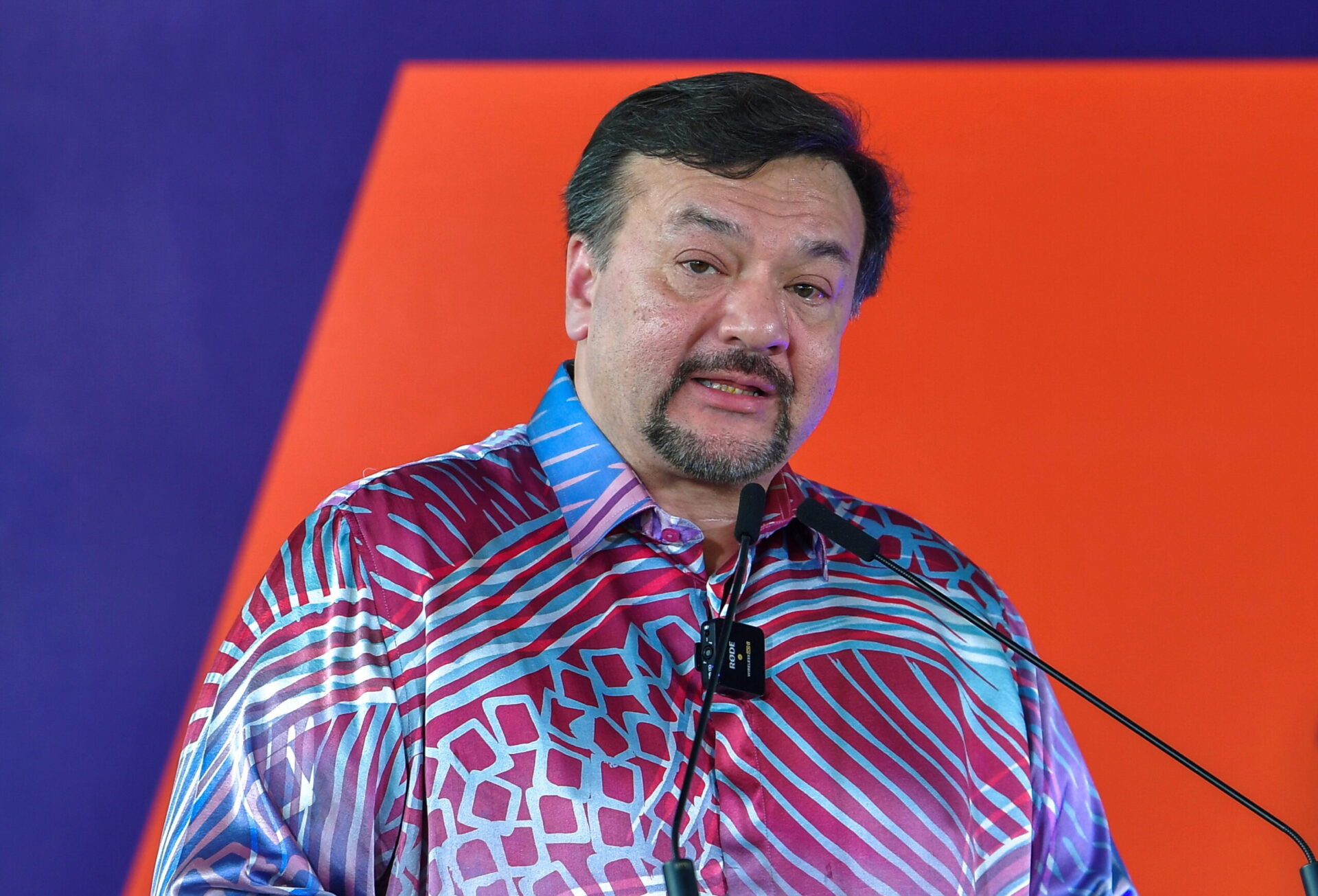

KUALA LUMPUR – The recent drop in Brent prices following announcements by the US and Iran reflects forward pricing rather than the actual cost of oil today, Finance Minister II Datuk Seri Amir Hamzah Azizan said.
Speaking at a press conference at the Finance Ministry complex (MOF) in Putrajaya today, Amir Hamzah stressed that the real price of oil remains significantly higher despite the apparent dip in global benchmarks.
“Five weeks after the West Asian conflict began, the price of Brent crude increased by around 77%, pushing RON95 petrol up by 78%, while diesel surged by about 158%,” he said.
He explained that the Brent contract price reflects oil that will be delivered in the future and does not account for additional costs such as transportation, insurance and supplier premiums.
“The Brent contract price in the market is for oil that will be delivered to buyers, but it does not include the cost of transporting the oil, insurance, or premiums imposed by suppliers,” he said.
He added that once these factors are taken into account, the delivered cost of oil has continued to rise and has exceeded RM144 per barrel.
Amir Hamzah also highlighted the sharp increase in logistics and insurance costs due to the ongoing conflict.
“On average, logistics costs have increased threefold, while insurance costs have risen sixteen fold for ships entering the conflict zone,” he said.
He said these rising costs show that the actual burden of oil prices remains high despite movements in headline global benchmarks.
As of 2 pm today, Brent crude futures rose by USD 2.60, or 2.74%, to USD 97.35 per barrel, while US West Texas Intermediate (WTI) crude increased by USD 3.02, or 3.2%, to USD 97.43 per barrel.
Both benchmarks had fallen below USD 100 per barrel in the previous trading session, with WTI recording its largest drop since April 2020, following expectations that a ceasefire ending the conflict between the US and Israel against Iran could reopen the Strait of Hormuz. – April 9, 2026