

KUALA LUMPUR — The Child Protection Code (CPC) sets out a secure, practical and responsible age-verification framework aimed at ensuring only eligible users can access social media platforms.
Communications Minister Datuk Fahmi Fadzil said the CPC, together with the Risk Mitigation Code (RMC), was issued by the Malaysian Communications and Multimedia Commission (MCMC) on May 22 and came into force on June 1 under the Online Safety Act 2025 (Act 866).
He said both codes are intended to strengthen online safety, particularly in protecting children from digital harms and risks.
“Under the CPC, licensed service providers offering social media services are required to implement age-verification mechanisms rather than identity verification to ensure compliance with the minimum age requirement. Users aged 16 and above are allowed to register and hold social media accounts, while those below that age are not permitted to create or maintain accounts until they reach the specified threshold.”
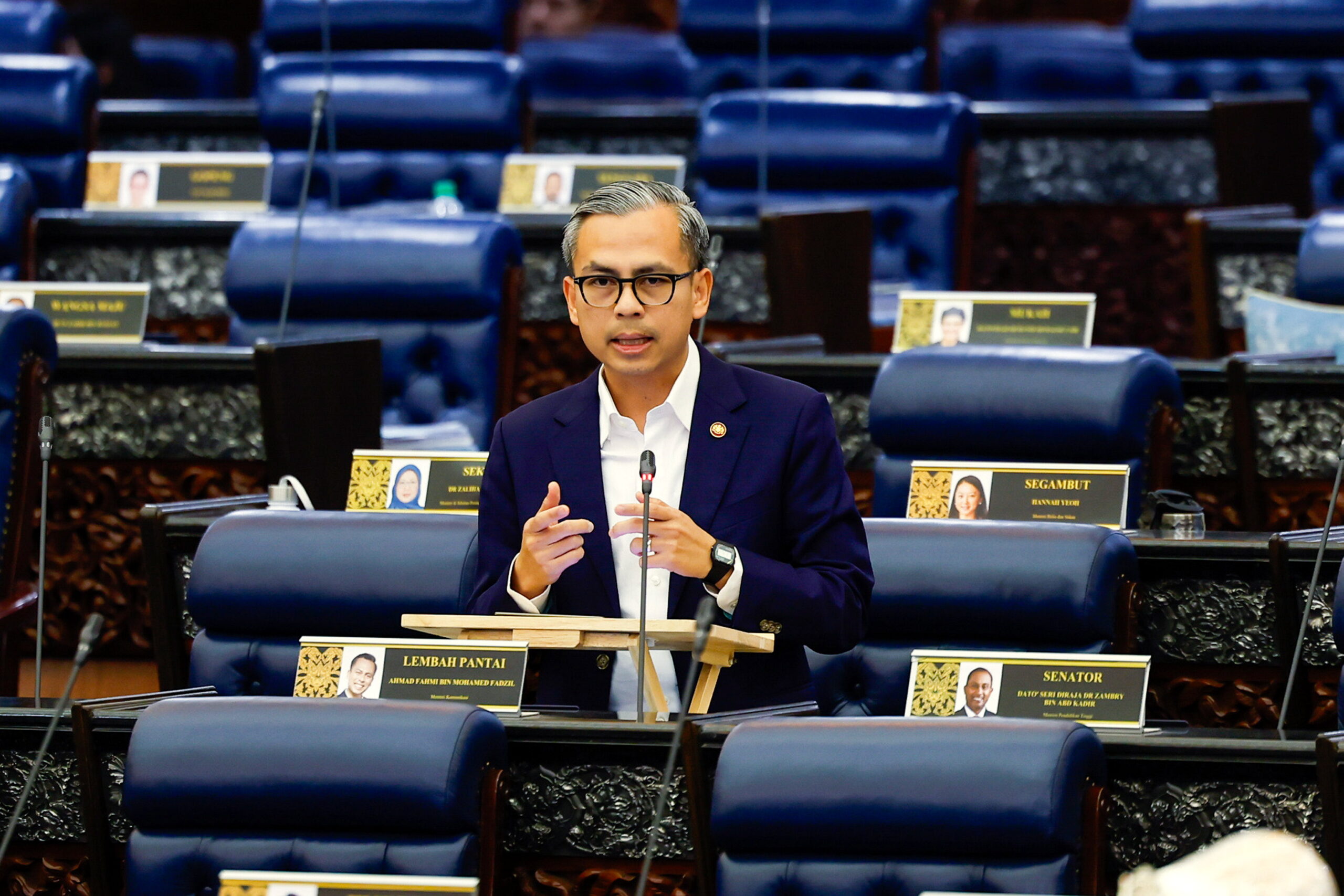
He said this in reply to Syahredzan Johan (PH-Bangi) in the Dewan Rakyat today regarding the purpose of age verification for social media accounts and safeguards to ensure personal data is limited in scope and deleted after use.
Fahmi stressed that the mechanism must be implemented in a secure and practical manner that also safeguards user privacy, in line with CPC requirements.
He added that service providers must comply with personal data protection laws, including principles of data minimisation and purpose limitation, ensuring that information collected is strictly confined to what is necessary for age verification and properly disposed of thereafter.
He said age verification must rely on official government-issued documents such as MyKad, passports, birth certificates or other recognised credentials.
“To prevent manipulation, age verification must be supported by official government records and not self-declaration alone,” he said.
Fahmi also noted that the CPC allows the use of equivalent documents issued by competent authorities in other jurisdictions, ensuring that children are afforded equal protection online regardless of their documentation status.
He said the policy does not permanently bar children from social media, but instead delays account ownership until the age of 16, when users are considered to have greater maturity to engage responsibly online.
He added that the initiative, known as “Tunggu 16” (Wait Until 16), is designed to safeguard children and families from online risks and harm. — June 24, 2026