

KUALA LUMPUR – Warisan vice-president Datuk Junz Wong has defended Sabah’s special immigration powers, saying the requirement for Peninsular Malaysians to present identification and obtain work permits is a constitutional right that should be preserved as long as Sabah continues to lag behind Peninsular Malaysia in development.
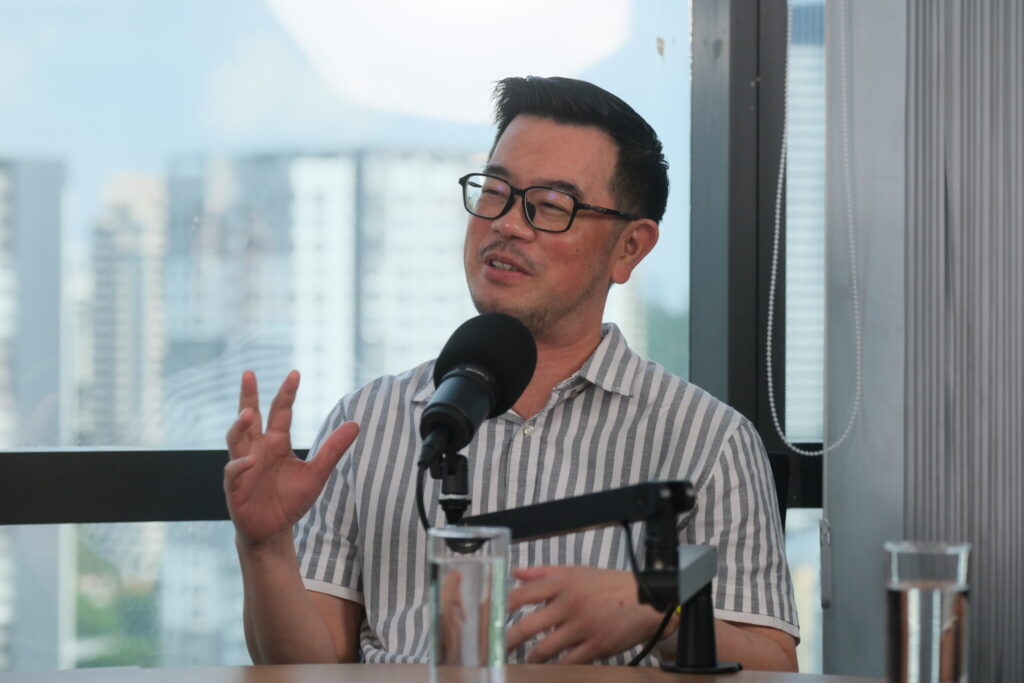
Speaking on the Trick Lama podcast hosted by Big Boom Media Editor-in-Chief Terence Fernandez, Executive Director Datuk Ahiruddin Attan (Rocky Bru) and Chief Executive Officer Datuk Zainul Arifin Mohammed Isa, Wong said the issue was not about equality but about safeguarding rights guaranteed to Sabah under the federation.
“No, it’s not about being equal. It’s about the rights that have already been promised to us. So that is a right,” he said.
The discussion arose when the hosts questioned whether Sabah’s immigration controls remained necessary, noting that Malaysians from Peninsular Malaysia are still required to present identification when entering Sabah and must obtain work permits to work in the state.
Wong stressed that Sabahans do not view the arrangement as discriminatory and pointed out that Sabah remains open to investors and businesses from Peninsular Malaysia.
“Sabahans are pretty lenient to our friends from West Malaysia. We are not stopping you from doing business and all that.
“We’re still being very lenient. Even when we formed the government, we invited many friends from West Malaysia who came in to help Sabahans and build industries,” said the Tanjung Aru assemblyman.
While acknowledging calls for freer movement between Sabah and Peninsular Malaysia, Wong said now was not the time for Sabah to relinquish one of its remaining autonomous powers.
“There are many things being deprived. So, this is not a time to ask us to give more.
“This is a time to give us back whatever that should be due to us, so that we can live a better life, have a better economy and better jobs,” he said.
Wong argued that discussions on relaxing Sabah’s immigration controls should only take place after Sabah achieves development levels comparable to those enjoyed in Peninsular Malaysia.
“If ever what you’re suggesting is to take place, at least Sabahans and Sarawakians, in terms of development and education, should be on par with Malaysians in Peninsular Malaysia. Then maybe we can start to talk about that,” he said.
Drawing comparisons with Sarawak, Wong said many Sabahans admired the state’s progress and believed Sabah should emulate Sarawak’s approach to defending its rights and interests.
“That’s why Sarawakians are proud of what they’re doing, and they should be. Sabah is looking at the Sarawakians with envy,” he added.
For Wong, the retention of Sabah’s immigration autonomy is symbolic of a broader struggle for rights and development that many Sabahans believe have yet to be fully realised.
Earlier in the same podcast, the former Sabah agriculture and food industry minister blamed the growing influence of Peninsular-based political parties for weakening Sabah’s political cohesion.
He argued that the entry of Malayan parties had fragmented local politics and prevented Sabah leaders from presenting a united front in defending state interests, unlike their counterparts in Sarawak.
Wong said Sabah’s development had lagged behind Sarawak’s, attributing the disparity to stronger political unity and a more consistent focus on safeguarding state rights across the border.
According to him, Sarawakians today enjoy a higher quality of life, while Sabah continues to face longstanding structural and development challenges. – June 25, 2026