

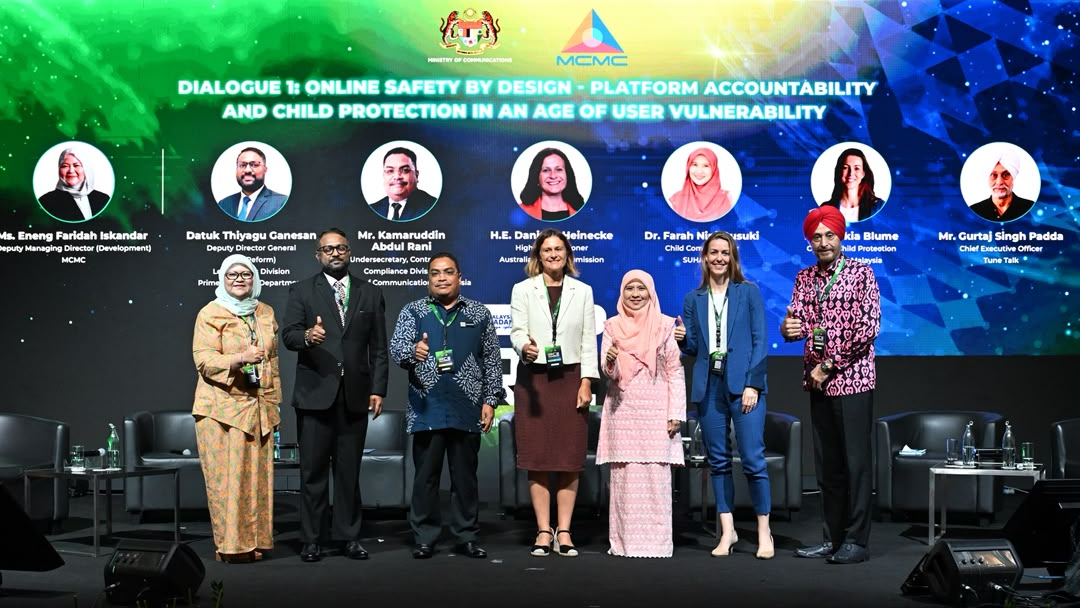
KUALA LUMPUR – Malaysia’s efforts to create a safer online environment will depend on holding digital platforms accountable for how they design and operate their services, rather than focusing solely on removing harmful content after it is published, panellists at the recent International Regulatory Conference 2026 (IRC 2026) said.
The Communications Ministry’s Control and Compliance Division Undersecretary, Kamaruddin Abdul Rani, said the current approach of taking down harmful content alone cannot keep pace with how online platforms operate.
“As we know, the platform using the business model of potential economy, as long as we scroll up and there is endless of ads and that is economic for them.”
“What we have to do is, there is the design of the platform is most importantly that we have to set up the platform to safely design the platform,” he said.
He said authorities often face an uphill battle because new harmful content quickly replaces content that has been removed.
“Right now in Malaysia, we have been told to take down anything unfulfilled content, but when we take down one content, there is a few thousand more pop up,” he explained.
He added that Malaysia’s Online Safety Act (ONSA) introduces tools such as Risk Mitigation Codes and Child Protection Codes to require platforms to embed safety measures into their systems rather than depending solely on enforcement.
The same shift was echoed by Prime Minister’s Department Legal Affairs Division Deputy Director General (Law Reform), Datuk Thiyagu Ganesan, who stressed that ONSA was deliberately designed to move beyond traditional content moderation.
“ONSA is not focused on content moderation, which is take down. It’s also a system-based approach.”
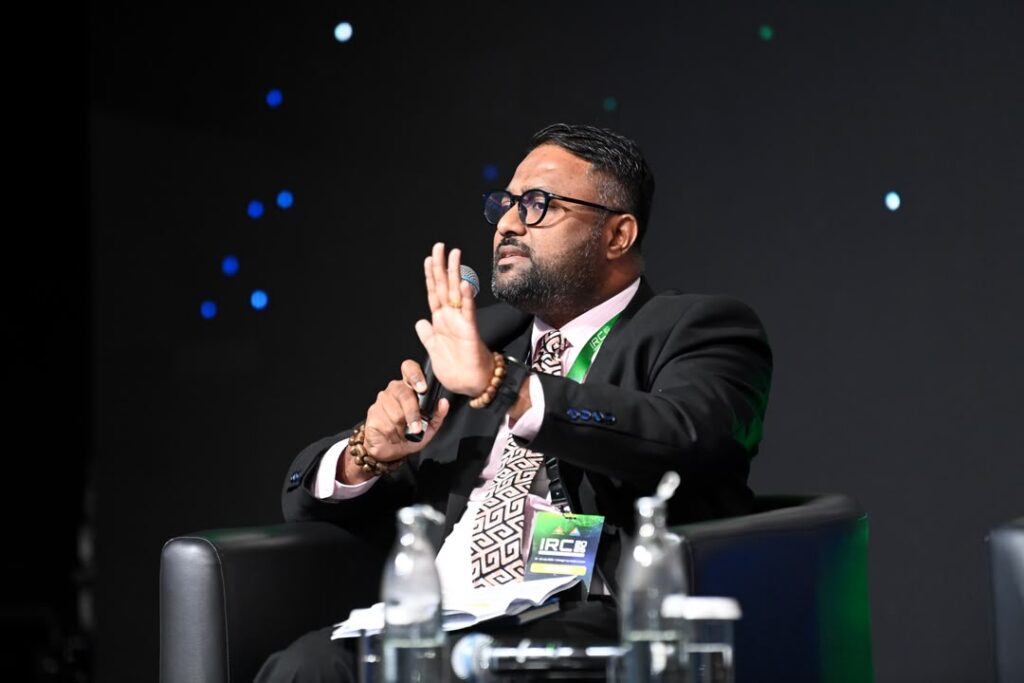
“We have obligations being imposed under this particular legislation on the platform providers where there is a duty that platform providers to ensure that the platforms are safe,” he added.
Datuk Thiyagu said the legislation seeks to balance online safety with constitutional protections for freedom of expression through the principle of proportionality.
He added that success should not be judged by the number of enforcement actions against platforms.
“The success for me… is that we want to see a system… that automatically give a greater confidence to the parents that my child today using the internet safely, safer default settings and responsible recommendation system.”
From the industry’s perspective, Chief Executive Officer of Tune Talk, Gurtaj Singh Padda argued that financial penalties alone are unlikely to change the behaviour of major technology companies.
“Fundamentally, where the problem is most of the social media players or other people are not bothered by fines, double the fine, triple the fine. They already have an insurance, right, which will pay for it.”
“It is the monetising of the content which needs to be cracked,” he stressed.
He said platforms will only respond when their revenue or user base is affected, adding that telecommunications providers can play a greater role by giving parents direct control over the content accessible to their children.
Chief of Child Protection at UNICEF Malaysia,Saskia Blume said the growing focus on platform accountability reflects international recognition that the existing model is no longer sustainable.
“I think it’s very clear that the status quo is not acceptable and sustainable,” she said.
She added platforms should be required to assess how their products affect children’s rights, including privacy, education, freedom of expression and wellbeing, instead of addressing harmful content in isolation.
“I think the burden should not be on children to adapt to an unsafe digital environment but the burden is on all of us to make sure that digital environment is safer and appropriate for children.” she explained further.
Australia’s High Commissioner to Malaysia, Danielle Heinecke, said regulation remains necessary but cannot work in isolation.
“So we’re really grateful that there’s other countries that we can learn from as well because as I said at the beginning, when you’re an early mover you don’t have any answers and you need to learn from how others are doing it as well,” she said.
She added that stronger legislation and enforcement must be complemented by parents, schools and communities.
Meanwhile, Child Commissioner at Suhakam, Farah Nini Dusuki, said Malaysia’s challenge now lies in ensuring effective implementation of ONSA through proactive enforcement and oversight mechanisms.
“For example, we cannot expect to be training children on how to cross dangerous roads. So, we build safer roads, right? And likewise, online environment has to be like that.” she said.
She said protecting children online should begin with creating safer digital environments by design rather than expecting children to navigate unsafe platforms on their own. – July 27, 2026