

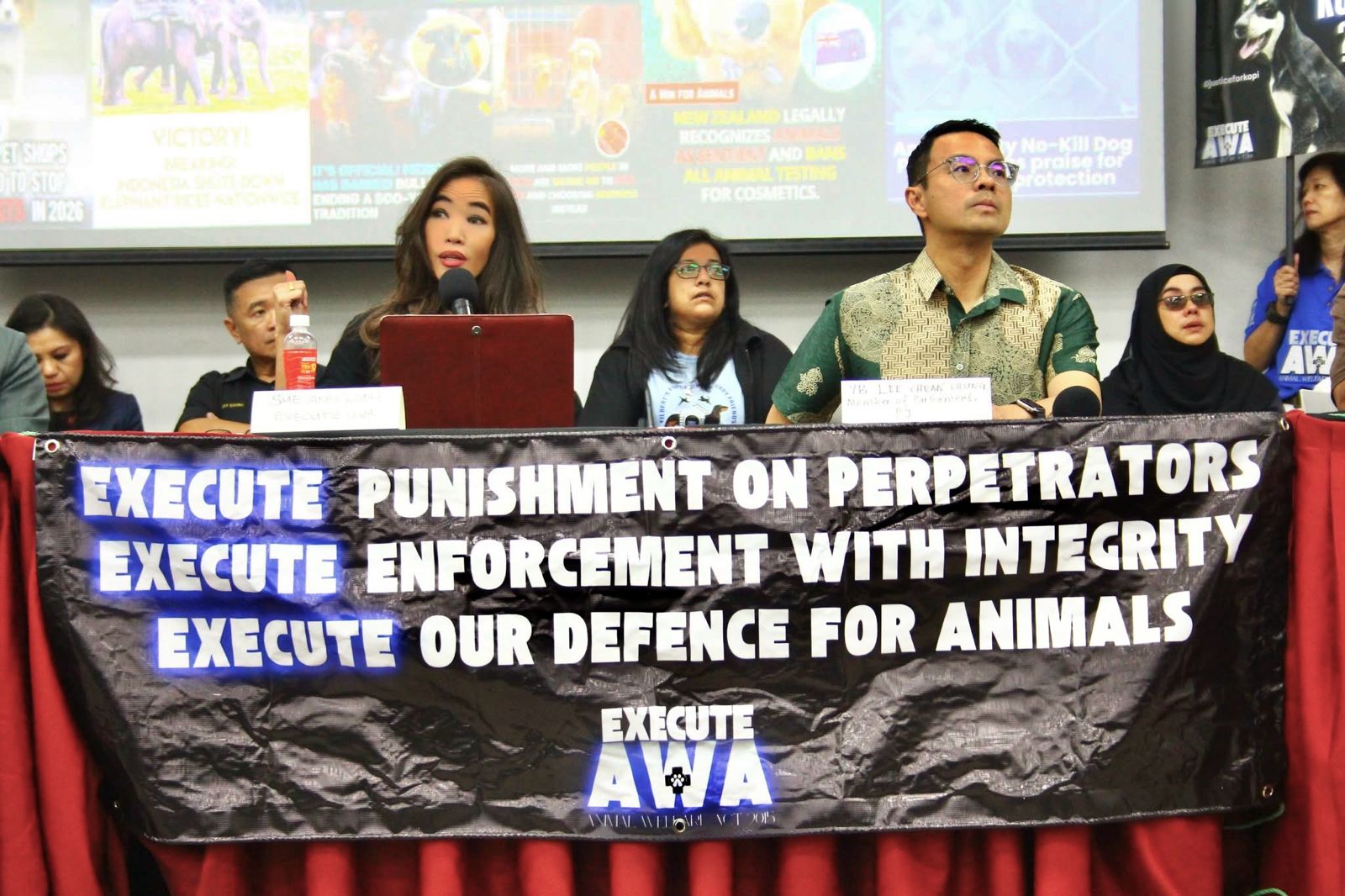

KUALA LUMPUR — Animal welfare advocacy platform ExecuteAWA has called for a comprehensive overhaul of Malaysia’s animal welfare governance, saying the death of a stray dog known as Rocky has exposed deeper failures in enforcement, accountability and the management of stray populations.
In a statement on Monday, the organisation said Rocky’s death should not be viewed as an isolated incident, but as another example of what it described as persistent institutional shortcomings, including inadequate enforcement, fragmented approaches to stray management, limited public awareness and weak coordination among relevant agencies.
ExecuteAWA said Malaysia must move away from responding only to high-profile cases of animal cruelty and instead establish a national strategy based on data, research and scientific methods to prevent such incidents from recurring.
“Animal welfare governance cannot improve if failures remain undocumented, unmeasured and unaddressed,” said ExecuteAWA founder Sue Ann Kong.
Kong said repeated animal cruelty cases had highlighted weaknesses in the current system, which she described as largely reactive and focused on intervention only after harm had occurred.
“Rocky is yet another evidence of systemic abuse and disintegrity for the way our government has failed our voiceless,” she said.
She added that authorities needed to move beyond issuing statements and focus on transforming evidence into practical and measurable reforms.
“ExecuteAWA invites all and any parties genuinely wanting to engage in the spirit of professionalising animal welfare by replacing emotion with evidence, reaction with prevention, and sporadic efforts with data-driven, research-backed strategies,” Kong said.
The group said it launched Malaysia’s first dedicated animal welfare platform in May last year to document cruelty cases, enforcement shortcomings and institutional gaps through evidence-based data collection.
ExecuteAWA said the platform was intended not only to record incidents but also to identify trends, assess weaknesses in existing systems and provide authorities with information needed to introduce meaningful improvements.
It urged the federal and state governments, the Department of Veterinary Services (DVS) and local authorities to utilise its research findings, governance assessments and preventive frameworks, saying the necessary data and reform proposals were already available.
The organisation also highlighted its #ProjekTogetherBoleh initiative, which advocates a nationwide preventive stray population management programme through a coordinated Trap-Neuter-Vaccinate-Manage (TNVM) approach involving government agencies, non-governmental organisations, veterinarians, businesses and local communities.
Meanwhile, ExecuteAWA’s Head of Regulations and Enforcement Punita Naidu said accountability for Rocky’s death must extend beyond public assurances, stressing that those responsible should face action under the Animal Welfare Act (AWA) 2015.
“Justice cannot remain merely a public statement or a repeated promise – and #JusticeForRocky cannot be overlooked and dismissed,” she said.
Punita said DVS statistics showing a 2,035 per cent increase in reported animal cruelty cases, alongside a prosecution rate of only 0.22 per cent, demonstrated the urgent need for stronger enforcement and reforms to rebuild public confidence in Malaysia’s animal welfare framework.
The statement comes amid growing scrutiny over Rocky’s death during a stray dog capture operation conducted by the Klang Royal City Council (MBDK) at Taman Teluk Gedung Indah, Port Klang, on July 29.
The incident triggered public anger after videos of the operation circulated online, with animal welfare groups alleging that the dog had been subjected to excessive force before dying shortly after being captured. Police are currently investigating the case under the Animal Welfare Act 2015.
Responding to criticism, MBDK mayor Datuk Abd Hamid Hussain was reported as saying the operation followed standard operating procedures (SOPs) issued by the Housing and Local Government Ministry (KPKT), including the use of approved loop equipment.
However, he said he was unable to comment on allegations that Rocky had been beaten as the matter remained under police investigation.
Abd Hamid said the operation was carried out after repeated complaints from residents and students who claimed they had been chased and, in some cases, injured by stray dogs in the area.
He added that notices had been issued to residents before the operation, while MBDK continued to face challenges including manpower shortages and difficulties in appointing private contractors to manage Klang’s increasing stray dog population.
Selangor Menteri Besar Datuk Seri Amirudin Shari also called on the public not to make selective accusations over the matter, stressing that the state government remained committed to balancing public safety with animal welfare.
He said local authorities had a duty to address stray dog issues that could endanger the public, while ensuring enforcement actions complied with legal requirements and animal welfare principles.
Amirudin added that Selangor’s approach was consistent with the views of Tengku Permaisuri Selangor Tengku Permaisuri Norashikin, who had called for firm action against individuals found guilty of animal abuse, while emphasising that animal welfare concerns must be balanced with public safety considerations.
The controversy has also prompted Pelabuhan Klang assemblyman Azmizam Zaman Huri to call for a review of SOPs governing stray animal capture operations, as calls grow for greater transparency and accountability in the handling of Rocky’s case. – August 3, 2026