

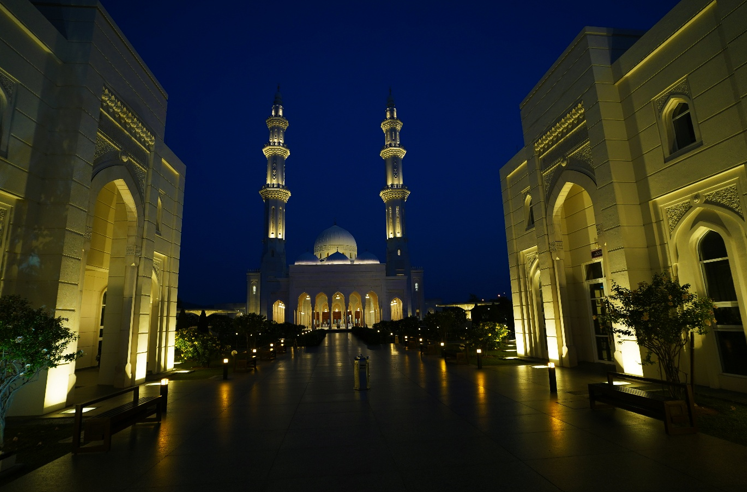
Masjid Sri Sendayan has just placed a relatively young Malaysian mosque on the international stage, not simply for its spectacular architecture, but for what happens when that architecture becomes a place for faith, learning and community.
This mosque within the Bandar Sri Sendayan township has been named “Global Outstanding Mosque of the Year” at the World Islamic Tourism & Trade Awards (WITA) 2026, recognising its excellence in Islamic architecture, community development, religious education and visitor engagement.
Architecture That Interacts With Nature
Set across 10 acres overlooking a lake, the mosque makes a striking first impression. Twin minarets rise above the complex, framing a magnificent central dome, monumental arches and an expansive, symmetrical courtyard.
But stay a while, and watch how light, shadow and reflection transform the space as the day unfolds. In daylight, the open setting, landscaped gardens and water features soften the monumentality of the architecture. Light and shadow pick out the arches, patterns and details, while the lake provides a tranquil backdrop.
Come evening, the mood shifts. Warm illumination washes across the façade, transforming it into a glowing presence — still imposing, but more serene as dusk sets in.
Global Design, Local Interpretation
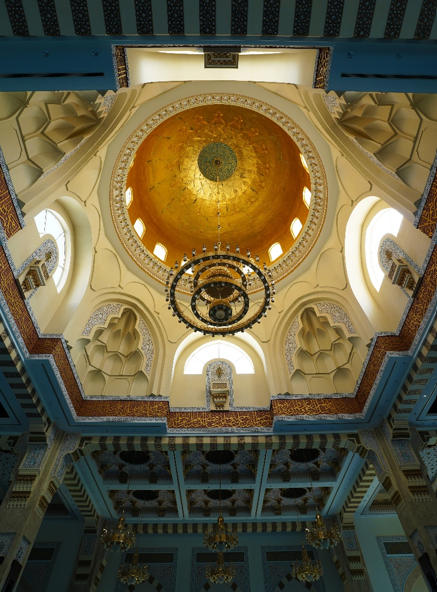
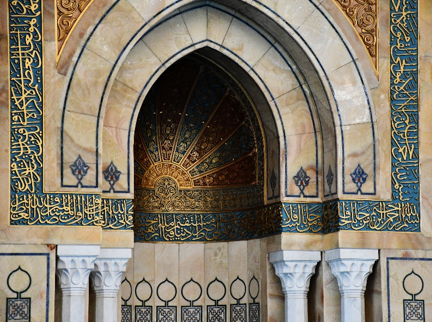
The architecture itself spans centuries. Masjid Sri Sendayan draws inspiration from the Abbasid tradition, enriched by distinctive Mamluk elements.
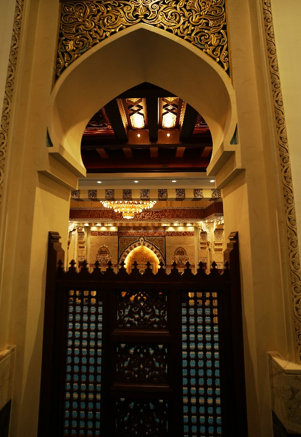
International materials and craftsmanship from Italy, Dubai, Portugal, Egypt and India were brought together with local knowledge and skills. Masjid Sri Sendayan Committee Chairman Tan Sri Abdul Rashid Hussain, who conceived and oversaw the mosque’s development from vision to completion, was closely involved in its design and execution.
The result is a meeting of global Islamic traditions and Malaysian expertise – rooted in place, yet connected to the wider Islamic world.
Built to Bring People Together
The mosque’s 5,000-person capacity speaks to its role as a substantial place of worship, but the vision extends beyond accommodating worshippers. A multipurpose hall, library and other community-oriented facilities form part of the complex.
Abdul Rashid said about half of the mosque’s activities are religious and the other half community-focused.
Worship and religious learning will sit alongside programmes designed to embrace contemporary skills and knowledge, including an understanding of artificial intelligence – to prepare the community for the future.
That is also where the mosque’s waqf foundation becomes significant – a tradition in which wealth or property is dedicated for lasting benefit. Its value is therefore not simply in the marble, arches, dome or craftsmanship. It is in what the building makes possible.
A place to worship. A place to learn. A place to gather. A place to reflect. A place to welcome visitors.
More Than a Landmark
For Muslims, it offers a space where faith and community life meet. For visitors from Malaysia and beyond, its architecture and activities offer a window into Islamic values and contemporary Malaysian Muslim life. And perhaps that is what makes this award worth noticing.
Masjid Sri Sendayan is not being recognised simply because it photographs beautifully or because it is “Instagrammable”, to use today’s keyword.
It is being recognised for bringing architecture, faith and community together.
So when you look at the photographs, notice the things that change.
The light. The shadows. The reflections. The details that emerge as you move closer.
And then look beyond the architecture to the people the spaces were created for.
Because the mosque may be the landmark. But the community is what gives it life.
The award was presented to Abdul Rashid at the World Islamic Tourism and Trade Awards Gala Dinner held at the World Trade Centre Kuala Lumpur on August 24.
The event was attended by an international audience comprising government leaders, ambassadors, tourism authorities, industry leaders, international organisations and distinguished guests. – August 30, 2026
Maria J. Dass is a journalist, and travel blogger covering communities, culture and heritage issues.