

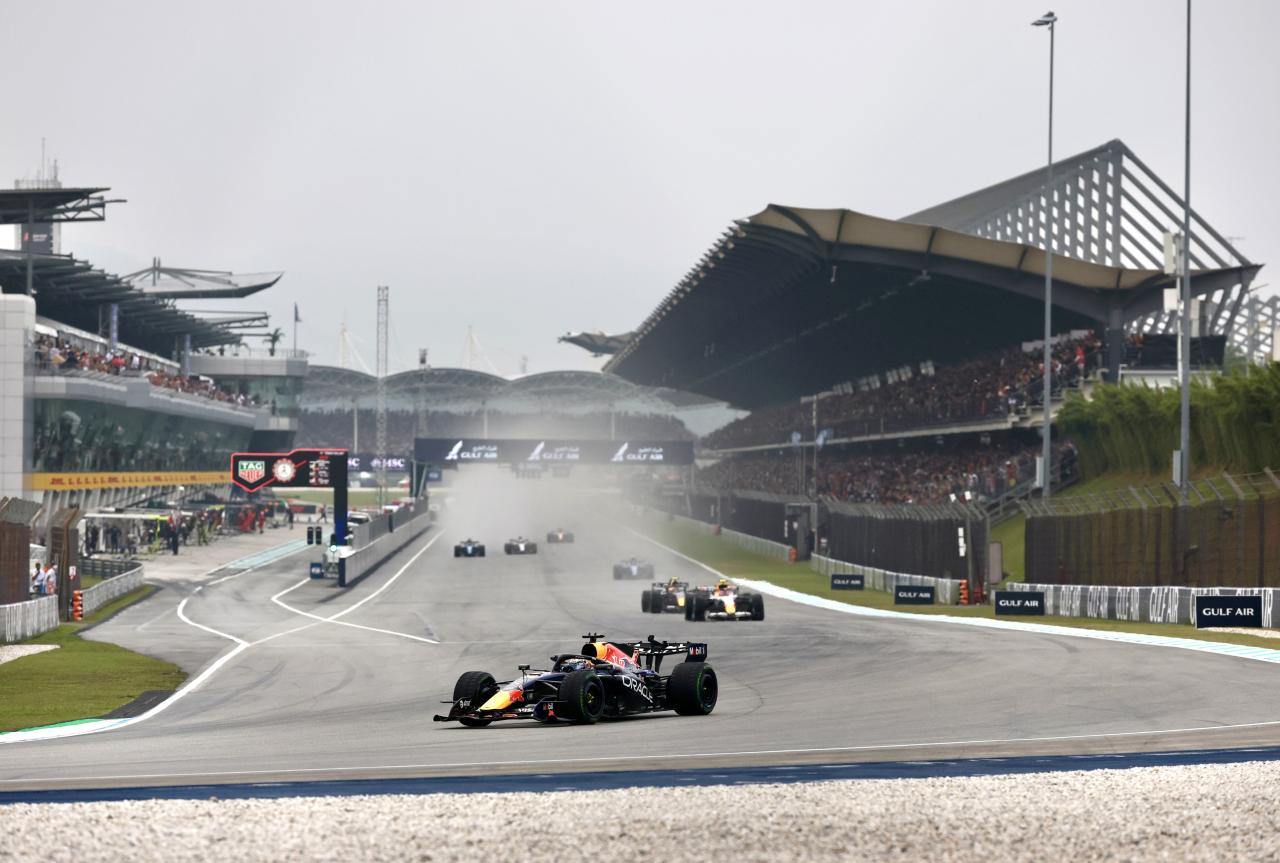

LAST month’s Bahrain’s F1 race in Sepang was interesting, it was akin to a visit by an old friend. It was nice to see each other again, the chaotic transportation issues notwithstanding.
It was the Bahrain grand prix in name due to the unfortunate situation in the region that saw the need to move the race, and Sepang was available. One can’t help reminiscing about the Formula 1 Petronas Malaysia Grand Prix that ran its last race in 2017. So much feel good factor was generated that there is now serious thinking of bringing F1 back to the circuit.
I say bring it on. The Sepang circuit is great and is better than most. It seems that racing fans and drivers like Sepang, too.
The F1 race is not only an occasion for speed and thrills, but it is also an event with significant economic multipliers. Apart from ticket sales and sponsorships revenue that went back to Bahrain, an analyst report suggested that over RM1 billion in revenue could be tied back to the event.
There were several direct economic effects such as tourism arrivals and spendings, but also indirect ones such as the positive image of the country, the haze notwithstanding, and a potent promotional opportunity. It attracted over 50,000 tourists boosting hotel and flight sales, as well as local spending, and generated an estimated RM120 million in global media exposure for Malaysia.
There are few sporting events that generate as much interest as the F1 races, maybe perhaps the Olympics, football World Cup and the Premier League could surpass the high speed, high octane event. It was reported that the recent race in Sepang, which was broadcast to more than 180 countries and territories drew over 820 million viewers for the three-day event.
It must also have been a welcome sight for Petronas to see the conspicuousness of its logo on tens of thousands merchandise due to it being a title partner of the Mercedes-AMG Petronas F1 team since 2010. It started its foray in F1 30 years ago when it sponsored the Sauber team.
Incidentally, Petronas is also a technical partner to the team and it is offering
“fluid technology solutions” in the form of custom fuels, lubricants, and fluids for the cars.
Its participation allows the national oil company a real life, high intensity and extreme laboratory to test its products that would eventually trickle down to us daily drivers. For instance, its Synthium lubricants used in F1 are available in over 100 countries – if it’s good enough for George Russel, it must be good for you, too.
Formula 1’s shift into the use of 100 per cent sustainable fuel this year will also give Petronas research and development capabilities a higher profile, as it competes with others to develop high performance synthetic fuels.
Being a title sponsor, Petronas’ name and colours are on the cars’ livery, driver suits, and team gear, which make its brand a common feature in broadcasts and social media. In terms of exposure, this must be worth so much more than the money it spent on the team.
Petronas reported 10 years ago that it earned over RM3.7 billion in global media exposure in 2015, and that number should have been surpassed now. In fact, Petronas’ brand value, which in a nutshell is its perception worth, now stands at US$14.4 billion, the third strongest in the global oil and gas sector.
The popularity of the F1 team and the period of success it has in this past decade has resulted in the Petronas logo on shirts and tees the world over. The team’s performance this season has been great thus far, too, and presumably having two good-looking young drivers helped.
The F1 accord parties associated with it some name and brand boost. The positive association with recognised names like Mercedes has also made the national oil company a global brand with global recognition.
Similarly, a race in Sepang will offer other domestic firms with global ambitions the opportunity to emulate Petronas for exposure at perhaps lower cost. There are many Malaysian firms that could use the massive global exposure that even a single race can bring to promote their goods and services worldwide.
The hosting of the race is an attempt by us to punch above its weight. Before Sepang, the only Asian destination was Suzuka in Japan as it was largely a European affair, with Brazil and Australia thrown in.
Hosting F1 races, an unlikely idea when it was proposed, was mocked, laughed at and ridiculed then. After Sepang, many countries from the region to the Middle East to Central Asia were asking themselves – “if Malaysia could do it, why not us, too?”
Over a quarter million people descended to the circuit over three days, and about 100,000 on race day. Perhaps it was pent up demand, but the demand is real nevertheless. It showed the event can be a success the second time around.
Also, the F1 could do with the exciting prospect of extreme heat and thunderstorms, too. – October 28, 2026
Datuk Zainul Arifin is the Chief Executive Officer of Big Boom Media that publishes Scoop.my