

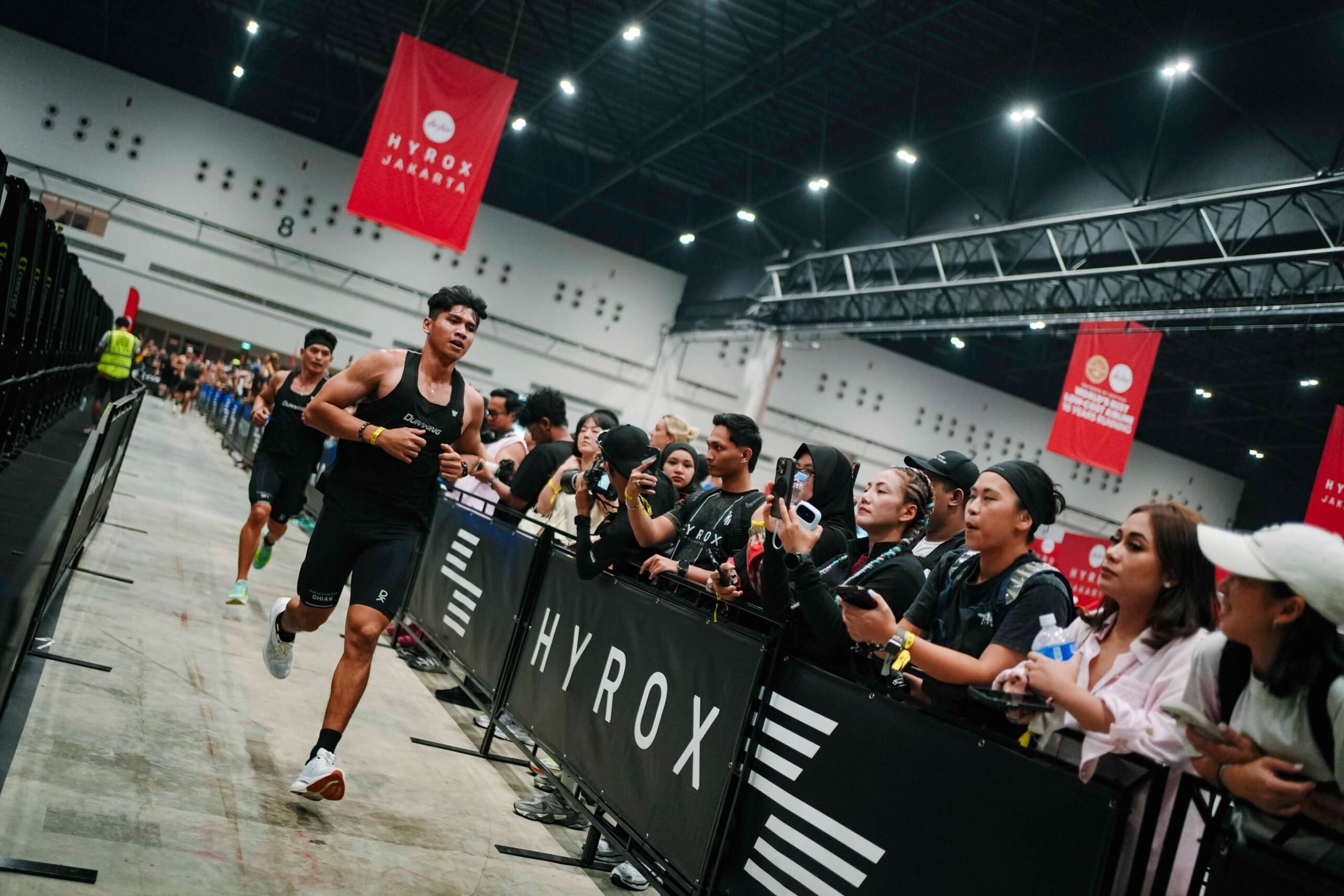
INTERNATIONAL sporting events bring more than competition. They bring excitement, commercial
opportunities, global exposure and, occasionally, a spirited debate about where business
interests meet local values.
The recent controversy surrounding beer sponsorship and the proposed HYROX event in Malaysia
offers an interesting example.
What might ordinarily have been a straightforward discussion about sponsorship suitability and
regulatory requirements has evolved into a wider conversation about cultural sensitivities,
commercial viability and whether Malaysia is being unnecessarily restrictive.
Such discussions are not necessarily unhealthy. In fact, they offer an opportunity to examine how
international events can thrive while respecting the values and expectations of their host
societies.
But there is a curious tendency in these debates: when a commercial arrangement encounters an
established boundary, the conversation sometimes shifts from whether the arrangement is
appropriate to whether the boundary itself is reasonable.
A perfectly legitimate question, of course.
Although one might reasonably expect the question to have been asked before the sponsorship
agreement was made.
MALAYSIA, A CONSERVATIVE SOCIETY?
Before we casually label Malaysia a conservative society, perhaps we should ask: conservative by
whose standards?
We have developed a peculiar habit of treating conservatism as though it were an embarrassing
medical diagnosis, while assuming that anything described as progressive must automatically be
enlightened.
But societies are not manufactured from one universal template.
Every country has its own history, values, social expectations and legal framework. What is
acceptable in one jurisdiction may be inappropriate or prohibited in another.
That does not necessarily make one society superior and the other backward.
It makes them different.
We readily celebrate cultural diversity when travelling abroad. We admire traditions, respect local
customs and remind ourselves to behave appropriately.
Yet when Malaysia expects similar consideration, some suddenly discover an irresistible urge to
lecture the country about modernity.
How wonderfully selective.
Let us establish something fundamental – Laws and regulations are not optional
recommendations to be followed only when they complement a business proposal.
Where existing requirements prohibit or restrict certain sponsorship arrangements, compliance
is obligatory, regardless of personal preferences.
Of course, regulations can be debated, reviewed or challenged through legitimate channels. But
that is different from disregarding them and expressing surprise when questions arise.
Event organisers are expected to conduct proper due diligence before committing to sponsorship
agreements. That includes understanding applicable regulations, approval conditions and the
sensitivities of the communities in which their events take place.
This is not an extraordinary demand.
It is Event Management 101.
A commercially attractive sponsorship may look impressive in a presentation, but if it creates
foreseeable regulatory difficulties, perhaps someone should have asked a few more questions
before celebrating the deal.
After all, crisis management is considerably cheaper when the crisis never happens.
FITNESS, ENDURANCE AND… BEER?
There is also an interesting question of brand alignment.
HYROX celebrates physical fitness, discipline, endurance and healthy competition.
So where exactly does beer fit into that narrative?
Certainly, alcohol brands sponsor sporting events internationally. That is an established
commercial reality.
But international precedent does not automatically establish local appropriateness.
Nor does the existence of such sponsorship elsewhere make it essential to the success of a fitness
competition here.
Surely an event built around pushing physical limits can find commercial partners whose products
more naturally complement its purpose.
One would imagine hydration, nutrition and sporting performance offer a reasonably promising
starting point.
But perhaps that is an excessively sober suggestion.
Another familiar argument is that similar sponsorship arrangements are permitted in other
countries.
Indeed, they may be. But Singapore is not Malaysia. Australia is not Malaysia. Europe is not
Malaysia.
And Malaysia is not obliged to become any of them.
When Malaysian businesses operate overseas, they must comply with local requirements. We do
not expect foreign governments to rewrite their regulations because our preferred business
model works better elsewhere.
International expansion requires local adaptation.
That principle should not suddenly become controversial when applied at home.
Respecting a country’s boundaries does not mean endorsing every aspect of its policies. It simply
means recognising that commercial ambition operates within a legal and social environment, not
above it.
THE REAL LESSON
The sensible response to the HYROX controversy is neither moral grandstanding nor defensive
outrage.
It is to clarify the applicable requirements, resolve any incompatible sponsorship arrangements,
engage the authorities and reassure participants.
Most importantly, avoid turning an operational issue into an unnecessary cultural confrontation.
The public should not be made to feel that their values are an obstacle to commercial success.
Equally, legitimate commercial considerations deserve a fair hearing within the established
framework.
Good communication requires more than persuasive messaging. It demands cultural intelligence,
sound judgement and the ability to anticipate consequences.
Ultimately, progress is not measured by how many boundaries we discard, just as tradition should
not be used to resist every new idea.
A mature society can embrace international sporting events while maintaining its own principles.
And a competent organiser should be capable of understanding both.
The lesson is simple: when entering a market, study its rules before selling your vision.
Because the mark of a truly world-class event organiser is not merely knowing how to stage an
international event.
It is knowing which country you are staging it in. – November 6, 2026
Prof. Hj. Mohd Said Bani C.M. Din is President of Public Relations and Communications Association of Malaysia