

KUALA LUMPUR – Malaysia’s transition to electric vehicles (EVs) is more than a move towards cleaner transportation; it is the defining industrial decision that will shape the country’s future economic competitiveness, former Tambun MP Datuk Seri Ahmad Faizal Azumu said.
He warned that how Malaysia responds to the global EV transition will determine whether it remains competitive in the global economy or risks falling behind.
Drawing parallels with key moments in the country’s industrial history, Peja said every generation of Malaysians has faced a pivotal economic decision that shaped the nation’s future.
“For our grandparents, it was whether to remain a supplier of raw tin and rubber or climb the value chain. In 1972, it was whether Penang could attract the world’s electronics giants and, when Intel chose the island for its first overseas plant, the answer helped make Malaysia one of the world’s leading semiconductor nations. In 1983, it was whether we dared build our own car, and Proton was born.
“The electric vehicle is this decade’s question, and perhaps the most consequential yet, because for the first time the two industries we know best — electronics and automobiles — have merged into one,” he told Scoop in an exclusive interview.
Ahmad Faizal argued that, unlike conventional vehicles, modern EVs are increasingly becoming technology products, giving Malaysia’s long-established electrical and electronics (E&E) industry a natural advantage in the global transition.
“An electric vehicle is no longer a mechanical object with a computer bolted on; it is a battery, a bank of power electronics and a fleet of processors that happens to travel on four wheels — precisely the territory Malaysia has worked in for half a century.
“EV adoption is therefore not a foreign agenda we are importing, but the continuation of what we have already built,” the Bersatu vice-president said.

He said the transition would influence not only Malaysia’s industrial competitiveness but also its environmental future, urban development and quality of life.
“It will decide our carbon trajectory, our air quality and the livability of our cities. Just as importantly, it will decide whether Malaysia builds the future or merely buys it at retail,” the former Youth and Sports Minister said.
Ahmad Faizal believes EVs should sit at the heart of Malaysia’s broader industrial strategy by connecting sectors that have traditionally developed independently.
“The EV should be the spine connecting parts of our economy that grew up on separate tracks: a world-class electrical and electronics sector, a serious automotive base, a renewable energy ambition and a maturing digital economy,” he said.
He said Malaysia’s EV ambitions should not be limited to importing and selling foreign-made vehicles but should instead focus on building a complete domestic ecosystem.
“The mistake to avoid is treating an EV as a finished foreign car we merely unload at port and register. The value was never in the badge on the bonnet; it lives in the ecosystem behind it — assembly, components, chargers, software, maintenance, financing and energy integration,” he stressed.
Ahmad Faizal pointed to Proton’s first electric vehicle as proof that Malaysia is capable of moving further up the value chain.
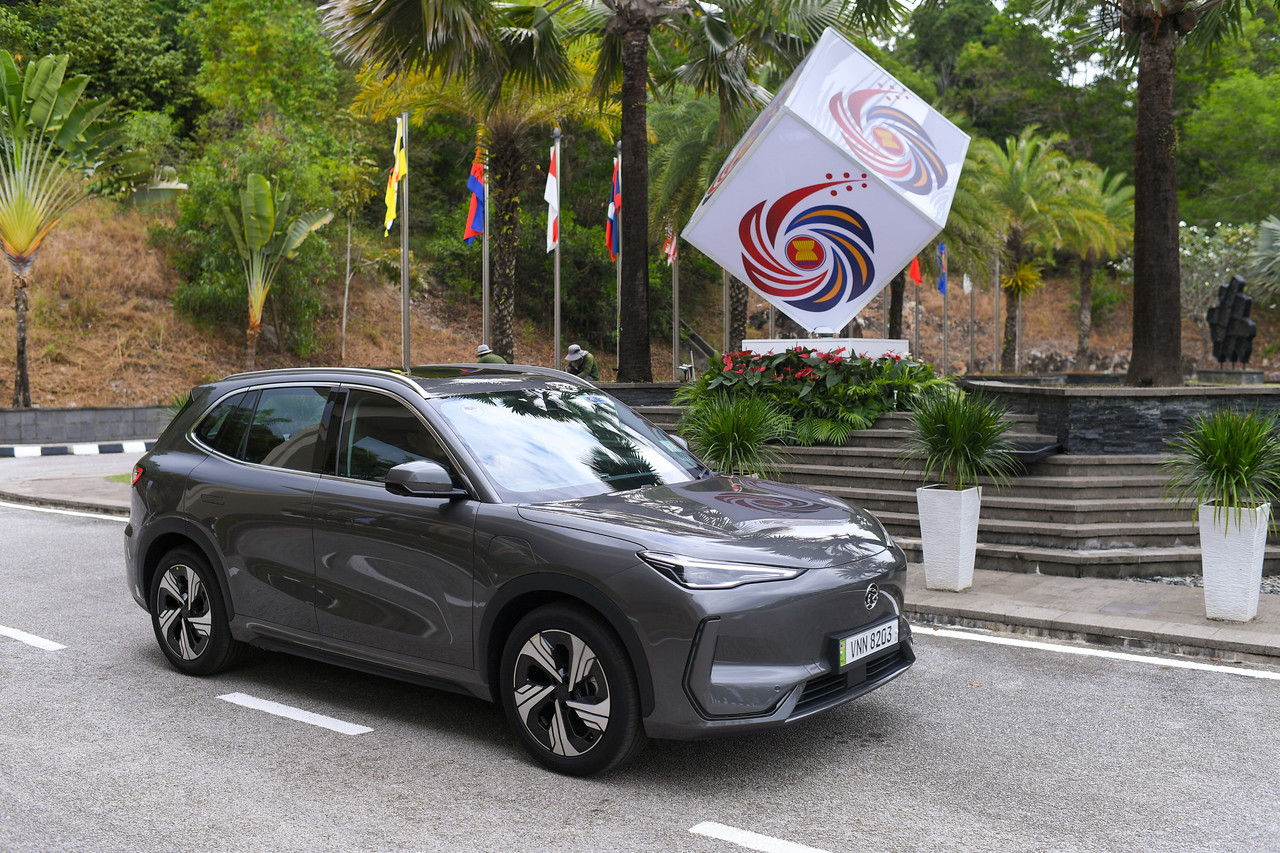
“The Proton e.MAS 7, built here with Geely and now the country’s best-selling EV, proves Malaysians can sit on the making side, not only the buying side. That is the difference between an industrial agenda and a shopping list,” he added.
Beyond major manufacturers, he said the EV industry also presents significant opportunities for local small and medium enterprises (SMEs) and technology firms.
Drawing another comparison with Malaysia’s semiconductor industry, Peja noted that the biggest long-term gains did not come solely from multinational corporations but from the local ecosystem that grew around them.
“The EV will spawn its own long tail, and it has already begun. The niches are countless: charger installation and maintenance, software platforms, payment and roaming systems, energy management, solar integration, battery diagnostics and second-life services, fleet management, spare parts, training and after-sales support.
“The EV is not merely an automotive story; it is also an energy, technology, digital and services story and SMEs can win in every one of those areas,” he said.
For Peja, the question facing Malaysia is no longer whether the global EV transition will happen, but whether the country will seize the opportunity to become one of its beneficiaries.
“Malaysia has stood at industrial crossroads before tin and rubber, semiconductors, the national car and the times we chose boldly are the times we prospered.
“The electric vehicle is this generation’s crossroads, and the technology is not waiting for us to deliberate,” he added. – July 2, 2026