

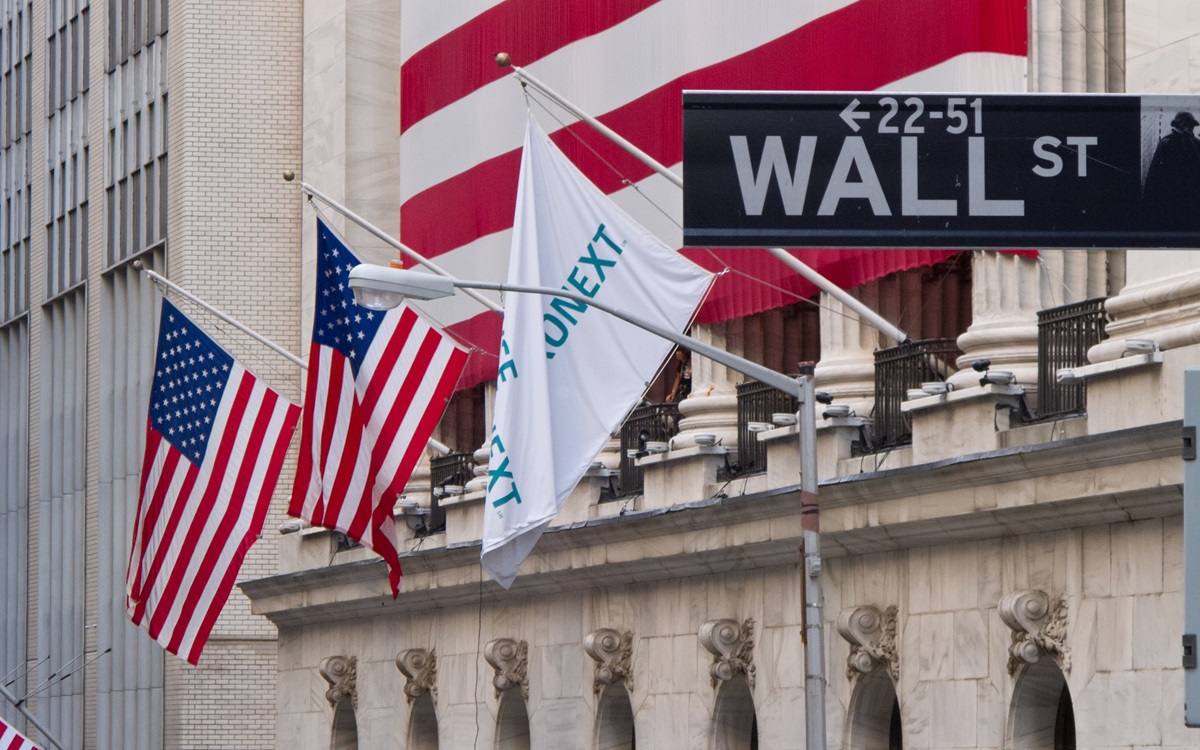
KUALA LUMPUR – US stocks slumped today after President Donald Trump confirmed a fresh round of import tariffs on countries including Malaysia, Japan, South Korea and South Africa, a move that spooked investors and dragged down equities with regional exposure.
The Dow Jones Industrial Average fell 422 points or 0.94%, while the S&P 500 lost 0.79% and the Nasdaq dropped 0.92%, according to reports. The declines marked the worst day for Wall Street in nearly three weeks, erasing some recent gains driven by strong US jobs data and optimism over trade negotiations.
Losses accelerated in the afternoon as Trump posted tariff letters on Truth Social outlining new duties of between 25% and 40%, to take effect on August 1. Malaysia’s revised 25% rate – slightly higher than the 24% initially announced in April – was among the adjustments.
The letters warned that rates “may be modified, upward or downward,” depending on future negotiations.
Sector-wide jitters were felt across the board. Exchange-traded funds (ETFs) managed by BlackRock that track Japanese, South Korean, Malaysian and South African equities dropped by 2.4%, 3.56%, 1.97% and 1.73%, respectively, with CNN reporting that Malaysia’s ETF posted its worst day since early April.
US-listed shares of major Asian exporters also took a hit. Toyota slid 4%, Nissan 7.16% and Honda 3.86%. Tech firms were harder hit, with LG Display and SK Telecom falling 8.3% and 7.76%, respectively.
“The market was caught off guard by the scale and timing of the announcement,” said Ross Mayfield, investment strategist at Baird, as quoted by CNN. “Investors were hoping for more clarity, not escalation.”
Bond markets reacted as well. The yield on the US 10-year Treasury rose to 4.39% while the 30-year hit 4.92%, indicating a sell-off in government debt. The US dollar index gained 0.3%, while the yen, won and rand weakened.
Reports quoting analysts said that they believe the market response could have been worse, had investors not expected the threat to be a bargaining tactic.
The broader context for the tariffs is a 90-day window that Trump imposed in April to renegotiate trade terms with 49 countries. Malaysia initially faced a 24% rate, along with others such as China (34%), Vietnam (46%) and Cambodia (49%).
The revised 25% tariff came despite two rounds of negotiations in Washington led by Investment, Trade and Industry Minister Datuk Seri Tengku Zafrul Abdul Aziz in June.
In his letter to Prime Minister Datuk Seri Anwar Ibrahim, Trump said Malaysia’s trade policies were “far from reciprocal” and contributed to an “unsustainable trade deficit”.
Trump also announced a separate 10% tariff on any country aligning itself with the BRICS bloc – comprising Brazil, Russia, India, China and South Africa – further unsettling investors.
While the S&P 500 and Nasdaq had recently hit record highs, market strategists are warning of growing downside risks.
“Our feeling is that stocks are ahead of themselves,” said Wells Fargo’s Scott Wren in a client note quoted by CNN.
“We’re looking to trim positions in sectors that have run ahead, especially US small caps and consumer discretionary.”
In a statement issued today, the Investment, Trade and Industry Ministry said Malaysia would continue discussions with the US in good faith to clarify the scope and impact of the 25% tariff and to pursue a balanced, mutually beneficial outcome. The ministry acknowledged Washington’s concerns over trade imbalances but stressed that “constructive engagement and dialogue” remained the best path forward.
Trump’s administration has so far only concluded revised trade deals with the UK and Vietnam. Other countries facing new tariffs include Indonesia, Thailand, Kazakhstan, Myanmar and Laos. – July 8, 2025