

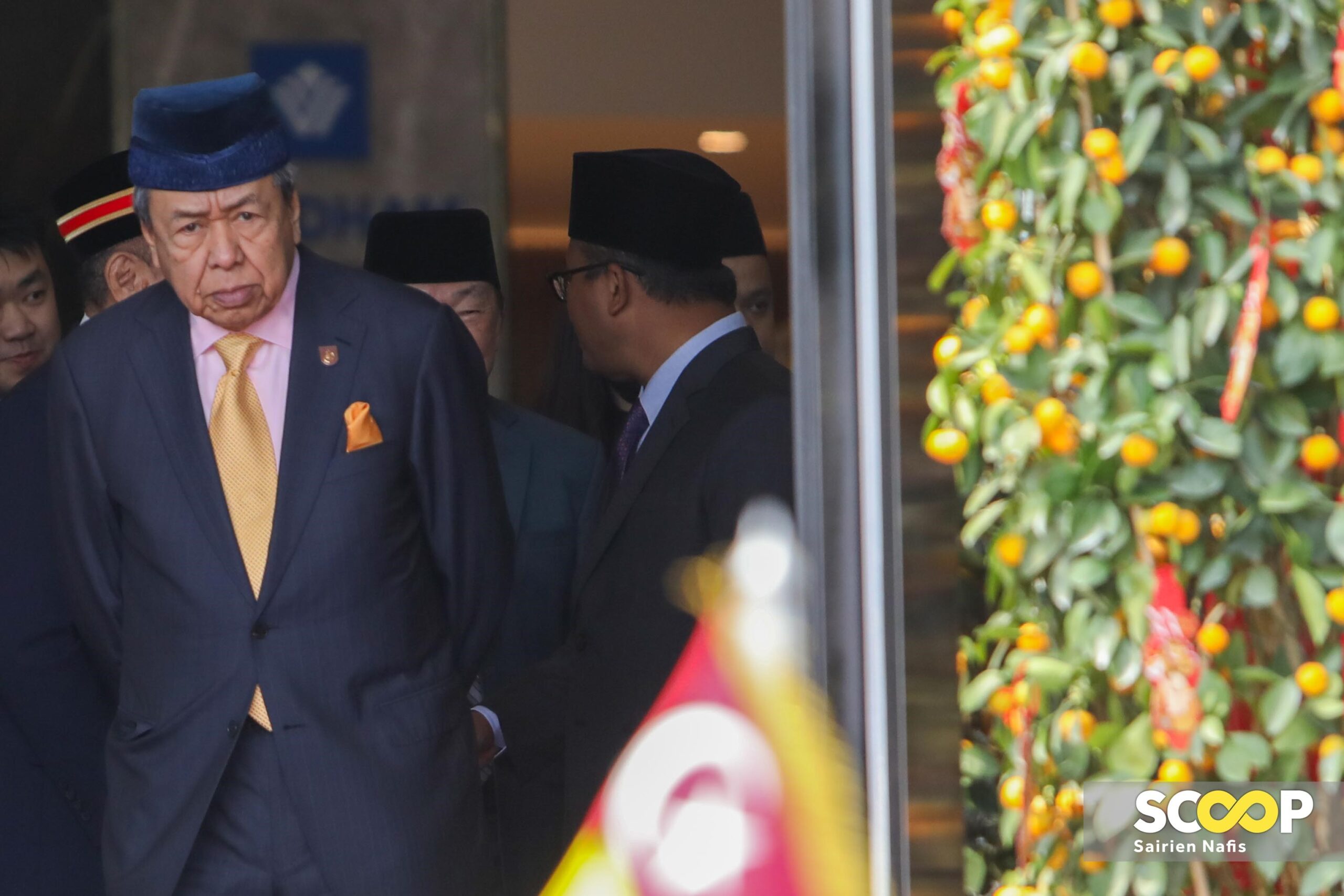
KUALA LUMPUR – Selangor Ruler Sultan Sharafuddin Idris Shah has ordered the cessation of pig farming operations in Tanjong Sepat, Kuala Langat, and called for a gradual relocation to Bukit Tagar.
The Sultan’s directive, which was made following a meeting with Selangor’s Infrastructure and Agriculture Committee Chairman Datuk Ir Izham Hashim and Local Government and Tourism Committee Chairman Datuk Ng Suee Lim at Istana Bukit Kayangan, aims to ensure that pig farming operations comply with all legal and regulatory requirements.
In a statement released by Istana Alam Shah on Monday, it was revealed that the Sultan had carefully reviewed the management and future direction of pig farming in Selangor, taking into account the interests of the public, environmental well-being, and social harmony in the state.
As part of the transition, the Sultan also ordered a comprehensive study and survey based on legitimate data to assess the actual demand for pork, specifically for the non-Muslim population in Selangor. The study’s findings will form the basis for determining the scale, capacity, and size of the new pig farming operation in Bukit Tagar, ensuring it remains controlled and reasonable.
The Sultan further emphasized that the Selangor state government will not provide financial allocations or investments for any future pig farming operations, including in Bukit Tagar, and that all related matters should be handled without involving public funds.
The statement concluded with a reminder that all parties involved must act responsibly, in accordance with the law, to ensure the well-being of the people, the environment, and social harmony in the state.
Previously, the Selangor government announced plans to relocate pig farms from Kuala Langat and Sepang to a modern livestock centre in Bukit Tagar, Hulu Selangor, by the end of this year. The relocation aims to address ongoing pollution issues and promote long-term environmental sustainability.
According to Izham, the move involves 202 hectares of land in Bukit Tagar and seeks to resolve longstanding concerns, including odour, water pollution, and public disturbance, through a more systematic and professional approach. It is also seen as crucial in controlling African Swine Fever (ASF), with a modern, controlled farming system that ensures food security for the non-Muslim community while safeguarding environmental sustainability.
“His Royal Highness stressed that the food supply should not be restricted, but it must be managed sustainably so as not to affect the environment,” said Izham.
The relocation plan includes modern, closed-system pig farms situated away from residential areas, equipped with buffer zones and a zero-emission waste management system that converts waste into biogas for electricity generation, following a model implemented in Penang.
Izham urged that the issue, which has been ongoing, should not be politicised, as the state’s priority remains resolving pollution and safeguarding the welfare of the community.
The Sultan had previously expressed strong opposition to the state government’s plan to permit pig farming operations in Tanjong Sepat before their relocation to Bukit Tagar in 2030, a decision he voiced on January 10. – January 12, 2026