

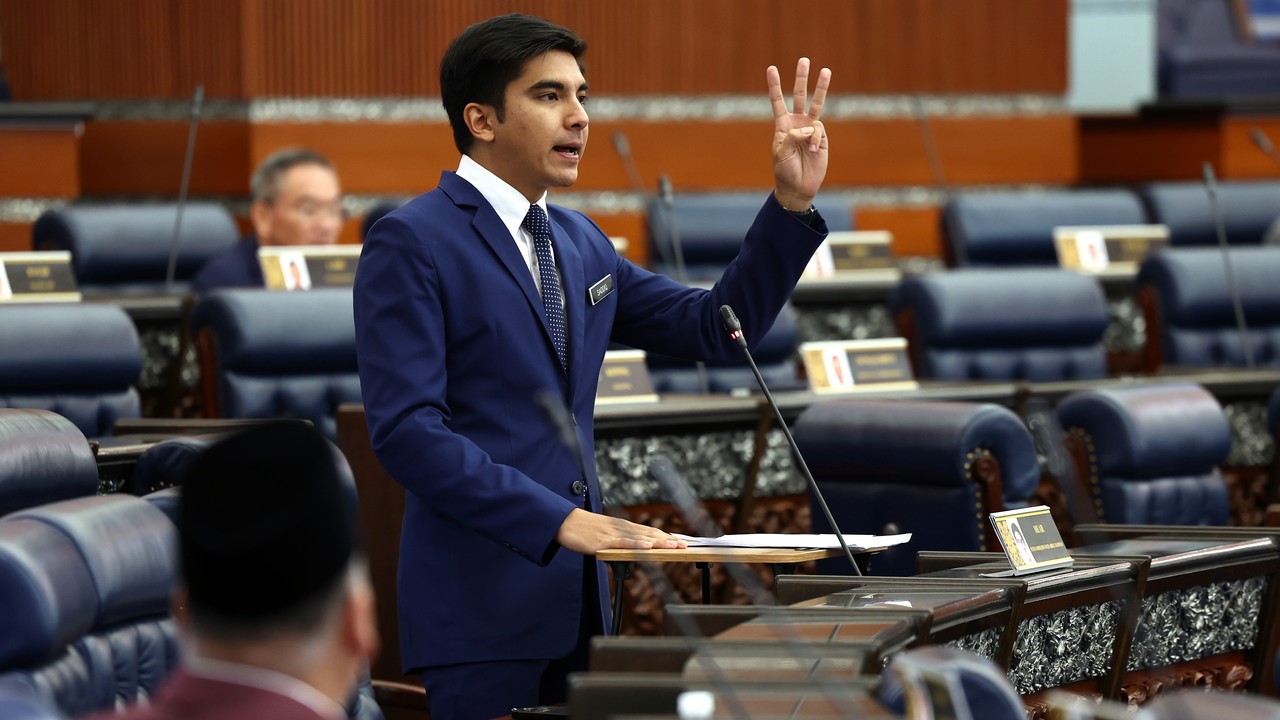
KUALA LUMPUR – A pilot programme for six-year-old children to take a diagnostic test for early entry into primary school could result in discrimination, according to Muar MP Syed Saddiq Syed Abdul Rahman.
Speaking in Parliament today, he warned that the move could exacerbate existing inequalities and put additional strain on schools.
Although the diagnostic test is voluntary, Syed Saddiq highlighted the need to focus on the pre-school system, which remains out of reach for many families due to its high cost.
He pointed out that children who attend pre-school are typically from higher-income M40 and T20 families, while those from the B40 group face significant barriers to early education.
“As a result, children who attend pre-school are usually from higher-income families,” he said, emphasising that this disparity creates a significant learning gap between them and children who lack access to such opportunities.
“Ultimately, those with access to pre-school education are more likely to pass the diagnostic test.”
Syed Saddiq further expressed concern that children who pass the test and enter school a year early might be labelled as “smart,” while those entering at the age of seven could face bullying and stigma. He also warned that this age gap could contribute to an already serious problem of bullying in schools.
“At a time when bullying cases are becoming increasingly serious, including incidents of violence, how can we justify creating an additional one-year gap between pupils?” he asked.
The former Muda president also cautioned that pre-schools could become “stress schools,” pressured to focus on preparing children for the diagnostic test instead of fostering holistic development. This shift, he argued, would make early education more exam-oriented, sidelining play, character-building, and enjoyment in learning.
“We are taking away the fun of education,” he lamented.
Syed Saddiq also voiced concerns over the burden on teachers, noting that the introduction of psychometric and skills-based assessments would require hundreds of thousands of individual evaluations annually. Given existing teacher shortages and overcrowded classrooms, he warned that the policy could stretch the system even further.
He cautioned that allowing both six- and seven-year-olds to enter Year One could lead to larger class sizes, higher teacher-to-student ratios, and ultimately a decline in education quality, unless additional classrooms and teachers were provided.
“In the past, for example, at Sekolah Kebangsaan Taman Peleng, there might have been seven classes dedicated to Year One. With the introduction of a new intake for six-year-olds, the number of classes would have to increase from seven to 10, 12, or even 14,” he explained.
Recently, Education Minister Fadhlina Sidek announced that the special diagnostic screening for six-year-old children would be introduced for the 2027 school session to assess their eligibility for Year One. – January 22, 2026