

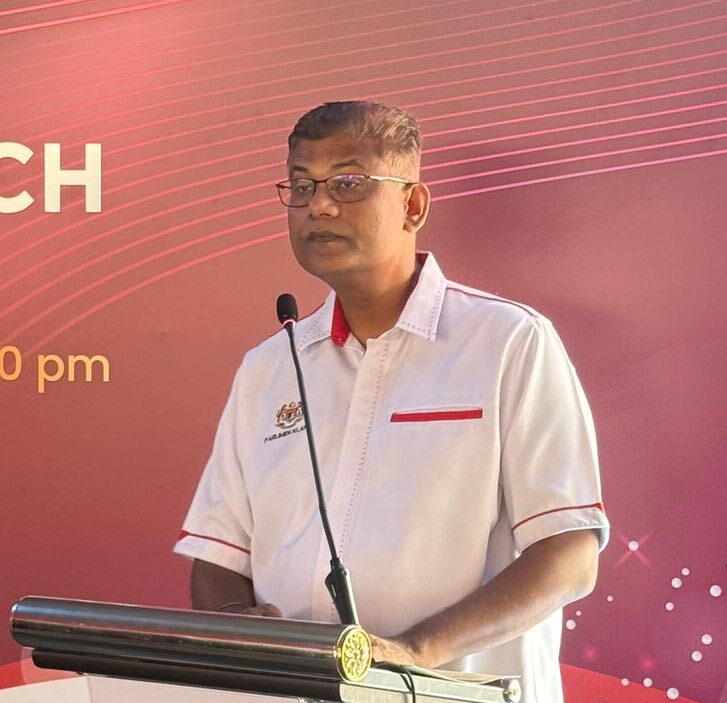
KUALA LUMPUR — The silence from government leaders over a controversial rally against illegal Hindu temples tomorrow can be interpreted as indifference, and puts Malaysia’s reputation at risk, Klang MP Ganabatirau Veraman has warned.
Urging the government to be firm in halting the event, he expressed concern over the timing of the planned rally which coincides with the visit of Indian Prime Minister Narendra Modi.
“This is why the authorities must act decisively. Any rally that risks inflaming religious sentiment, especially during the visit of a world leader, should not be allowed. National interest, social harmony, and international dignity must take precedence.
“We must ask honestly whether we are trying to embarrass Malaysia on the international stage, or worse, humiliate our own Prime Minister in front of a world leader,” Ganabatirau said on Facebook.
“Silence from leaders is not neutral. It is damaging. When the Prime Minister, Deputy Prime Ministers, and Ministers remain quiet on issues that deeply affect a community, that silence is read as indifference. The government must speak. It must explain. It must reassure, without hurting religious sentiments, but firmly and clearly.
“Leadership means addressing difficult issues with wisdom and empathy, not avoiding them,” the DAP representative added.
The rally in Kuala Lumpur tomorrow is organised by independent preacher Zamri Vinoth, against whom hundreds of police reports have been lodged in the past over incendiary comments that allegedly stirred racial and religious tensions.
Opposition party PAS has expressed support for the rally saying it is to uphold rule of law regarding the building of temples, and not aimed at targeting a single group or religion.
However, Ganabatirau said the issue of illegal temples has been oversimplified, and the matter has long historical and administrative roots.
He noted that many Hindu temples in Malaysia remain ungazetted not because they were built in defiance of the law, but due to unresolved land administration issues dating back to the colonial and early post-independence periods.
“These are not acts of lawlessness but consequences of unresolved historical land issues,” he said, adding that many temple committees are already engaged in negotiations with land offices and local authorities to regularise their status.
While acknowledging that some temples are located in unsuitable areas such as road reserves or drainage land, Ganabatirau said these cases require coordinated and humane solutions rather than selective enforcement or public anger.
“These matters must be handled through governance, not grandstanding. Through dialogue, not rallies,” he said.
There are already established bodies such as the Malaysia Hindu Sangam, Malaysia Hindu Mamandram and MAHIMA to engage constructively with the government, and the authorities should use these platforms to resolve issues, instead of allowing demonstrations that could inflame tensions.
“With serious political will, this issue can be resolved comprehensively within one year. What is lacking is urgency and commitment,” he said. – February 6, 2026