

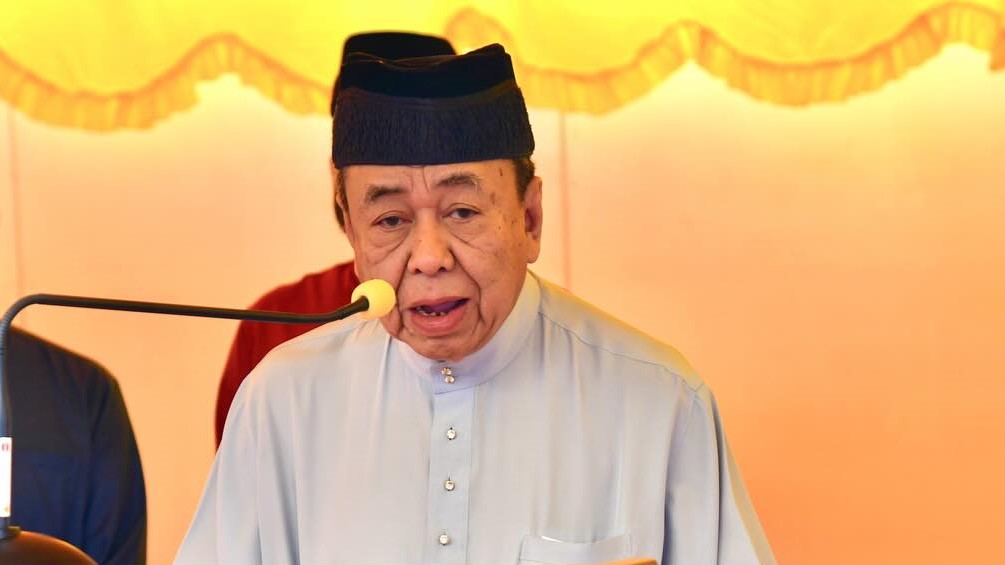
KUALA LUMPUR – Selangor ruler Sultan Sharafuddin Idris has expressed his full support for Prime Minister Datuk Seri Anwar Ibrahim’s recent statement against the construction of houses of worship without proper approval.
In a statement issued by His Royal Highness’s private secretary, Datuk Mohamad Munir Bani, the Sultan backed the Prime Minister’s firm position, emphasising that such developments must adhere to the law and be in compliance with established regulations.
“Any construction of a house of worship without lawful approval, whether on government or private land, risks creating disputes among different religious communities and could eventually pose safety and security threats to the state and the nation,” the statement read.
The Sultan was informed by the Selangor state government that as of January 31, 2026, there were 687 Hindu temples in Selangor built without proper authorisation.
Of these, 388 were constructed on government land, and 299 on private property. This number is notably high when considering that approximately 11.3% of the state’s population is Hindu.
His Royal Highness highlighted that all places of worship should be constructed only after a formal application is made, and approval is granted by the relevant authorities, including the local councils, in line with the legal frameworks and guidelines.
The issue of unapproved constructions, particularly temples, has long been a source of tension, and it is seen as a significant challenge to community harmony.
The Sultan further stressed the need for continuous monitoring by the authorities to prevent illegal constructions from escalating.
Anwar, in his recent address on February 9, 2026, reiterated that local authorities have been empowered to act against unlawful houses of worship, including temples built on illegally occupied land. He stressed that while the policy could stir controversy, the rule of law must prevail.
“[We] will no longer allow illegal encroachments, and municipal councils will be authorised to take action against unlawful temples,” Anwar declared.
He acknowledged that this policy might provoke debates but emphasised that it is rooted in ensuring safety and maintaining order.
Anwar added that all houses of worship, whether mosques, churches, or temples, must comply with land ownership and planning regulations. He clarified that violations would be dealt with according to the law and that enforcement actions should be measured and conducted in an orderly fashion.
“Islam is the religion of the Federation, and other religions are granted their respective rights. However, we cannot allow houses of worship that do not follow the rules. The law must be upheld,” he said.
Anwar also explained that land acquired without consent could never be legitimised, underscoring the importance of upholding property rights.
“Land that is illegal, seized, or taken without permission cannot be made legal,” he asserted.
The Prime Minister also pointed to Batu Caves as an example of lawful practice, where all approvals were obtained, including for an escalator project to improve access for worshippers.
He noted that while long-standing cases might be considered on an individual basis, they should not be used as a justification for continued non-compliance.
“We cannot defend 1,000 temples that are not in compliance just because they have existed for a long time,” he concluded. – February 10, 2026