


KUALA LUMPUR – The Malaysian legal system may be shifting how it prosecutes fatal road accidents, following recent decisions to charge intoxicated drivers with murder.
On March 29, Sakthygaanapathy Ravichandran, 28, allegedly drove his car against the flow of traffic while intoxicated on substances at high speed in Klang, causing a collision that killed Amirul Hafiz Omar, 33, as he was driving his motorcycle.
The driver has pleaded guilty to self-administration of drugs under Section 15(1)(a) of the Dangerous Drugs Act, as reported by Bernama.
In a subsequent incident in Segamat, Johor on April 2, where Shafiq Salleh, 29, tested positive for methamphetamines after allegedly rear-ending a van that resulted in the deaths of three family members identified as K. Myakrishnan, 72, S. Sevendai, 65, and S. Palamiandy, 75.
While fatal crashes are typically prosecuted under the Road Transport Act, both men were charged with murder under Section 302 of the Penal Code, which carries the death penalty or a prison term of 30 to 40 years.
As the murder cases fall under High Court jurisdiction, no pleas have been taken for either driver.
The Attorney-General’s Chambers (AGC) has defended the murder charges regarding the Klang case, with Attorney-General Tan Sri Dusuki Mokhtar stating that the driver’s conduct was “so imminently dangerous” that death was a near certainty.
Although the prosecution has not officially confirmed the specific legal provision for every case, legal experts suggest these charges likely rely on Section 300(d) of the Penal Code.
This provision classifies culpable homicide as murder if the perpetrator knows their action must, in all probability, cause death, even if there was no specific intent to kill a particular individual.
While legal practitioners generally support applying this threshold to severe DUI cases, they offer differing perspectives on the legal mechanics and prosecutorial strategy.
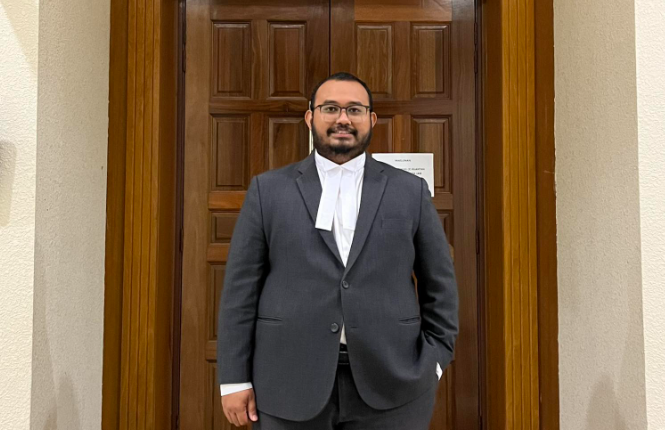
Alif Tarmizi, a criminal defence lawyer and founding partner at Messrs Alif & Co, argues that the escalation is a necessary response to the rising number of driving under the influence (DUI) cases.
“Contrary to popular belief, I do think that murder is the right charge for this case under section 300(d),” Tarmizi told Scoop, noting that under this provision it applies when death is almost certain, regardless of intent or whether a specific victim was targeted.
Alif believes the government is using these cases to signal that voluntary intoxication provides no excuse for incurring such extreme risks to public safety.
Farhan Read, a criminal defence lawyer and former Deputy Public Prosecutor, added that while the charge is appropriate, the prosecution faces a high evidentiary threshold.
“Whether it is the ‘right’ charge depends on whether there is evidence to prove the elements of the offence,” Read said regarding the application of the Penal Code in traffic accidents.
He observed that the law typically compares such imminently dangerous acts to firing a cannon into a crowd, and the court must decide if a high-speed DUI meets that benchmark.

Read also noted that while the Klang driver pleaded guilty to using benzodiazepines and tetrahydrocannabinol, the prosecution must still prove he possessed the cognitive knowledge of the risk at the time of the crash.
“The defence of intoxication does not include the act of voluntarily taking substances,” Tarmizi said, clarifying that the driver’s guilty plea for drug usage cannot be used as a legal shield to avoid the murder charge.
While the Klang and Segambut cases show a move toward murder charges, other tragedies continue to be handled under the Road Transport Act (RTA).
However, not all fatal DUI cases are being escalated to murder charges. For instance, Shaun Lau Wee Hong, 28, was the drunk driver that caused a fatal double-casualty crash in Pahang on February 14 and was charged under Section 44 of the RTA, a DUI resulting in death or injury.
“Selective prosecution is another word for prosecutorial discretion. No two cases are exactly alike,” Read said regarding the fact that policy considerations often influence which cases are used to make a legal example.
Alif countered that the AGC holds the power to charge based on the specific evidence of each investigation, rather than a lack of uniformity.
“I believe it’s about time that the government should make the law regarding DUIs stricter as the number of cases are going through the roof,” Tarmizi said, adding that this attempt is not merely to appease public pressure but to send a message.
As these cases proceed to their respective mentions in May (Shafiq Salleh) and June (Saktygaanapathy Ravichandran), their outcomes could set a precedent on how far Malaysian law is willing to go in treating fatal DUI incidents not as negligence, but as murder. – April 13, 2026