

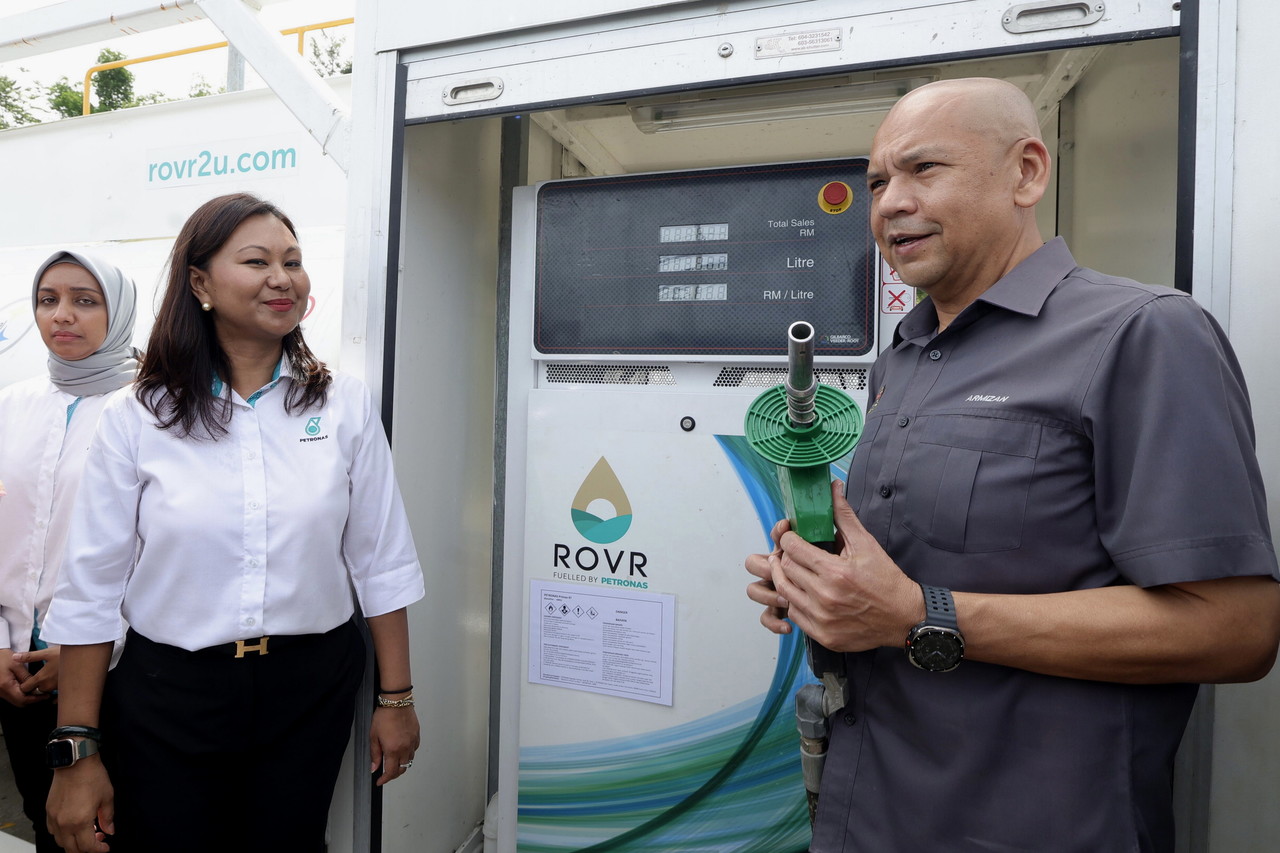
KUALA LUMPUR — The Cabinet has agreed to station police personnel at petrol stations to strengthen monitoring and enforcement, following rising concerns over fuel supply leakage amid the global energy crisis sparked by conflicts in West Asia.
Domestic Trade and Cost of Living Minister Datuk Armizan Mohd Ali said the decision was reached during the Cabinet meeting on April 8, building on the ministry’s static enforcement deployment that began on March 20.
“A report by the High-Level Committee on Coordination Among Enforcement Agencies to Combat Leakage and Smuggling (JTPAP), presented at the National Economic Action Council (MTEN) meeting, found a need to expand static monitoring to all petrol stations near border areas and other high-risk locations,” he explained.
Speaking to reporters after visiting Dapur Kita-Kita Jetsin Sdn Bhd here today, he said enforcement officers from the Ministry of Domestic Trade and Cost of Living (KPDN) had previously been stationed on a rotational basis at petrol stations in border regions nationwide.
“In the first phase from March 20 to April 10, 2026, static deployment of KPDN enforcement officers was carried out at 87 petrol stations. The second phase, beginning next week, will involve an additional 70 stations, including the deployment of police personnel,” Armizan added.
He stressed that police involvement was necessary due to limitations in KPDN enforcement resources and the requirement for more comprehensive monitoring of supply and pricing nationwide.
“We will continue to monitor risks and the need for a broader expansion from time to time. I have also discussed with the Home Minister (Datuk Seri Saifuddin Nasution Ismail) the need to consider the involvement of RELA volunteers in the static monitoring process at these petrol stations,” he said.
Meanwhile, Armizan highlighted the success of the Ihsan Food Bank (i-FB) initiative, implemented by KPDN alongside strategic partners under the i-FB@Ramadan Bazaar 2026 programme. The initiative rescued 71.3 tonnes of surplus food from wastage and distributed it to those in need throughout the fasting month.
“The programme was carried out at 119 Ramadan bazaars nationwide, involving 2,875 volunteers. In Sabah alone, 2.6 tonnes of food were successfully rescued and distributed to those in need.
This achievement clearly demonstrates the effectiveness of an integrated approach in minimising food wastage and extending benefits to communities in need, while also protecting the environment by reducing carbon dioxide emissions (from food waste),” he added. – April 11, 2026