

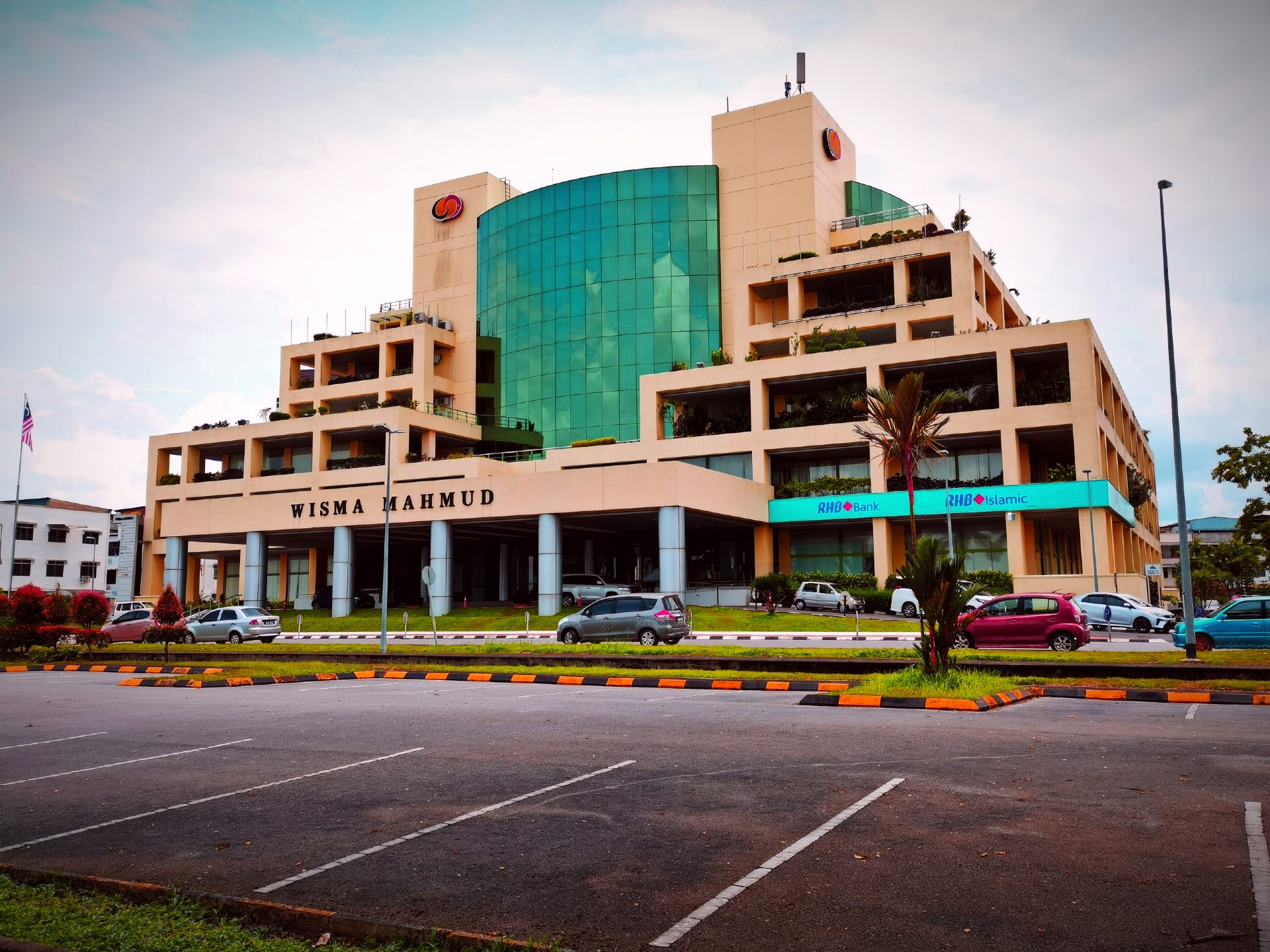
KUALA LUMPUR — Cahya Mata Sarawak (CMS), the flagship conglomerate long associated with the legacy of the late Tun Abdul Taib Mahmud, is heading into a high-stakes annual general meeting (AGM) later today (May 25) under the weight of deteriorating financial performance, intensifying family conflict, and renewed scrutiny from investors.
At the centre of the turbulence is a widening rift between managing director Datuk Seri Sulaiman Abdul Rahman Abdul Taib and his brother, Datuk Seri Mahmud Abu Bekir Taib, a non-independent, non-executive director of the company.
What began as internal disagreement over company finances early last year has now spilled beyond the boardroom and into the courts, amplifying concerns over control, oversight, and the stewardship of one of Sarawak’s most prominent listed groups.
The annual meeting today is largely viewed as a pivotal moment for CMS. Previous news reports noted that four board members are standing for re-election, including Sulaiman, who is the younger son of Taib.
Slipping financial performance
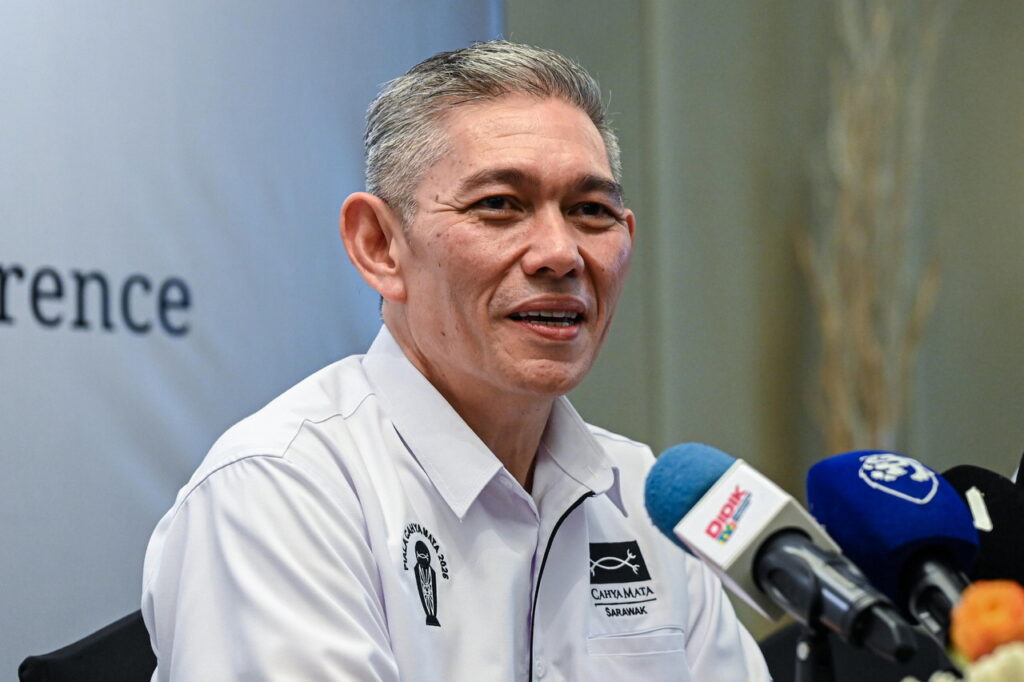
The internal conflict comes as CMS grapples with uneven and weakening financial performance. In April, the group reported a 48.8% drop in profit for the financial year ended December 31, 2025, to RM65.7 million from RM128.2 million a year earlier.
Revenue slipped 7.3% to RM1.11 billion from RM1.20 billion, while basic earnings per share halved to 6.11 sen from 11.93 sen.
Despite the softer results, the board proposed maintaining a dividend of 3.0 sen per share, unchanged from FY2024, signalling confidence in the group’s longer-term outlook. CMS, however, acknowledged that headline numbers were affected by non-cash accounting items that distorted profitability.
A RM36.3 million unrealised foreign exchange loss on intercompany financing — compared with RM8.9 million previously — weighed heavily on reported earnings.
Excluding this, adjusted profit before tax would have been about RM145.1 million, instead of RM108.8 million.
Performance across divisions remained mixed. The property segment was a relative bright spot, with revenue rising 49.8% to RM109.5 million, driven by progress on the Borneo Convention Centre Kuching 2 project, a RM550 million development moving ahead of schedule.
However, profit before tax in the division fell to RM5.9 million from RM21.6 million, mainly due to the absence of a one-off land disposal gain recorded in the prior year.
The cement division continued to anchor the group’s earnings, posting revenue of RM665.1 million and a record pre-tax profit of RM160.6 million, supported by robust infrastructure demand in Sarawak and improved cost efficiency.
The cement division’s RM600 million Mambong Clinker Line 2 expansion, which will more than double clinker capacity when completed in 2027, is expected to reduce import dependence and strengthen margins further, the company noted in April.
Troubled phosphates division, estimated losses, and existential threat
In contrast, the phosphates division remains a significant drag on the group’s performance. The Samalaju plant recorded a pre-tax loss of RM145.9 million in FY2025, with cumulative losses now exceeding RM500 million.
Full commercial production of yellow phosphorus — which would position CMS as Malaysia’s sole producer of the critical industrial input — has been pushed back to the third quarter of 2026. Commissioning only resumed after electricity supply was restored in September 2025, following a prolonged disruption linked to unpaid bills.
That disruption is now linked to a separate and escalating legal risk. The Syarikat SESCO Berhad (SESCO) lawsuit, which involves a claim for RM342 million in unpaid electricity bills, is emerging as a structural and existential threat to CMS due to its scale, relative to the group’s financial buffers.
The claim is substantial when measured against CMS’s net current assets of about RM551 million, meaning an adverse ruling could potentially absorb more than 60% of its liquid resources.
Despite these challenges, CMS maintained that its balance sheet remains solid. It noted in April that cash and bank balances stood at RM750.8 million, exceeding total borrowings of RM310.2 million, leaving the group in a net cash position of RM440.6 million.
Still, the longer-term trajectory underscores the strain on earnings. For example, profit after tax fell from RM290 million in 2022 to just RM40 million in 2025.
An analyst familiar with the matter said investors heading into the AGM should pay close attention not only to CMS’s headline financial position, but also to the underlying risks emerging from the group’s phosphates venture, rising costs, and legal exposure tied to unpaid electricity bills.
Among the issues likely to draw scrutiny, the analyst said, are the RM342 million dispute involving unpaid electricity bills, as well as significant impairments linked to Cahya Mata Phosphates.
“Investors should closely examine the impairments Cahya Mata Phosphates, including refundable advances to contractors, alongside impaired loans to subsidiaries. This may come up to the hundreds of millions,” the analyst said.
The analyst added that shareholders should also assess whether the group’s reported earnings accurately reflect its operational position. Based on the analyst’s estimates, CMS — which has a market capitalisation of just over RM1.2 billion — may have seen comprehensive net income decline sharply from more than RM100 million in FY2024 to below RM5 million in FY2025, despite revenue remaining broadly stable.
The company’s latest audited annual report, the analyst noted, also points to a sharp increase in operating costs, administrative expenses, and holding company expense, as well as other costs.
“This would determine whether the pace of cash outflows is sustainable, and it raises questions about capital discipline and the prioritisation of spending within the group,” the analyst said.
The analyst said investors at the AGM would likely want greater clarity on whether CMS’s relatively strong cash position and balance sheet are sufficient to withstand prolonged losses, mounting liabilities, and continued delays in the phosphates business.
At the same time, CMS remains a major economic pillar in Sarawak. With more than 30 subsidiaries across five divisions, the group provides at least 3,000 direct jobs while supporting a broader ecosystem of contractors, suppliers, logistics providers and small businesses whose livelihoods are linked to its operations.
Against this financial backdrop, governance tensions have added further strain.
Legal disputes and waning investor confidence
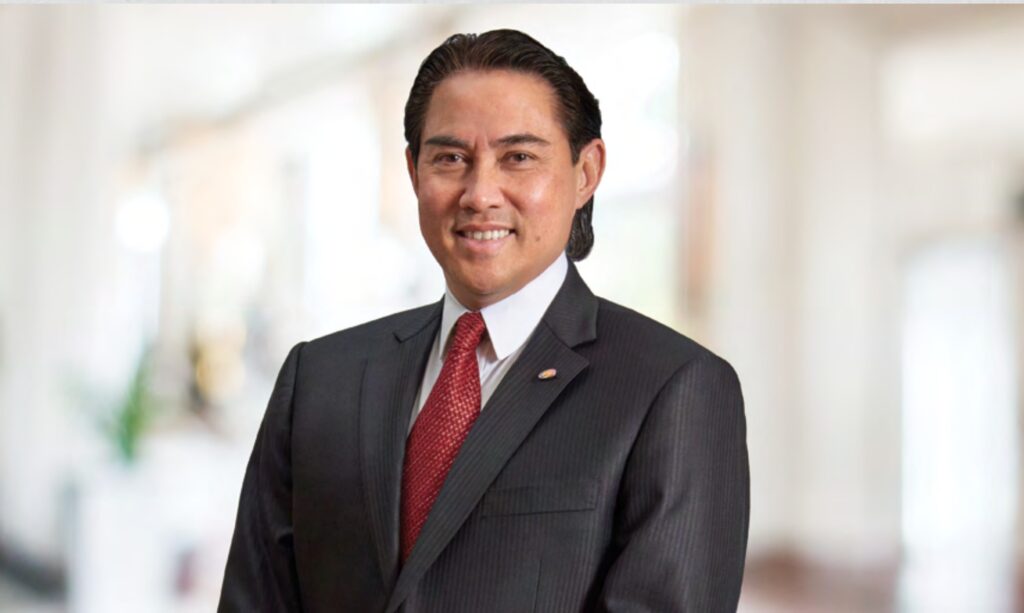
On April 7, 2026, Mahmud was demoted from deputy group chairman to non-executive director. On the same day, he initiated legal action asserting his right to attend board meetings.
Court proceedings have already seen an earlier injunction against him lifted in April 2025, while the Court of Appeal dismissed CMS’s appeal in January 2026. However, tensions have persisted, with board access remaining restricted.
Mahmud has also filed a derivative action alleging breaches of directors’ duties, governance failures, and financial mismanagement involving impairments, funding of loss-making subsidiaries, and approvals of transactions without adequate oversight.
CMS has secured an ex parte injunction restraining him from pursuing the action, with an inter partes hearing set for August 18, 2026.
The dispute has also coincided with shifting shareholder dynamics. Tabung Haji has reportedly reduced its stake significantly, selling nearly 12 million shares since March 2026, while government-linked Urusharta Jamaah Sdn Bhd has emerged as a notable shareholder.
The changes have fuelled questions over institutional confidence in the group’s direction.
A minority shareholder from Sibu voiced frustration over the company’s performance.
“As a shareholder, I’m disappointed with the financial results, especially the dramatic decrease of operational profits over the past three years and very small profit for a billion-ringgit company. Looking at the profit after tax as reported in the audited annual report, there are many questions that need to be answered by those entrusted to manage the company.”
Adding to the scrutiny, CMS recently announced late-stage sports sponsorships involving women’s cycling and men’s football. While positioned as support for sport development, the timing has prompted questions among observers about reputational positioning during a period of financial strain.
Taib Mahmud’s legacy
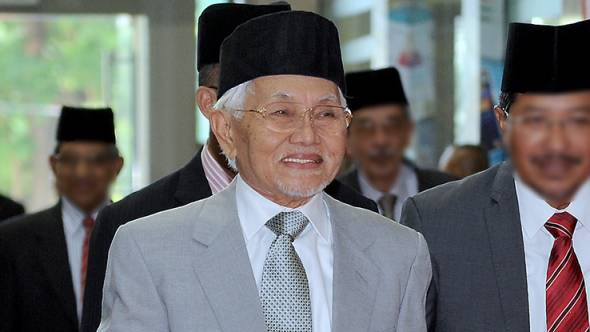
The backdrop to it all remains the legacy of Taib Mahmud, who governed Sarawak as chief minister for more than three decades before serving as governor.
His tenure is credited by supporters with expanding state reserves from a few hundred million ringgit to nearly RM30 billion and reducing poverty significantly.
Yet his legacy remains sharply debated, with critics pointing to long-standing concerns over wealth distribution, cronyism, and governance transparency.
As CMS approaches its AGM, the convergence of weakening earnings, internal family conflict, and sustained governance scrutiny places the group at a pivotal juncture. – May 25, 2026