

KUALA LUMPUR – The government is reviewing its electric vehicle (EV) policies and incentive framework to accelerate the rollout of charging infrastructure nationwide as Malaysia targets 30,000 charging points by 2030.
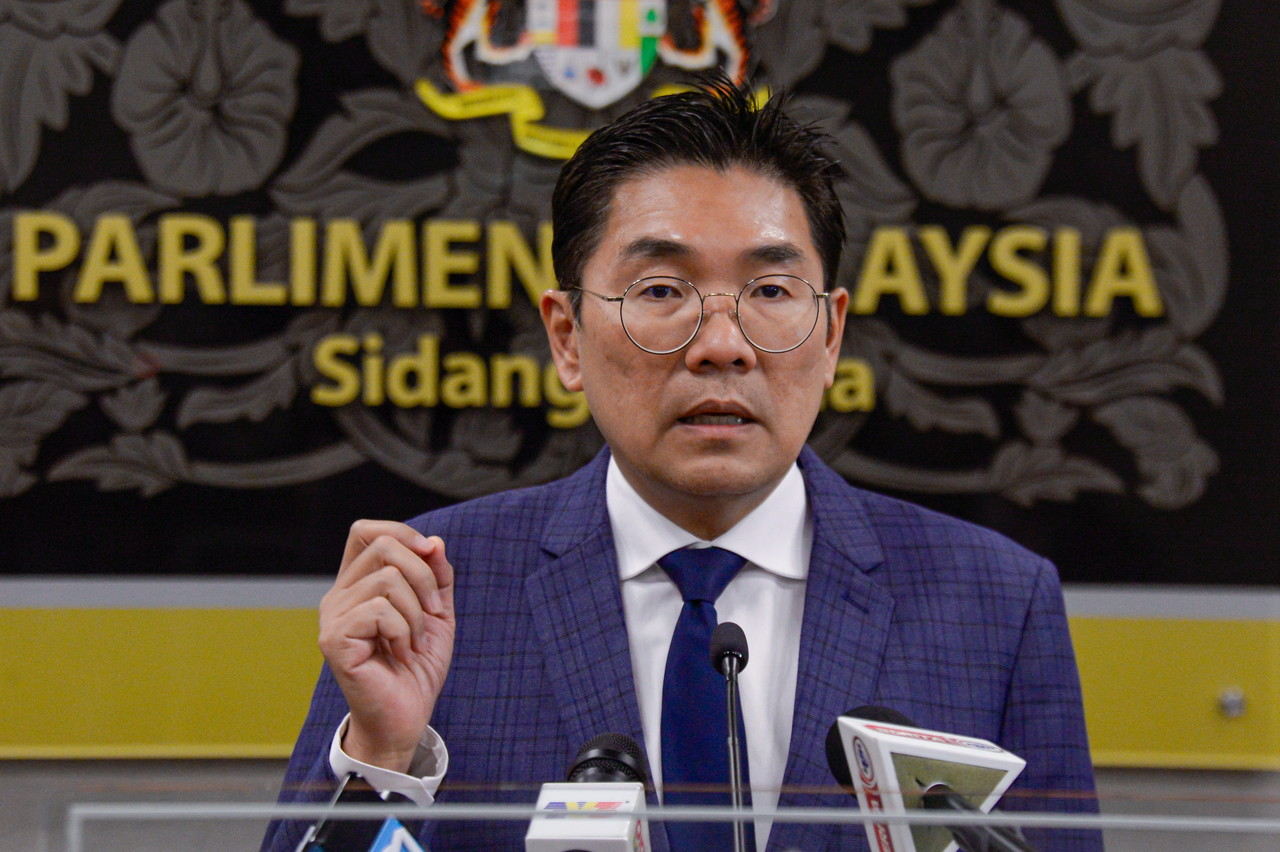
Deputy Investment, Trade and Industry Minister Sim Tze Tzin said Putrajaya is working closely with Tenaga Nasional Bhd (TNB) to strengthen the national electricity grid by building more substations capable of supporting direct current (DC) fast chargers, which are increasingly needed as EV adoption grows.
“Malaysia aims to provide 30,000 charging facilities by 2030. The government recognises that there is currently a shortage of such facilities,” he told the Dewan Rakyat today.
Sim said the government is continuously refining its policies to keep pace with the rapidly evolving EV industry while ensuring the supporting infrastructure expands in tandem.
“What the government is doing now is collaborating with stakeholders, particularly TNB, to build more substations.
“For charging points to function effectively, we need substations that can supply sufficient power. Therefore, we must continue expanding this infrastructure,” he said.
In addition to upgrading the power grid, Sim said the government is formulating targeted incentives for EV charging point operators to encourage greater private sector investment and speed up the nationwide rollout of charging facilities.
He was responding to Datuk Dr Ku Abdul Rahman Ku Ismail (PN-Kubang Pasu), who urged EV manufacturers to play a bigger role in expanding Malaysia’s charging network to improve consumer confidence and encourage wider EV adoption.
Abdul Rahman also called for closer coordination with the Public Works Department and the Housing and Local Government Ministry to ensure charging facilities are incorporated into new housing developments, including apartments and condominiums.
He further urged the government to extend charging infrastructure beyond major cities to towns such as Sungai Petani and Alor Setar, saying a more comprehensive nationwide network is essential to make EV ownership practical for more Malaysians.
Sim said the government had taken note of the proposals and would continue strengthening its implementation strategy.
“While this process will take time, the government has taken note of the suggestions raised by Kubang Pasu and will continue improving our efforts,” he said.
On policy matters, Sim said Malaysia maintains separate regulatory frameworks for electric vehicles and internal combustion engine (ICE) vehicles because the two industries are at different stages of development.
He explained that while imports of completely built-up (CBU) ICE vehicles have long been restricted to models with engine capacities of 1,800cc and above, EV policies are designed to strike a balance between boosting consumer adoption and developing local vehicle assembly, supply chains and the broader EV ecosystem.
Sim added that EVs currently benefit from a preferential excise duty rate of 10%, compared with significantly higher rates imposed on ICE vehicles based on engine capacity and localisation requirements.
To prevent the under-declaration of import values and protect government revenue, he said the government has also introduced a minimum Cost, Insurance and Freight (CIF) value for imported CBU EVs. – July 8, 2026