

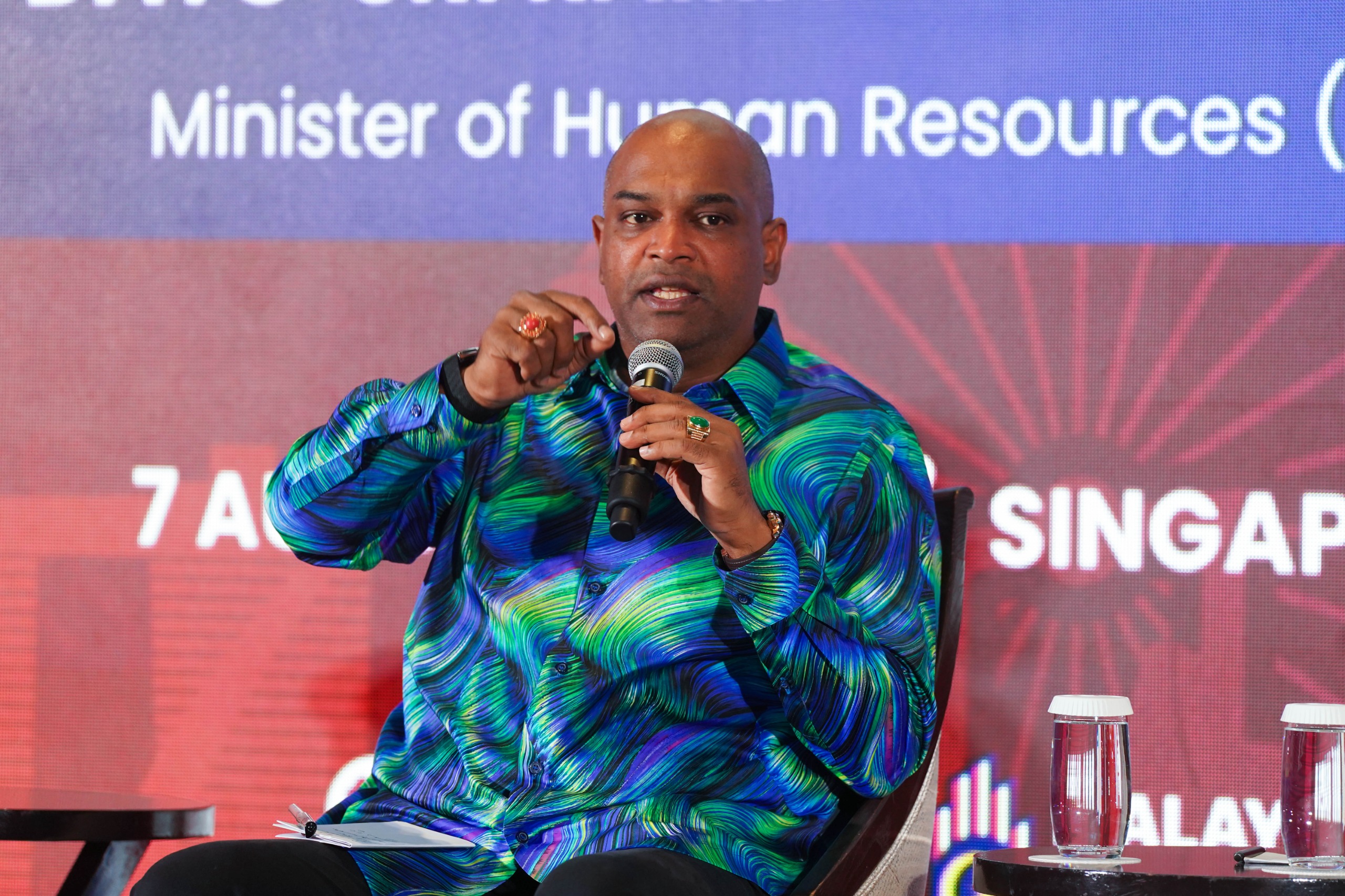
KUALA LUMPUR — Human Resources Minister Datuk Seri R. Ramanan has made listening to the people the foundation of his approach at the ministry, saying policies must be shaped by the realities faced by workers, employers and industries.
In a statement, Ramanan said meaningful change could only happen when government decisions were aligned with challenges on the ground, particularly as Malaysia faces a rapidly evolving employment landscape driven by artificial intelligence (AI), new technologies and changing industry demands.
“My direction is very simple, listen to the people. Our job is to hear them, understand the challenges on the ground and take those views into account when we decide what needs to be done,” he said during the Salam Dari Malaysia @ Singapore engagement with Malaysians in Singapore.
He said engaging directly with workers, employers and industry players was crucial to ensuring policies were not only well-intentioned, but also practical, relevant and capable of addressing real-world needs.
On the growing influence of AI, Ramanan said the key issue was not whether technology would replace jobs, but whether Malaysians were equipped to adapt and remain competitive.
“The real question is not whether AI will replace us. It is whether we are prepared to keep up.
“Technology will continue to evolve. If we equip ourselves with the knowledge, upskill and reskill, there will still be people behind the technology who manage it, guide it and make it work,” he said.
Ramanan said strengthening Malaysia’s skills ecosystem would remain a key priority, with Technical and Vocational Education and Training (TVET) playing an important role in developing industry-ready talent.
He highlighted the 95.5% employment rate among TVET graduates and the 97.2% employer satisfaction rate as indicators of the sector’s ability to produce skilled workers who meet industry expectations.
“The employment rate is impressive, but what is equally important is that employers are satisfied with the talent being produced.
“TVET must not be seen merely as a pathway to getting a job. It is about developing skilled, capable and industry-ready Malaysians who can contribute to the country’s economic growth,” he said.
Ramanan also called on Malaysians working in Singapore to contribute to Malaysia’s talent development by sharing the knowledge, skills and professional experience they have gained overseas.
He said Malaysia and Singapore each have their own strengths, and closer cooperation could help both countries exchange expertise while creating greater opportunities.
“The experience Malaysians gain in Singapore is valuable. Be a mentor, share your professional experience and help someone in your field grow.
“That knowledge can also contribute towards developing our talent and strengthening Malaysia’s workforce,” he said.
Ramanan said Malaysia’s future competitiveness would ultimately depend on ensuring its people are equipped to participate in and benefit from economic and technological progress.
“By listening to the people, equipping Malaysians with the right skills and creating meaningful opportunities, we can build a future-ready workforce where everyone has the chance to contribute, progress and succeed,” he said. – August 13, 2026