

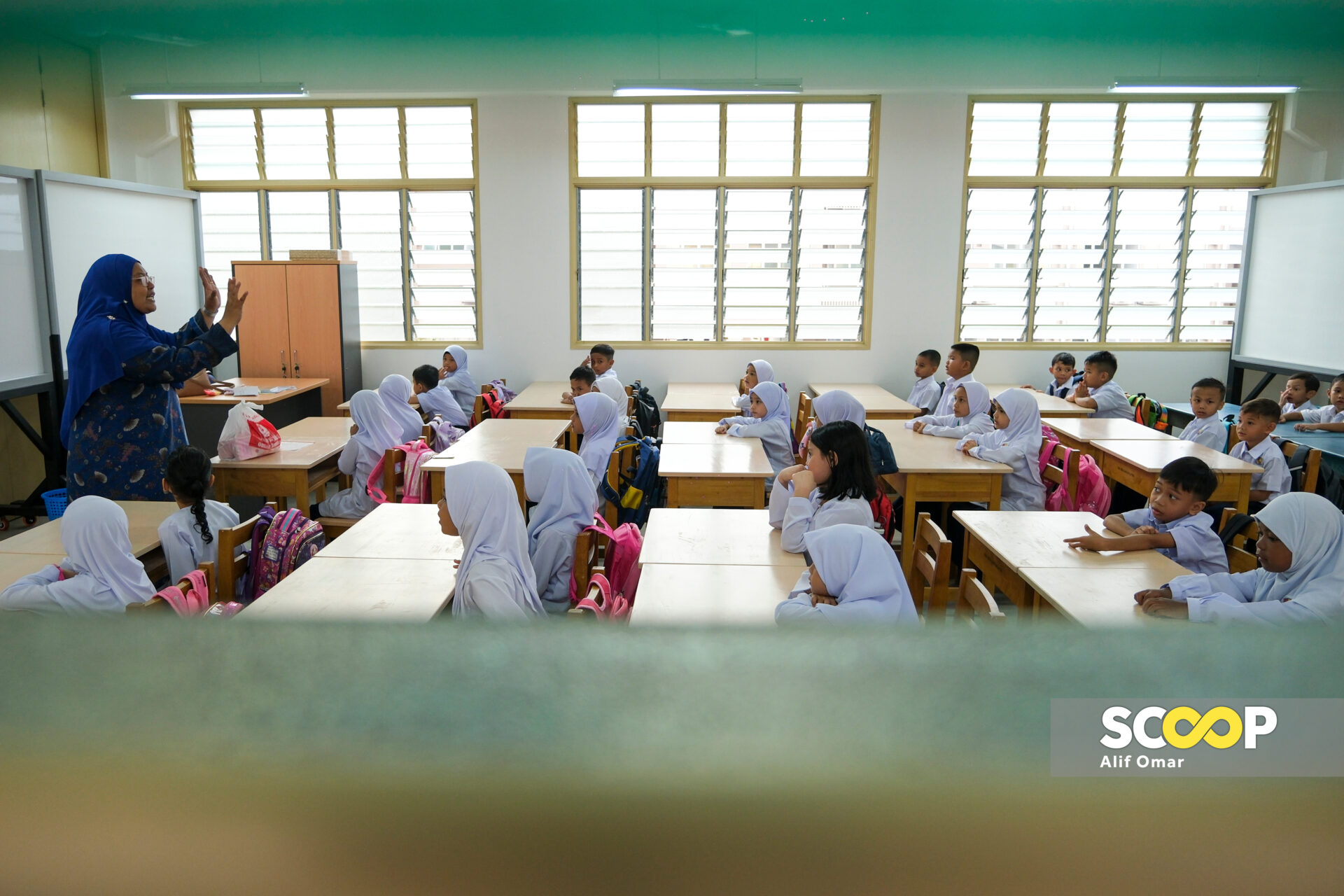
KUALA LUMPUR – Children must be taught how to think alongside artificial intelligence (AI), rather than simply how to operate AI tools, as over-reliance on the technology could weaken their critical thinking and decision-making abilities.
Kamales Lardi, CEO of Lardi & Partner Consulting, said AI education in schools should place greater emphasis on computational thinking and the ability to question AI-generated information, instead of focusing only on technical skills such as coding or using generative AI applications.
“Computational thinking goes into logical problem solving how technology impacts or accelerates that problem solving how you can apply technology in different parts of different areas of business or different areas of life.”
“These are elements of understanding the technology and thinking in a way that allows you to make the best use of the technology,” she told Scoop.
She said this approach was becoming increasingly important as children were being introduced to AI and digital platforms at younger ages, making it unrealistic to completely prevent their exposure to such technologies.
Instead, she said, the priority should be to help children understand when and how AI should be used while preserving their ability to make independent judgements.
“Computational thinking, I would say, is where Malaysia, as a country, should focus its education at the school level, rather than the use of AI.”
“Then, on top of that, we have to consider who should be governing the use of this technology. Should parents stop children from using it? Should the government put in rules? I think there are many pros and cons,” she explained.

The global authority on neuroscience-driven AI and digital transformation also warned that excessive dependence on AI could push users into what she described as “passenger mode”, where they become passive recipients of information rather than active thinkers.
She said her neuroscience-based research, which measured brain activity among employees working with and without AI, showed that the technology was already influencing the way people process information and make decisions.
“We see that AI is impacting how we’re thinking. People are very quickly slipping into this passenger mode. They’re not aware of it themselves, but they are going into a sort of passive thinking, not proactively thinking and allowing AI to guide their thinking,” she said.
Kamales said AI governance should therefore extend beyond issues such as technology, data protection and cybersecurity to include what she called cognitive governance.
She said organisations, schools and communities needed to encourage people to preserve their own reasoning abilities while using AI as a tool to enhance productivity.
“So, let’s say you’re doing a creative piece of work or a strategic piece of work, or whatever it may be. You start off by using your own brain, setting the boundaries of what you want to do and setting the scope of the task. Then, you can use AI to accelerate how quickly you can do the task,” she explained.
Kamales said parents, educators, governments, technology companies and users all shared responsibility in ensuring AI was adopted responsibly.
However, she stressed that teenagers should not simply face blanket restrictions on AI use, but should instead be included in conversations about developing appropriate rules and practices.
She said young people needed to develop self-governance through a combination of education, digital skills and an understanding of the benefits of responsible technology use.
“The self-regulating has to come with a set of approaches that explain how you govern yourself, why you should do it and the benefits you get from it,” she added.
Kamales also highlighted the need to reinforce fundamental social and family values in an increasingly digital environment, including establishing healthy boundaries around device use and maintaining face-to-face interactions.
She said Malaysia’s strong culture of family and community engagement could provide an advantage in addressing the social and cognitive challenges linked to excessive technology use.
“I think there is a element of human values that needs to be re-established again. Malaysia does this really well,” she stressed.
While acknowledging AI’s benefits, including expanding young people’s access to knowledge and increasing awareness of global issues, Kamales said society must also consider what could be lost when technology replaces traditional learning processes.
“Young people are becoming more sophisticated and intelligent” through greater access to information, she said, but warned that bypassing human interaction and learning experiences could create new challenges.
The issue, she said, was not about preventing children from using AI, but ensuring they remained in control of how the technology shaped their lives.
“It’s not just the harm of what people can see on these platforms but it also introduced the harm of the interaction with the systems especially when you think about like generative AI and recommendation algorithms, they influence our attention, our emotional state, our beliefs, the decisions we make, our behaviours.”
For Malaysia, Kamales said the future of AI education should be built around human judgement, critical thinking and values, rather than simply teaching children how to use the latest digital tools. – August 24, 2026