

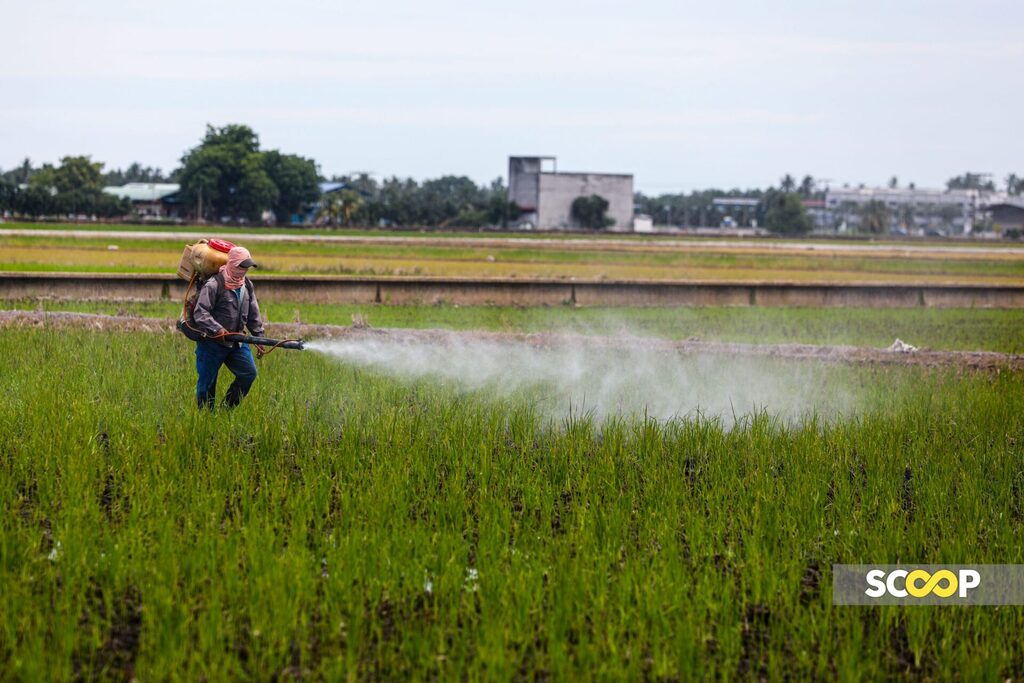
KUALA LUMPUR – The Malaysian Anti-Corruption Commission (MACC) has launched a full-scale criminal investigation into critical supply chain delays of supplementary compound fertiliser affecting tens of thousands of paddy farmers across Kedah.
The probe by MACC’s Kedah branch follows a formal complaint lodged on Aug 26 by the Pertubuhan Persaudaraan Pesawah Malaysia (PESAWAH) organisation.
At the center of the investigation is an appointed supplier under the Agriculture and Food Security Ministry (KPKM), whose delivery failures have stalled essential farming operations across a massive 100,000-hectare zone under the Muda Agricultural Development Authority (MADA).
“Kedah MACC is conducting the investigation to look into not only the criminal aspect, but also any governance weaknesses that may have contributed to the delay,” the commission stated today.
Investigators have already secured initial witness statements from PESAWAH and seized key documentary evidence.
The graft watchdog confirmed that its swift intervention aligns directly with top-level government concern surrounding national food security and farmers’ welfare.
“MACC welcomes the call and concern expressed by Prime Minister Datuk Seri Anwar Ibrahim over the issue and has engaged with KPKM and MADA for further investigation,” the statement read.
Confirming the development, MACC Chief Commissioner Datuk Seri Abd Halim Aman revealed that the case is officially being pursued under Section 18 of the MACC Act 2009, which covers false claims and deceptive documentation.
The probe unfolds against a backdrop of mounting political and economic pressure in Kedah, where supply failures have directly crippled approximately 38,000 farmers and left 78,117 hectares of paddy crops vulnerable.
The severity of the crisis prompted Pengkalan Kundor assemblyman Mardhiyyah Johari to urge federal authorities to compensate impacted farmers suffering direct financial losses from the delayed ‘Baja Padi 3’ allocation.
Official figures expose a glaring supply deficit: as of Aug 18, MADA confirmed that only 22 per cent—or 137,560 bags—of the required 616,015 bags of Baja Padi 3 had actually reached the ground, leaving vast swathes of Kedah’s agricultural heartland without crucial nutrients. – September 7, 2026