

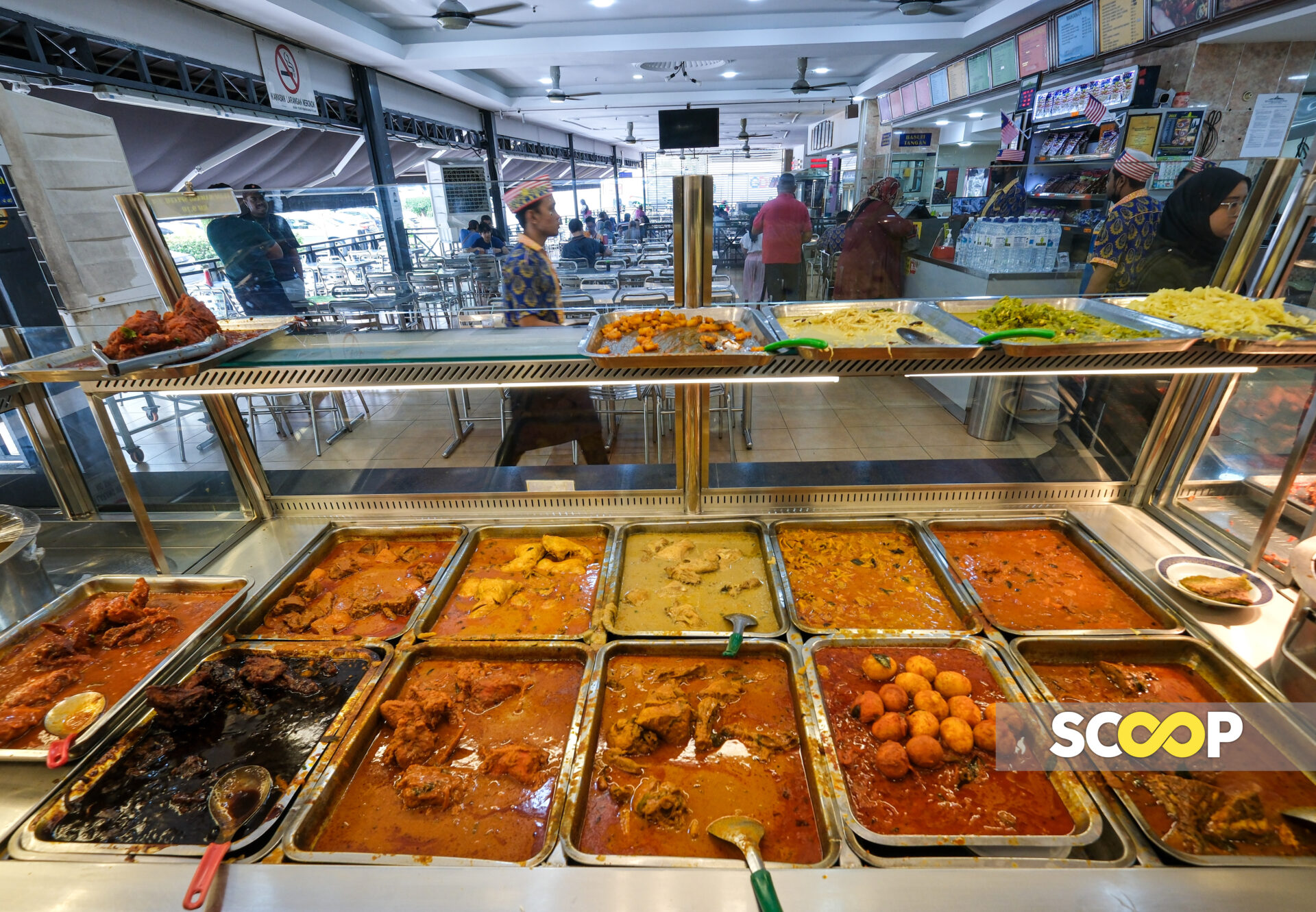
KUALA LUMPUR – Up to 30% of small restaurants, particularly family-run businesses, could close within the next 12 to 24 months if Budget 2027 fails to address escalating operating costs and the sector’s chronic shortage of foreign workers.
The Malaysian Indian Restaurant Owners Association (Primas) president Datuk J. Govindasamy @ Suresh said operators were increasingly unable to absorb higher costs for raw materials, labour, rent and electricity.
“No, we cannot absorb anymore,” he told Scoop.
Suresh said operating costs had risen by 35% to 45% since 2021, while profit margins had dropped from 15% to 20% previously to between 5% and 8%.
The cost of imported dhal, spices and onions has risen by about 40%, while cooking oil has become 35% more expensive, he said.
Labour costs have also increased by 25% following the RM1,700 minimum wage and higher overtime expenses, while rents have climbed by between 20% and 30%.
Electricity costs have risen by about 25% following tariff increases, adding further pressure on businesses already operating on thin margins.
Suresh said small, family-run restaurants were particularly vulnerable, with some already operating at a loss.
“If Government pushes more cost without support, we have only two options — increase price or reduce staff / shorten hours. Both will hurt the rakyat (people),” he said.
He warned that consumers could eventually face another 15% to 20% increase in food prices if restaurants were forced to pass on higher operating costs.
The worker shortage is also forcing some restaurants to cut their operating hours, with some now closing at midnight instead of operating around the clock.
Suresh described the shortage of foreign workers as the “number one killer” for the restaurant sector, saying the industry had lost about 70% of its workforce during the Covid-19 pandemic and had since recovered only 50% to 60% of those workers.
As a result, many restaurants are still operating with only half their required workforce.
For Budget 2027, Primas is seeking a longer-term workforce policy, including a fast-track mechanism to approve foreign worker quotas within 14 days instead of the current three to four months.
The association also wants permission to recruit workers from a wider pool of source countries, including Bangladesh, India and Nepal, alongside greater flexibility in the worker-to-local ratio.
Suresh said the foreign worker levy for restaurants should be reduced from RM1,850 to RM1,000, or operators should at least be allowed to pay it in instalments.
“We don’t want temporary amnesty. We want long-term five-year workforce policy for F&B, so operators can plan,” he said.
Primas is also seeking targeted measures to lower business costs, including subsidies for imported spices and onions, commercial cooking oil and electricity tariffs for F&B operators.
Suresh said the Government should consider a special F&B utility rate, arguing that restaurants have a different cost structure from other small and medium enterprises.
He also called for F&B businesses to be recognised as a separate essential service industry rather than being grouped under the wider SME sector.
Other proposals include tax deductions for manpower, raw materials and rental expenses, as well as a RM300 monthly wage subsidy per local worker for 12 months for restaurants that increase wages above the minimum requirement.
Primas is also seeking double tax deductions for EPF and SOCSO contributions, financial assistance for restaurants to meet worker accommodation requirements, and tax relief on licensing and compliance costs.
Suresh said the Government should also introduce a one-stop system for restaurant licensing and renewals, reducing the need for operators to deal with multiple agencies.
He warned that without such measures, smaller restaurants would continue to struggle to remain viable.
“Don’t treat restaurants as a luxury business. We feed the nation, 24 hours, 7 days. Help us survive, we will help rakyat with affordable food,” he said. – October 8, 2026