

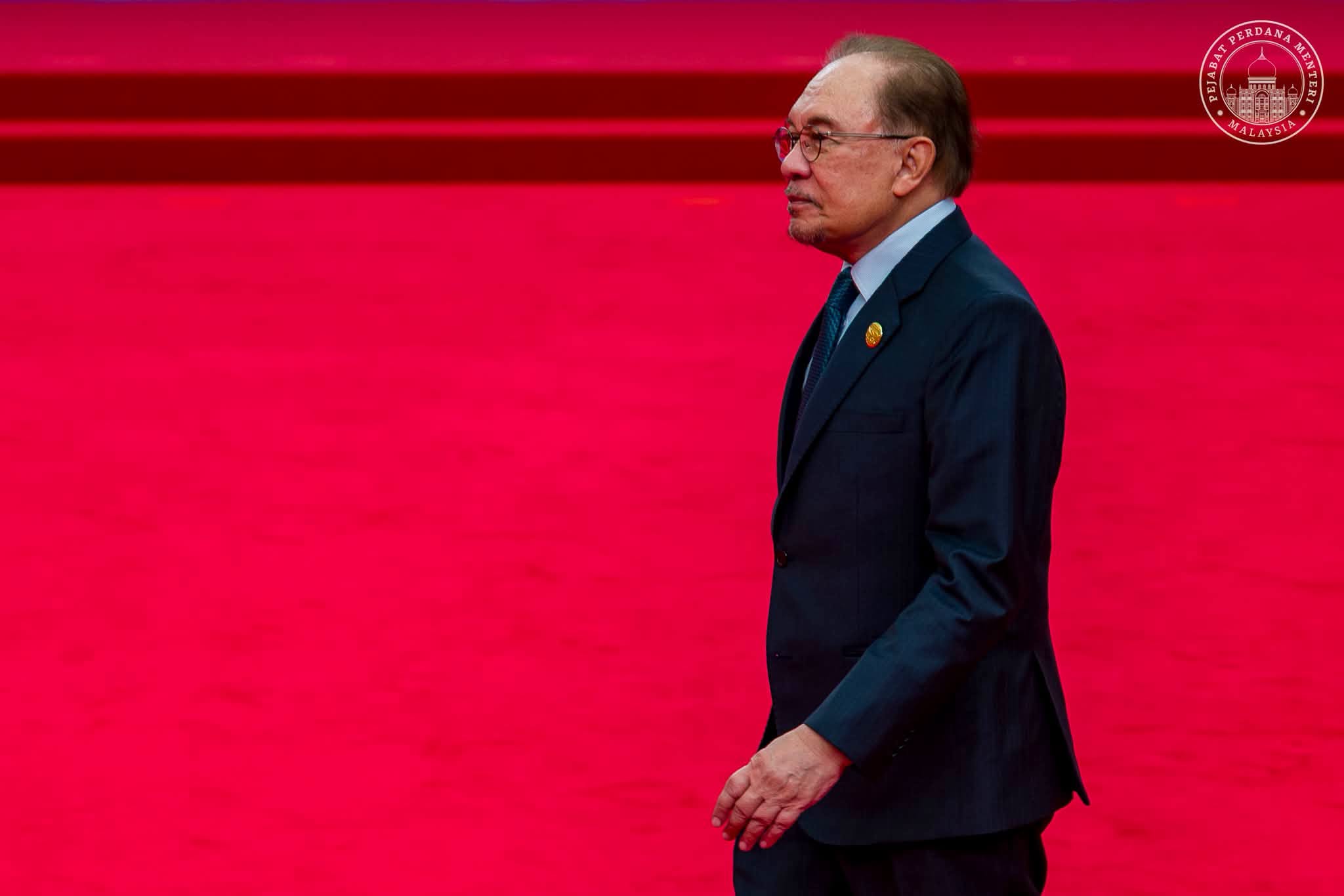
KUALA LUMPUR – The declassification of confidential Pardons Board documents following legal challenges is not unusual, says Prime Minister Datuk Seri Anwar Ibrahim.
He said documents originally classified as confidential could be declassified when subjected to court proceedings, although the timing of their release would depend on the circumstances, Bernama reported.
“The original documents are indeed confidential, but usually, if they are brought to court, they are declassified. That was also the case in my previous case.
“They were initially classified, but once there was a court challenge. In my case, I did not challenge the Board’s decision; I challenged the process,” he told a press conference after attending the 2026 APEC Economic Leaders’ Meeting in Shenzen, China today.
Anwar added that further questions or issues concerning the matter could be referred to the Cabinet.
He was responding to reports on the declassification of minutes from a Federal Territories Pardons Board meeting that discussed the possibility of placing former prime minister Datuk Seri Najib Razak under house arrest.
The disclosure has drawn criticism from Umno, which accused former DAP MP Tony Pua of undermining the royal prerogative of pardon by publishing the purportedly declassified minutes on his social media accounts on Wednesday.
Umno secretary-general Datuk Dr Asyraf Wajdi Dusuki said the party viewed the disclosure seriously, describing it as an attempt to provoke controversy and undermine the authority of the Yang di-Pertuan Agong.
“Umno views the circulation of the Pardons Board meeting minutes by Tony Pua as a deliberate attempt to incite debate and raise controversial questions, as well as insult and undermine the prerogative of His Majesty Sultan Ibrahim, King of Malaysia.
“It appears that Pua continues to exploit royal pardon proceedings as a subject of political contention, showing complete disregard for the dignity of the constitutional monarchy,” Asyraf said in a statement.
He stressed that Article 42(1) of the Federal Constitution vested the Yang di-Pertuan Agong with the authority to grant pardons, reprieves and respites in the Federal Territories.
Asyraf also questioned whether the King had consented to the declassification and subsequent disclosure of the minutes, noting that the Agong chairs the Federal Territories Pardons Board.
He maintained that documents and proceedings relating to the board must be treated with strict confidentiality and handled with due respect for the monarchy.
“Although there is a process for declassifying documents, Umno believes that matters directly concerning the proceedings of the Pardons Board must first be referred to His Majesty for consent,” he said.
According to Pua, the minutes indicated that Attorney-General Tan Sri Mohd Dusuki Mokhtar and Minister in the Prime Minister’s Department (Federal Territories) Hannah Yeoh had objected to the proposed arrangement concerning Najib’s application for a royal pardon.
Asyraf called on the government to explain the legal basis and procedures behind the declassification, including identifying those responsible for authorising the release.
He also sought confirmation on whether the King’s consent had been obtained before the documents were made public.
He warned that if any laws or established procedures had been breached, decisive action should be taken to safeguard the institution of the Malay Rulers, the Federal Constitution and the Agong’s constitutional powers.
Separately, Perak Umno chairman Datuk Seri Saarani Mohamad said the disclosure should not be taken lightly, insisting that the constitutional position of the royal prerogative must be upheld.
“Perak Umno maintains that royal pardon proceedings should not be exploited for political gain, especially in a manner that invites debate capable of tarnishing the dignity of the institution of the Yang di-Pertuan Agong,” he said.
Saarani also called on the government to verify the authenticity of the document, clarify how it was declassified and establish whether the relevant legal provisions and procedures had been followed.
“Should there be any breach of the law, abuse of power or failure to comply with prescribed procedures, firm action must be taken against those responsible without compromise,” he added. – November 19, 2026