

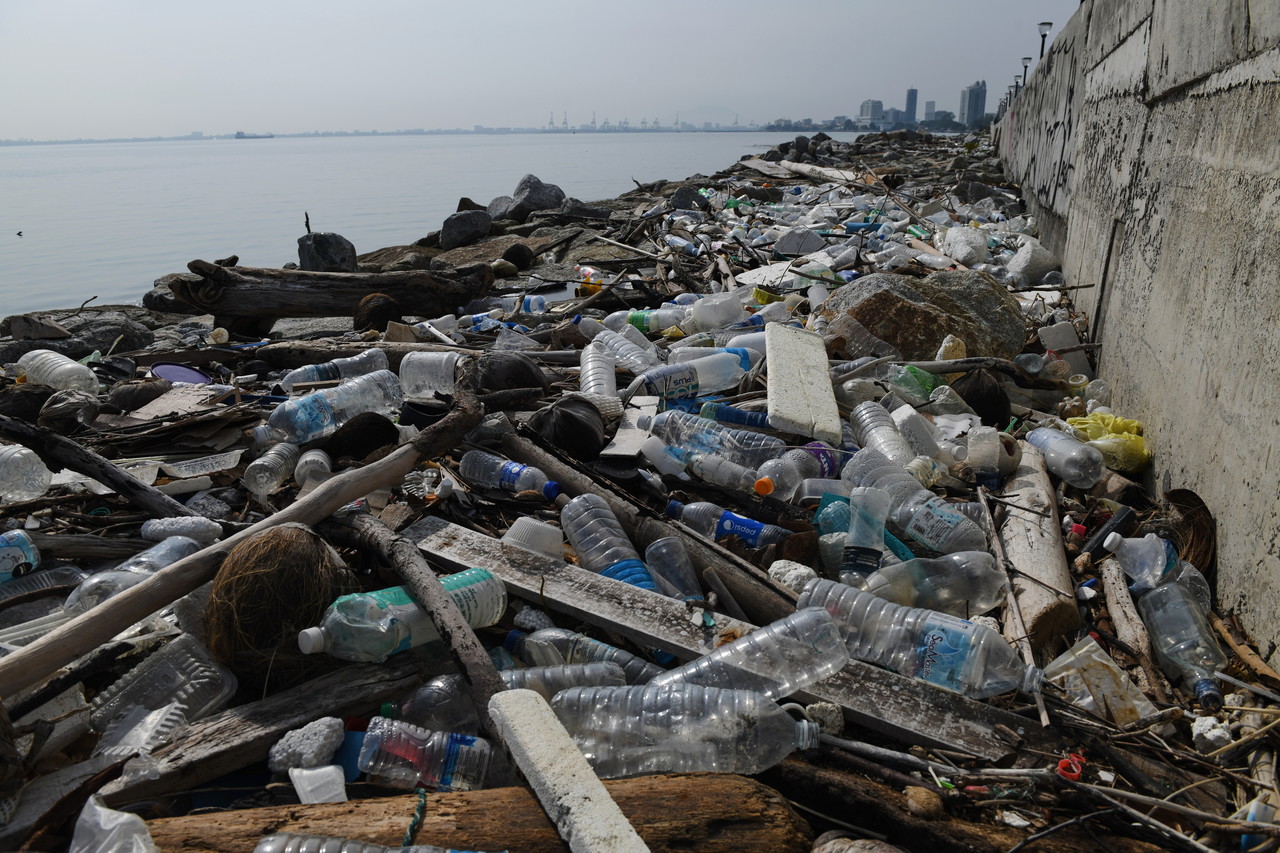
IN a region as diverse and rapidly urbanizing as Asean, waste is more than just a logistical challenge. It’s a climate issue. As cities expand, food systems industrialise, and consumption patterns shift, the way we manage waste will directly shape our ability to adapt to and mitigate the effects of climate change.
Waste mismanagement contributes significantly to greenhouse gas emissions, particularly through methane released from landfills and untreated organic waste. In Southeast Asia, where open dumping and limited recycling remain common, these emissions continue to rise, intensifying climate vulnerabilities across the region.
At the Borneo EcoScience Institute (IEB), based at Universiti Putra Malaysia Bintulu Sarawak Campus (UPMKB), our research focuses on climate change adaptation and mitigation. Naturally, sustainable waste management has become one of our institute’s core priorities, and it should also be a cornerstone of Asean’s broader climate strategies. While decarbonisation and nature-based solutions often dominate policy conversations, waste innovation remains an underleveraged yet essential pathway.
Through IEB’s initiatives, we have witnessed how local solutions can generate region-wide impact. One such initiative, a project funded by the Government of Japan under the Asia- Pacific Telecommunity (APT), explores how digital tools can support a circular economy by tracking recyclable materials and connecting communities with waste-to-value opportunities.
Though piloted in Bintulu, Malaysia, the model is designed with scalability across Asean in mind.
We also work closely with Japanese partners such as Tokyo University of Agriculture and Seven & i Holdings Co., Ltd., the parent company of 7-Eleven, to co-develop strategies that align waste innovation with climate and community needs across Asean contexts.
Our collaboration with local municipal governments, such as the Bintulu Development Authority, focuses on reducing edible food waste through behaviour change, while simultaneously valorising inedible waste through composting and biogas. In partnership with industry, we are also exploring how offshore food waste can be safely composted to enhance tree growth and soil health. These efforts, which contribute to land restoration and carbon sequestration, are only possible when research is translated into meaningful on-the-ground action through strong government and private sector partnerships.
IEB is also developing innovative tools such as compact composting boxes and digital platforms to simplify and scale sustainable waste practices in both urban and rural settings. These small but impactful interventions show how community-driven innovation can complement national and regional frameworks.
But no single country can tackle this alone. Waste flows, food systems, and climate vulnerabilities transcend borders. Asean’s strength lies in its ability to foster cross-border cooperation; In policy, research, and practice. We need stronger regional alignment on data sharing, policy harmonisation, and context-sensitive technologies that address local realities without reinventing the wheel.
As the climate clock ticks, waste should no longer be seen as an afterthought. It is a resource, a responsibility, and with the right cooperation, a roadmap to a more resilient Asean. – June 14, 2025
Dr. Keeren Sundara Rajoo is the Head of the Borneo Biodiversity Laboratory, Institute of EcoScience Borneo, UPM