

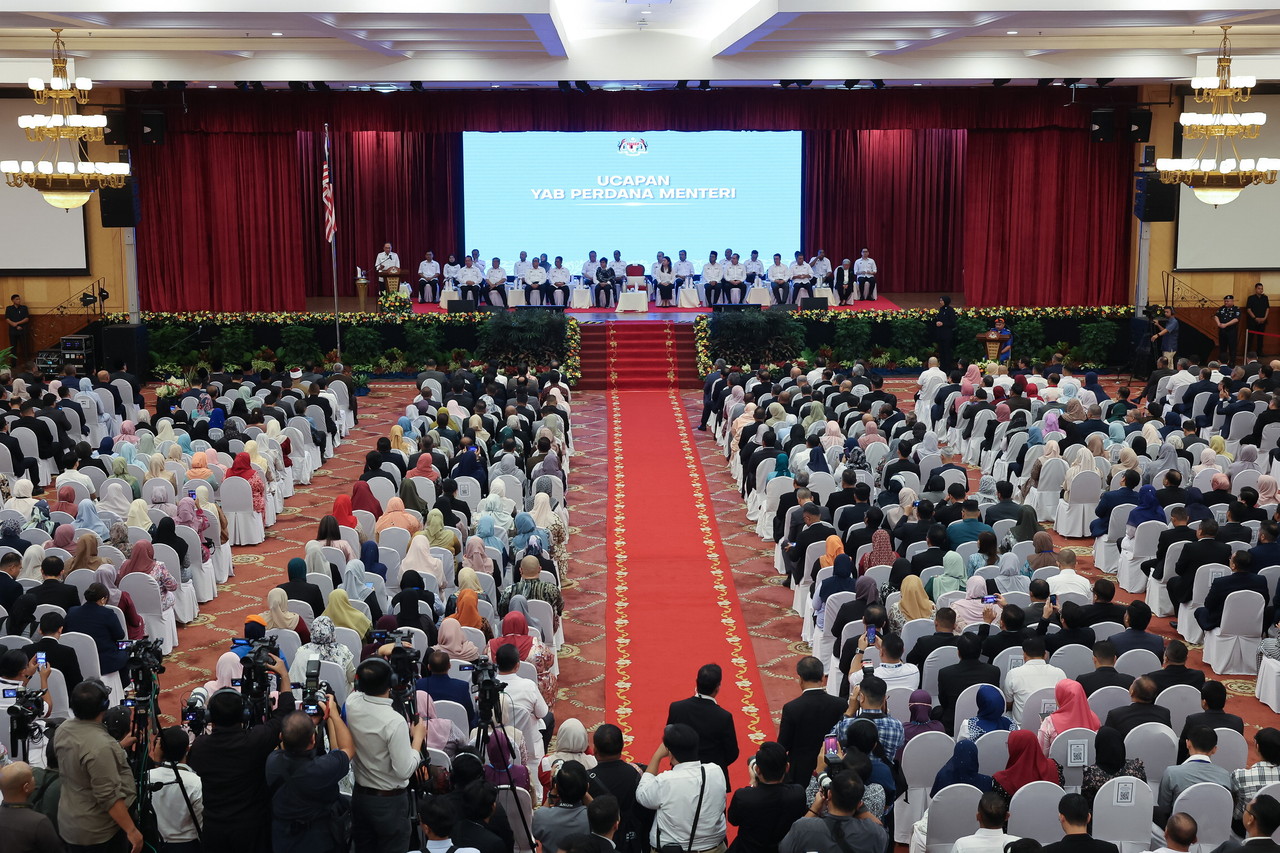
In his New Year address on 5 January 2026, Prime Minister Datuk Seri Anwar Ibrahim delivered far more than a routine policy outline.
He issued a clear and forceful statement of intent, reaffirming that the Reformasi agenda he has championed for decades is not only alive, but entering a phase of accelerated implementation under his leadership.
For years, critics from the opposition and even within reformist circles have accused Anwar of abandoning Pakatan Harapan’s core promises. They alleged that he had changed, traded Reformasi ideals for coalition pragmatism, sidelined the 2018 and 2022 manifesto commitments, and prioritised political survival over institutional transformation.
The cautious pace of reform in the early years of his administration, compounded by the realities of holding together a diverse unity government, fed this narrative. Some went so far as to declare the death of Reformasi itself, arguing that compromises with former adversaries had diluted, if not erased, the very movement Anwar once led.
The Prime Minister’s address has now decisively rebutted those claims
At the centre of his announcement is a series of landmark institutional reforms that directly fulfil long-standing Pakatan Harapan pledges. Most notably, Anwar confirmed that a bill to limit the prime minister’s tenure to a maximum of 10 years or two full terms will be tabled in Parliament this year.
This reform is intended to prevent the excessive concentration of power that characterised past administrations and reflects commitments made as early as the 2022 general election.
By extending the same principle to other key positions, including the Chief Secretary to the Government, Anwar sent a clear message that leadership must be renewed and no office should be entrenched indefinitely.
Equally significant is the decision to prioritise the separation of the roles of the Attorney-General and the Public Prosecutor, the first bill to be tabled in the upcoming parliamentary session.
This long-awaited reform addresses decades of concern over conflicts of interest and political influence in prosecutorial decisions and represents a critical step toward genuine institutional independence.
The planned tabling of the Freedom of Information Bill, the Ombudsman Bill, alongside improvements to judicial remuneration and digital public services, further underscores the government’s commitment to strengthening governance and accountability.
These are not symbolic gestures or vague promises. They strike at the very foundations of Malaysia’s governance architecture and are precisely the reforms critics claimed had been abandoned.
By announcing them at the start of the new year, Anwar has made clear that Reformasi was never forsaken, only pursued carefully within the complex realities of coalition governance.
Importantly, the Prime Minister’s address also balanced long-term structural reform with immediate support for the rakyat. Measures such as Sumbangan Tunai Rahmah (STR), Sumbangan Asas Rahmah (SARA), continued allocations for vernacular education, and faster tax refunds for SMEs demonstrate an understanding that institutional reform must go hand in hand with tangible economic relief.
This dual approach reflects a mature and responsible model of leadership, one that recognises public trust is built through both systemic change and real-world impact.
Its an insult to Malaysians when certain opposition figures like Datuk Seri Shahidan Kassim to dismiss these reforms by claiming that Malaysians are more interested in political alignments such as Muafakat Nasional than in institutional change. This is not political analysis. It is political escapism.
The truth is simple. When politicians have nothing to offer in terms of reform, policy, or solutions, they resort to racial consolidation, old alliances, and recycled slogans. When they cannot defend corruption, abuse of power, or institutional decay, they distract.
Muafakat Nasional is not a solution to the cost of living. It does not strengthen the judiciary. It does not protect public funds. It does not give justice to ordinary Malaysians. It merely protects political elites who fear accountability.
To those who doubted Anwar Ibrahim’s commitment, who suggested that Reformasi idealism had been replaced by expediency, the message is unambiguous.
The struggle continues, and it is being led with renewed clarity and purpose. The Pakatan Harapan manifesto is not a historical document. It is being translated into law, step by step.
Malaysia now stands at a pivotal moment. If these reforms are successfully legislated and implemented, Anwar Ibrahim will not only silence his detractors but secure his legacy as the leader who finally delivered a more accountable, transparent, and equitable Malaysia.
The direction is clear. The momentum has returned. The true test lies in delivery, but Reformasi is back at the centre of national governance. – January 5, 2026
S. Sivamalar Genapathy is the PKR Deputy Secretary-General and a member of the Central Leadership Council (MPP).