

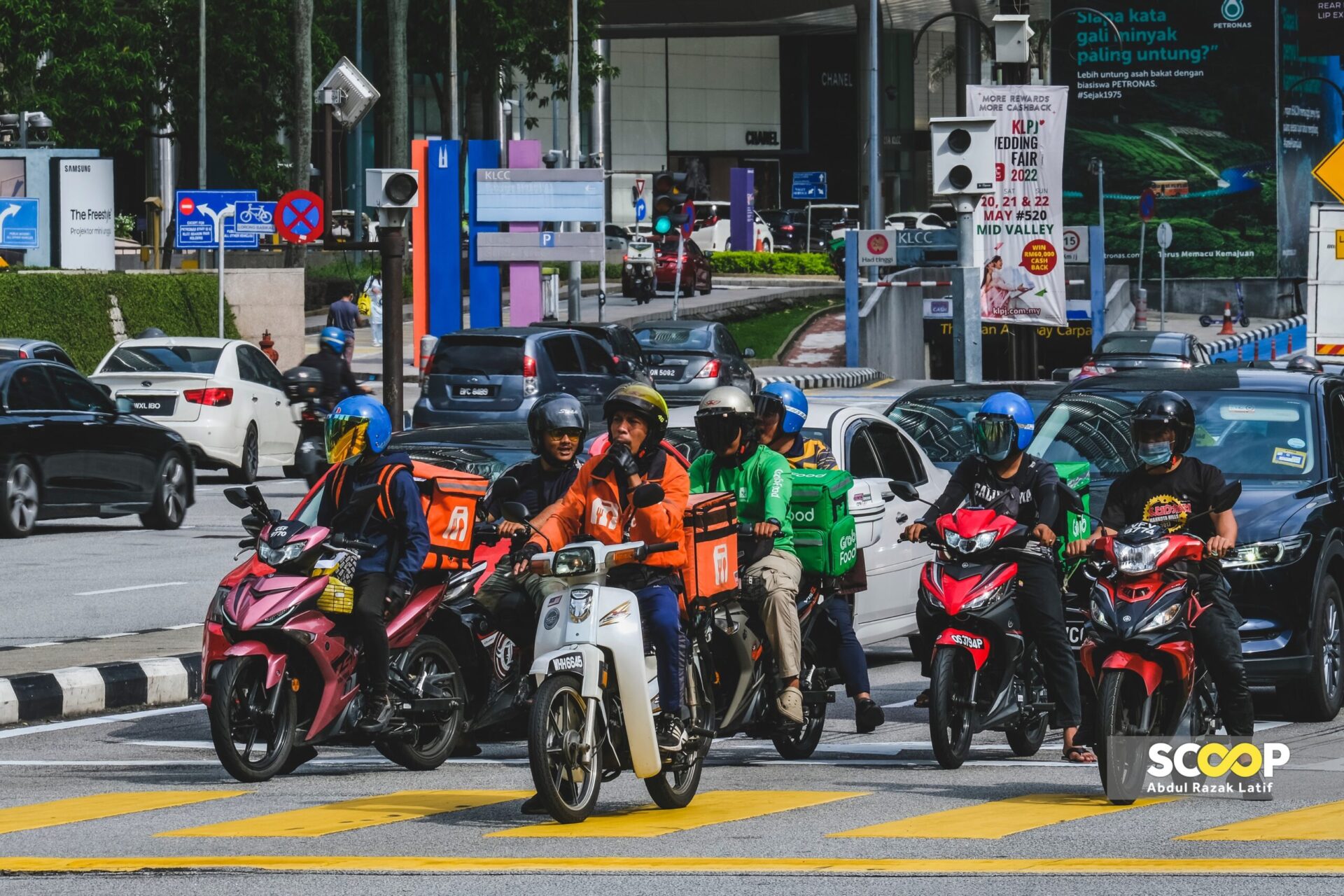
A young father on the tarmac. One lunch hour in Damansara, the glossy myth of the gig economy was shattered right in front of my car.
A food delivery rider clipped my vehicle and was flung onto the road, lying flat and motionless, with a line of cars bearing down behind.
I stopped, got out, and, with several good Samaritans, shielded him from traffic and pulled him to safety.
Later, I learned the story: he had arrived from Kelantan barely a week earlier, was riding a borrowed bike, and was answering an irate customer’s call while racing to deliver lunch to Damansara.
Three small children at home. A wife with no income. A desperate father gambling his life against an app timer and a customer’s temper, on a road he barely knew.
The accident was not my fault; he hit my car while distracted and rushing. Yet, I did what the system refuses to do: I took him to Sungai Buloh Hospital, stayed with him for hours, and gave him money to survive the week. He lived. Hundreds of others have not.
This is not “isolated” – it’s a pattern. Between 2018 and May 2022, 1,242 accidents involving food delivery riders occurred, 112 riders died, about 22 deaths in one year, 82 suffered serious injuries, and 1,048 sustained minor injuries, almost one courier death every week, and it was higher during the MCO.
Road safety researchers and the Transport Ministry have confirmed what Malaysians see daily at junctions: motorcycle delivery riders are now a major slice of urban crashes.
When you zoom out further, motorcyclists in general account for about two-thirds of all road deaths in Malaysia – 3,118 out of 4,653 fatalities in 2020 alone.
This is not “a few reckless riders”. This is a national public health crisis running on two wheels and branded with app logos.
Lawbreaking in plain sight – and yet tolerated
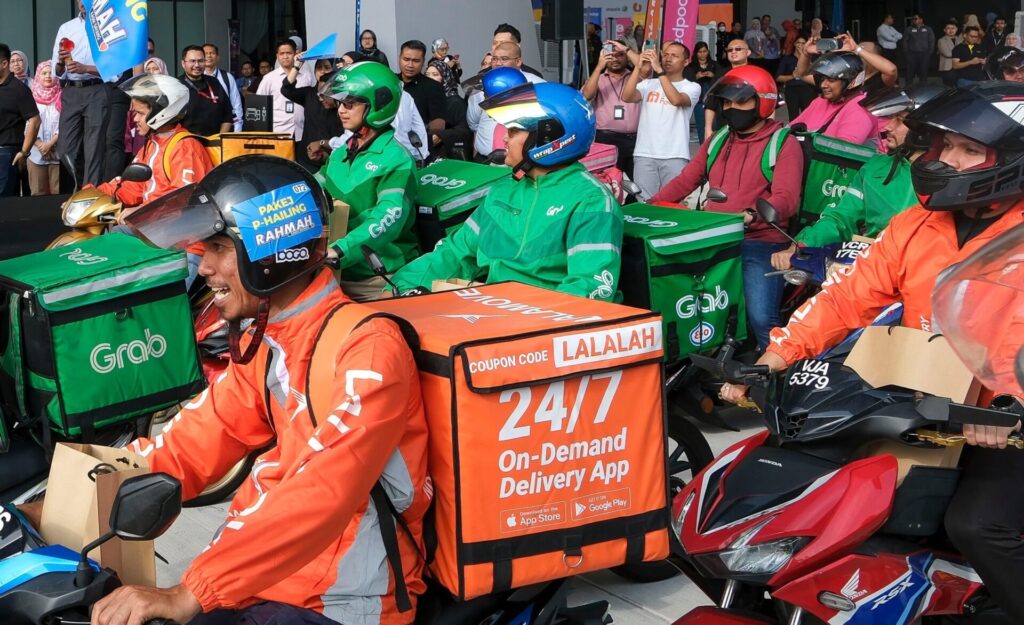
A Malaysian Institute of Road Safety Research (MIROS) study found that around 70% of p-hailing riders disobey traffic rules while on delivery runs. The breakdown is damning:
-57% stop in yellow boxes improperly.
-16% beat red lights.
-15% use the phone while riding.
-7% ride against traffic.
-5% make illegal U-turns.
This is the daily scenario: Riders launching before the light turns green, shooting across when “no car is coming”, riding on the far-right lane inches from lorries, cutting illegal U-turns, answering calls while threading between vehicles.
This behaviour isn’t a bug in the system; it’s the logical outcome of how the system is designed. Per-delivery pay, tight deadlines and harsh rating systems reward speed over safety, and punish riders who slow down to obey the law.
A business model built on risk
Since Covid-19, the number of food and parcel riders has surged, turning p-hailing into a lifeline for both households and restaurants.
But for many riders, it’s less a “flexible opportunity” and more a high-speed poverty trap.
Studies show riders often work long hours, juggle peak periods, and accept risky routes to meet time targets and earn enough per day.
One research review described Malaysia’s gig riders as navigating “risky roads” not only physically but also financially, with unstable income and limited safety nets.
We praise them as “heroes” during lockdown, then treat them as disposable once traffic resumes.
Platforms call them “independent partners” to avoid obligations, while every late order, bad rating and algorithmic penalty shoves them closer to the edge.
Platforms and policymakers: stop hiding
Transport Minister Anthony Loke himself has tabled laws to regulate p-hailing and highlighted the 1,242 accidents and 112 deaths in Parliament.
MIROS has raised red flags, and government campaigns on rider safety have been launched.
Yet nothing stops a man from stepping off a bus from Kelantan on Monday, borrowing a bike on Tuesday, registering on an app on Wednesday, and dashing through KL traffic by Thursday with barely any formal training and thin protection if something goes wrong. We have enough data. What we lack is political courage and corporate accountability.
What must change: protection, training, discipline
If we want fewer riders to die, we must stop pretending this is about “individual attitude” alone. We need structural change that bites – on riders, on companies and on regulators.
Protection: rights, not charity
Mandatory insurance and SOCSO: From 2018 to mid-2022, at least 1,242 accidents involving delivery riders were recorded – a level of risk that makes voluntary coverage a joke.
Every active rider account must be linked to verified comprehensive insurance and SOCSO protection for on-the-job accidents, funded by a fair split between platform, rider and government.
Automatic EPF contributions: Research shows many riders have low awareness and uptake of social security schemes, leaving them exposed in old age. A small cut from every completed job should flow straight into the rider’s EPF – not as an “opt-in”, but as a default built into the app’s payment system. If platforms can track every second of your order’s journey, they can track a few cents into a rider’s future.
Training: No more “learn on the job”
Compulsory defensive riding courses: Studies of signalised junctions in Kuala Lumpur show high-risk behaviours, red-light running, illegal turns, concentrated at the very places where riders spend the most time. No rider should go live on any app without passing a certified defensive riding and urban-traffic course tailored to Malaysian roads.
Regular refreshers and post-crash retraining: Work-related road safety research stresses that behaviour change requires continuous training, not one-off briefings. Riders involved in accidents or repeated violations should undergo mandatory refresher courses before resuming full operations. If bus and lorry drivers face tight licensing requirements, why do we accept lower standards for thousands of riders weaving between them every day?
Discipline: three strikes, and you’re out
Three-strikes rule for serious offences: With 70% of riders already admitting to breaking rules, “education only” is naïve. Three verified serious violations, red-light beating, illegal U-turns across oncoming traffic, or high-speed riding on the far-right lane, within a fixed period, should trigger suspension or a permanent ban from the platform.
No app-hopping to escape consequences: Accident and violation data must be shareable across platforms and regulators, to prevent dangerous riders simply switching apps and continuing as if nothing happened.
Corporate penalties for unsafe platforms: If one platform’s riders are consistently over-represented in accidents and fatalities, the company should face fines, caps on rider numbers, or temporary licence restrictions until its safety record improves.
Real enforcement, not mere PR “Ops”: MIROS is already working with authorities to monitor junctions with CCTV and surveillance for rider behaviour. PDRM and JPJ must follow through with visible, routine enforcement – not just occasional crackdowns that vanish once the cameras leave.
Stop calling predictable deaths “inevitable”
The rider who hit my car in Damansara is alive today because a few strangers chose to care. Many others become numbers in a minister’s reply: 112 dead, 82 seriously injured, 1,048 hurt – and counting.
These are not freak accidents. They are the predictable output of a system that trades human lives for 30-minute delivery, built on algorithms that never bleed.
Malaysia has a choice.
We either keep pretending that lost riders are “the price of progress”, or we build an ecosystem where a young father from Kelantan, borrowing a bike to feed his kids, never has to choose between arriving on time and arriving alive.
Gig operators must stop hiding behind contracts. The government must stop hiding behind guidelines. And we, as consumers, must stop hiding behind convenience!
Because the question is no longer whether more riders will die if we do nothing.
The question is: how many more broken bodies on our roads will it take before we admit that their lives are worth more than our lunches? – March 20, 2026
Ravindran Raman Kutty is an award-winning PR practitioner