

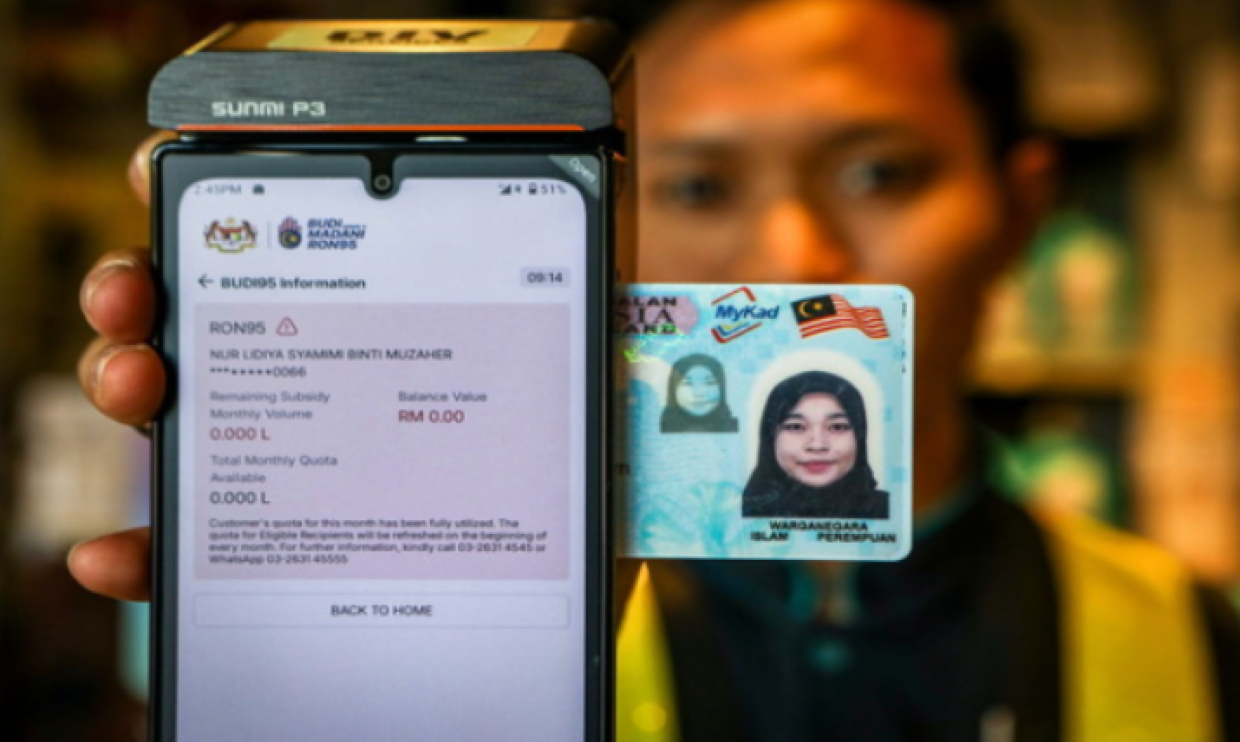
The rapid evolution of personal data usage in everyday life have inevitably raised concerns shared by many ordinary Malaysians — not because they reject technology, but because they fear losing control over something deeply personal: their identity, their privacy and ultimately, their dignity as citizens.
At the same time, governments everywhere are also wrestling with very real challenges involving subsidy leakages, smuggling, illegal syndicates, fraud and the abuse of public resources. The dilemma, therefore, is not simply about MyKad.
It is about how a modern nation balances security with freedom, efficiency with trust, and governance with humanity.
There is a growing unease among many Malaysians who increasingly feel that technology, while designed to simplify life, may also be quietly expanding the reach of surveillance into ordinary daily existence.
When citizens begin to feel watched rather than protected, trust naturally begins to erode.
Yet, the solution cannot simply be to reject digital systems altogether.
Malaysia, like many nations, faces genuine structural problems. Subsidised fuel and essential goods have long been exploited by syndicates. Leakages involving billions of ringgit affect national finances, distort markets, and deprive deserving Malaysians of assistance meant for them. Governments therefore seek systems that can verify eligibility, reduce fraud, and improve efficiency.
In principle, this objective is understandable. The problem arises when implementation races ahead of trust.
People are rarely afraid of technology itself. They are afraid of what happens when technology operates without clear boundaries, transparency, accountability, and meaningful safeguards. The public anxiety surrounding MyKad usage is therefore not irrational paranoia.
It is a response shaped by lived experience — particularly repeated data breaches that have shaken confidence in the nation’s ability to protect personal information.
When citizens hear of leaks involving agencies, telcos, hospitals, and commercial databases, they naturally begin asking a very human question:
“If my data could not be protected before, why should I feel safe now?” This is the heart of the issue.
The answer is not confrontation between citizens and government.
Nor should every attempt at digitisation automatically be framed as authoritarian control. Such extremes only deepen suspicion and polarisation. Instead, Malaysia needs a mature middle path built on democratic trust.
Firstly, the government must recognise that consent matters.
Citizens should always know why their MyKad is being requested, what data is being collected, how long it will be stored, who can access it, and whether it will be shared with third parties.
Transparency cannot remain hidden in fine print or technical jargon. It must be communicated clearly, honestly, and repeatedly.
Secondly, Malaysia urgently requires far stronger data protection enforcement. Existing laws often appear reactive rather than preventive. When breaches occur, accountability frequently feels vague and distant.
A modern digital nation cannot function on assurances alone. There must be visible consequences for negligence — whether involving government agencies, contractors, or private companies. Trust grows when people see that institutions are willing to protect citizens with the same seriousness used to collect their data.
Thirdly, there should be strict limits on the expansion of MyKad usage. Not every transaction requires identity verification.
A principle of proportionality must guide policy. If a purchase or activity does not genuinely require personal identification, then collection of IC data should not become routine practice. Convenience must never become an excuse for excessive intrusion.
Equally important is the need for independent oversight. Malaysians will feel more secure if data governance is monitored not only by the same institutions collecting the information, but also by independent bodies answerable to Parliament and the public. Oversight creates confidence because it reduces the perception of unchecked power.
However, citizens too must approach this issue carefully and responsibly.
Fear can sometimes create narratives that assume the worst possible intentions behind every policy. That may not always be fair or accurate.
Governments today operate in a far more complex environment involving cybersecurity threats, cross-border crimes, digital scams, identity theft, and subsidy abuse. Some degree of verification in modern governance is inevitable.
The challenge is therefore not whether digital systems should exist, but how to ensure they remain humane, proportionate, and accountable.
Ultimately, nations do not become strong merely because they are technologically advanced. They become strong when citizens feel respected within those systems.
Malaysia’s future cannot be built on blind obedience. But neither can it be built on permanent distrust. A healthy democracy requires citizens who ask difficult questions and governments mature enough to answer them transparently.
This moment should therefore not become a battle between “control” and “freedom.” Instead, it should become an opportunity for Malaysia to establish a new digital social contract — one where innovation serves the people without diminishing their rights, where governance becomes smarter without becoming intrusive, and where security never comes at the expense of human dignity.
Because in the end, the true measure of a modern nation is not how much data it can collect from its citizens. It is how responsibly it protects the trust those citizens place in it. – May 29, 2026
Ghazalie Abdullah is a reader of Scoop