

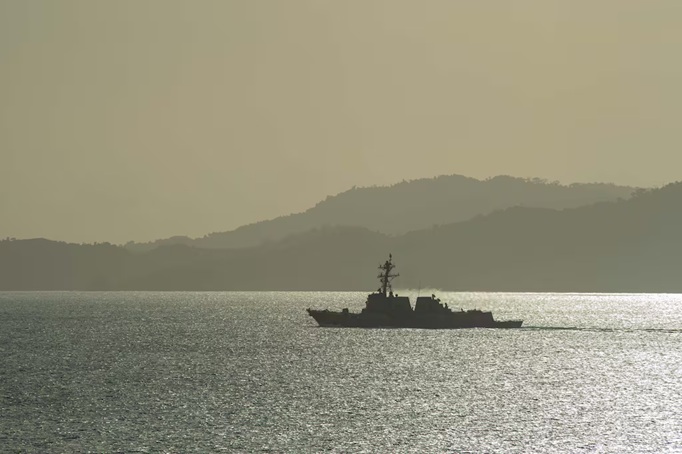
MALAYSIA Prime Minister Anwar Ibrahim has raised concerns over a Philippine military facility on Balabac Island, a strategically located island in southern Palawan near Malaysia’s state of Sabah.
The facility is one of nine Philippine locations covered by the Enhanced Defense Cooperation Agreement (EDCA) between the Philippines and the United States. Balabac’s location is particularly important because it sits near the southern approaches to the West Philippine Sea and just 50 kilometers off the coast of Sabah.
However, there is an important distinction: Balabac is not an American military base.
The site remains a Philippine military facility owned and controlled by the Philippines. Under EDCA, U.S. forces are allowed rotational access to agreed locations, while Washington helps fund and build approved infrastructure for joint defense activities. The agreement does not transfer ownership of the sites to the United States or establish permanent U.S.-owned bases.
The Philippine government has been improving military infrastructure on Balabac—including an airstrip roughly three kilometers long—with U.S. support for infrastructure development.
For Malaysia, the site’s close proximity makes those developments particularly sensitive. Speaking at a budget engagement session in Putrajaya, Anwar noted that Kuala Lumpur’s concern is connected to Sabah and the longstanding territorial context involving the area. However, he emphasized that bilateral relations between Malaysia and the Philippines remain strong. Malaysia has also indicated plans to strengthen its own defense capabilities in Sabah as the regional security environment grows more complex.
For Manila, fortifying Balabac comes amid continuing security challenges in the West Philippine Sea—the section of the South China Sea within the Philippines’ exclusive economic zone. Philippine and Chinese forces have repeatedly faced tense encounters in disputed waters, while other Southeast Asian countries, including Malaysia and Vietnam, also maintain overlapping maritime claims with China.
The Philippines has responded by modernizing its military and expanding defense cooperation with the U.S. and other international partners. Recent joint military exercises on and around Balabac have also involved partner nations, including Australia, Japan, Canada, and France.
The sensitivity surrounding Balabac is deeply tied to the unresolved Sabah issue. The Philippines’ historical claim to Sabah is rooted in the legacy of the Sultanate of Sulu, which exercised authority over parts of North Borneo. An 1878 agreement between the Sultan of Sulu and British commercial representatives (Baron von Overbeck and Alfred Dent) granted rights over territory in North Borneo, but the legal character of that agreement has long been disputed. Malaysia maintains that it constituted a permanent land cession, whereas the Sulu/Philippine position has historically characterized it as a temporary lease.
Malaysia continued making annual payments to the heirs of the Sultan of Sulu from 1963 until they were terminated in 2013 following the Lahad Datu armed incursion. Malaysia regards these as cession payments, whereas the Sulu side considers them lease payments. This historical divergence remains a key reason why any major military development near Sabah’s border draws scrutiny in Kuala Lumpur. – August 22, 2026
Samirul Ariff Othman currently serves as a senior consultant at Global Asia Consulting and has a background as a senior researcher at the Malaysian Institute of Economic Research.
The viewpoints articulated are solely those of the author.