

I refer to the ongoing controversy involving Sepang Umno division chief Datuk Noorazli Said, and his latest statement issued on Sept 15 questioning the standing of DAP and political leaders to judge the sincerity of his apology.
Background
At the Umno General Assembly on Sept 12, Noorazli recounted a demeaning and sexually suggestive joke involving a Catholic priest and a nun, with the punchline falsely attributed to Psalm 129 (Mazmur 129).
The Catholic Lawyers’ Society of Kuala Lumpur has since placed on record that Psalm 129 contains no such content, and speaks instead of deliverance and the triumph of the righteous over affliction.
The Society, together with DAP leaders including Teresa Kok, Syerleena Abdul Rashid and Lee Chin Chen, Tuaran MP Wilfred Madius Tangau, and PBS Tamparuli division chief Dr Bonaventure Boniface, have all publicly condemned the remarks and called for a full and unequivocal apology. A police report has also been lodged over the matter.
Noorazli initially said he was “prepared to apologise” if his remarks had caused offence, before amending his position to a direct apology, while maintaining that his reference to Psalm 129 was an honest but inaccurate error. In his latest statement, he has pushed back at DAP leaders who described his apology as conditional, asking what standing they have to determine what is sincere or insincere in another person’s heart.
My Position
Let me be direct: sacred scripture, clergy and religious life are not props for cheap political laughter.
That such a bad joke was told from the stage of a major party’s general assembly, and required public outrage, a police report and demands from leaders across the political divide before an apology was forthcoming, is itself unacceptable. This was not a minor slip of the tongue. It was a serious lapse in judgment that caused real hurt to the Catholic community and the wider Christian community, and it should never have happened in the first place.
I accept, as a matter of principle, that ultimate sincerity is known fully only to the person concerned and to God, and on that narrow point Noorazli is correct. But that principle cannot be twisted into a shield against all scrutiny. Sincerity is not established by asserting it; it is demonstrated through consistent conduct, full and unqualified acknowledgment of harm, and humility in the face of criticism.
Turning around to challenge the standing of those who were offended, rather than sitting with the discomfort of legitimate criticism, does little to inspire confidence in that sincerity.
I welcome Noorazli’s acknowledgment that his reference to Psalm 129 was inaccurate. But an apology qualified with conditional language, an apology that arrives only after mounting public pressure, and a subsequent statement that pivots to questioning one’s critics, together fall well short of the full and direct accountability this episode demands.
Malaysia is a multi-religious and multi-ethnic society, and its political leaders regardless of party carry a heightened, non-negotiable duty of care whenever race, religion or royalty (the so-called 3R issues) are touched upon, even in jest.
Humour that draws on sacred text or religious office is not a harmless political device; it wounds communities and corrodes the mutual respect on which our national harmony depends. Leaders who breach this duty must be held to account firmly and without equivocation.
At the same time, that accountability must be pursued through robust, principled criticism of conduct and not through claims of certainty about what lies in another person’s heart, which is a line even legitimate critics should not cross. As such, I call on all political leaders, of every party, without exception, to:
1. Exercise far greater caution and restraint when making public remarks that touch on religious texts, religious figures or religious practice as there is no acceptable margin for error on these matters;
2. Ensure that any apology offered for such conduct is full, direct, unconditional and timely, and not one extracted only after sustained public pressure;
3. Engage critics of an apology squarely on the substance of what was said and done, rather than deflecting scrutiny by reframing legitimate criticism as an illegitimate judgment of the heart; and
4. Recognise, unambiguously, that political and religious differences must never be allowed to justify disrespect towards any faith, and that restraint on all sides is what will actually safeguard racial and religious harmony going forward.
Malaysia’s multi-religious harmony is a hard-won and fragile inheritance that every community and every political party has a solemn duty to protect. It will not be safeguarded by point-scoring, nor by half-hearted apologies, nor by leaders who treat accountability as optional. It demands consistent restraint, genuine accountability and good faith before, during and after any controversy of this nature.
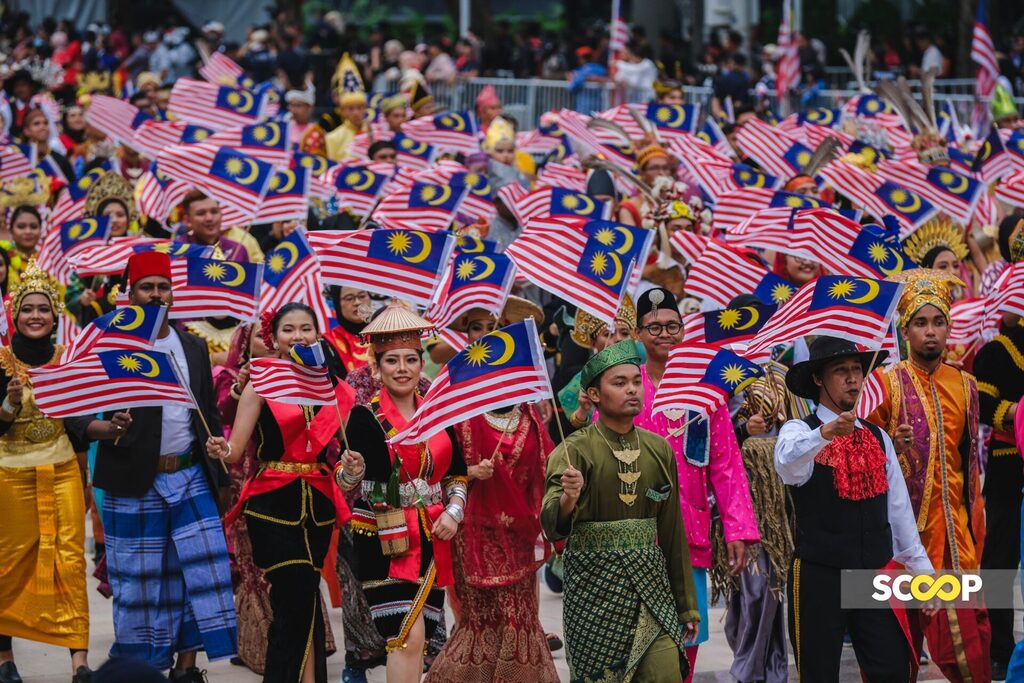
It is worth noting that this episode unfolds as the nation marks Malaysia Day. The formation of Malaysia on Sept 16, 1963 brought together communities of different faiths and backgrounds on the basis of mutual respect and equal standing.
That founding spirit demands more of our leaders than what has been shown here, and how this episode is resolved will say a great deal about our national maturity.
Selamat Hari Malaysia. – September 16, 2026
Datuk Dr Xavier Jayakumar is the former Minister of Natural Resources and Environmental Sustainability and a former PKR vice president