

KUALA LUMPUR – Malaysia’s approach to refugees has been branded as one of selective empathy, revealing profound societal bias and institutional neglect, according to human rights lawyer and activist Michelle Yesudas.
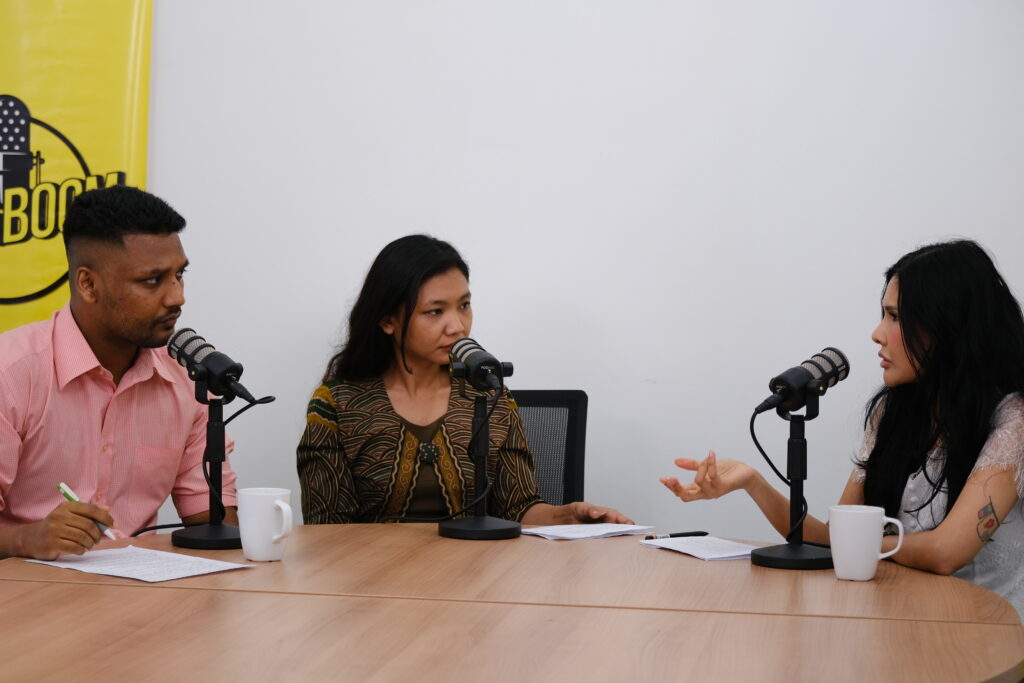
Speaking on the Scoop Insight podcast – hosted by Scoop reporter Sandru Narayanan, and assistant news editor Maya Zaharudin – Michelle outlined the inconsistencies in Malaysia’s treatment of refugees, which often varies based on race, religion, and geopolitical considerations.
“We loved the Bosnians. We cared about the Palestinians. But when it comes to the Rohingya or people from Myanmar, there’s this complete pushback,” she said. “It’s like: ‘Why are you still here? Go back.’ No one even asks why they came here in the first place.”
She also criticised the way in which public opinion frequently aligns with political inaction, noting how refugee communities are increasingly vilified and dehumanised in the public sphere.
“There’s this idea that refugees are criminals or a burden on the state. But the truth is, they’re here because we’ve allowed a system to persist that has no proper migration governance.”
Malaysia’s refusal to sign the 1951 Refugee Convention leaves refugees without legal status, effectively denying them access to formal education, healthcare, and legal employment. Many live in constant fear of arrest, exploitation, and detention.
Michelle highlighted the stark disparity in the treatment of refugees from different backgrounds. While Afghan refugees are sometimes tolerated, Rohingya communities continue to face discrimination and frequent calls for deportation.
“We are so inconsistent. One minute, we want to show compassion. The next, we’re pushing boats back into the sea,” she said. “And what’s worse is we use religion to justify our empathy — or the lack of it.”
Michelle also condemned the government’s failure to provide adequate support to refugees, pointing out that the responsibility has instead been shifted to civil society and international agencies.
“It’s the UNHCR, refugee-led groups, community kitchens. It’s not the state. We’ve abdicated responsibility, and then we act shocked when conditions worsen.”
She added that many Malaysians remain unaware of this institutional neglect, as the national conversation surrounding refugees is often superficial or dominated by fearmongering.
“Our entire political rhetoric is about who belongs and who doesn’t. And refugees? They don’t belong — so they’re left to rot.”
Michelle called for a fundamental shift in the way Malaysians view and treat displaced communities, urging both the public and policymakers to go beyond performative gestures and adopt a more consistent, humane approach.
“If we’re going to talk about solidarity, it can’t just be for Palestinians or Bosnians. It has to be for everyone — including the ones we’ve chosen to forget.” – August 8, 2025