


KUALA LUMPUR – The United States’ decision to impose worldwide tariffs to goods entering the country had forced Malaysia and other countries to work out deals with Washington or else face the risks of businesses being put under extreme pressure that could result in thousands of jobs lost.
The US is Malaysia’s largest export market and also its largest investors in the country and any change in tariff rates for export to the country would have a significant impact on business, investments and jobs, said former international trade and industry minister Datuk Seri Tengku Zafrul Abdul Aziz has warned.
Malaysia exports over RM200 billion a year to the United States, with almost 60 percent in electric and electronics.
The semiconductor industry alone employed about half a million people, he said.
He stressed that robust economic ties with the United States are crucial to boosting investor confidence and cementing the country’s role as a strategic export hub.
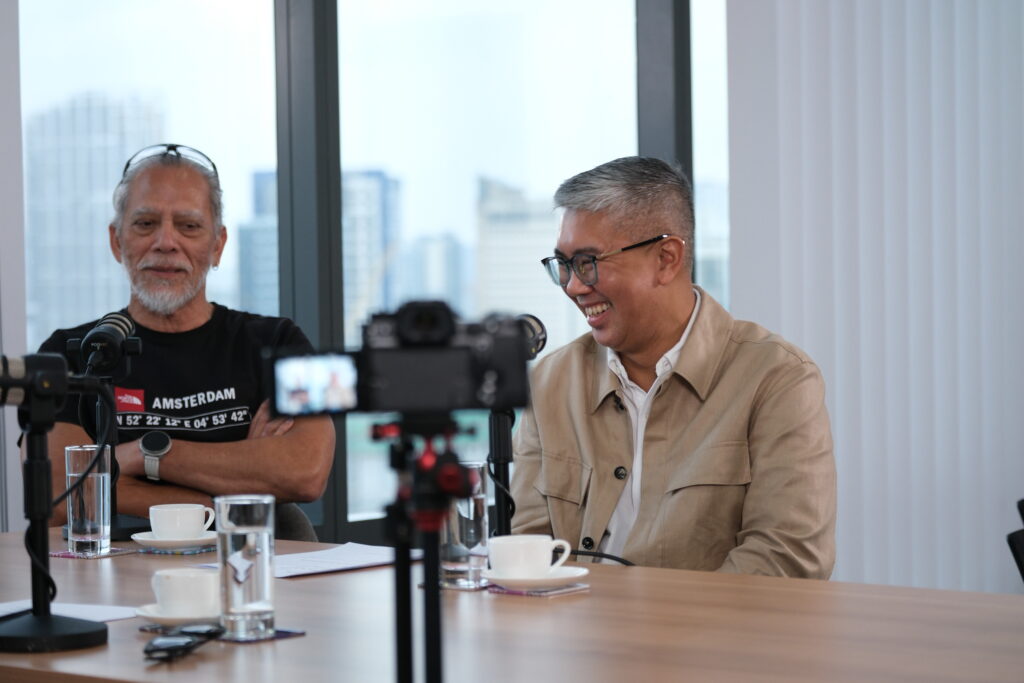
Speaking on the Trick Lama podcast hosted by Terence Fernandez, editor-in-chief of Big Boom Media Group, which publishes Scoop, and co-hosted by group chief executive Datuk Zainul Arifin and group executive director Datuk Ahirudin Attan, also known as Rocky Bru, Zafrul highlighted how recent trade agreements are already delivering tangible market outcomes.
“If we refused to negotiate and tariffs hit, companies would move and jobs would be lost. Then people would ask why we did nothing,” he said.
Tengku Zafrul also said detractors to the trade agreement would likely do the same thing if they understood the situation the country was in and if they listened to the advice of civil servants and subject matter experts who have years of experience in issues of international trade.
“We were pushed to the wall, and we have to figure out how to mitigate the situation,” he said when describing the little choice Malaysia had and suggested it was the same with other countries, too.
Tengku Zafrul also pointed to Malaysia’s upgraded relationship with the US, now formalised through the Agreement on Reciprocal Trade (ART), signed on October 26, 2025, describing the pact as a major confidence booster for investors.
“This gives confidence to many investors, and we can already see the results. The market has accepted that we will honour the agreements we have made, and they have already started engaging with us externally,” he said.
While the ART has yet to be fully ratified, Zafrul stressed that execution is what ultimately determines whether trade deals deliver economic value.
“Trade realities versus perception can be very different. Our focus is execution, not just announcing plans. Investors want certainty, and that is what we are providing,” he said.
Tengku Zafrul also underscored the importance of demonstrating real results from investment deals, rather than just announcing investment figures.
“People asked how much of that investment was realised. I had to show photos, videos — real proof. We had to show how many jobs were created, where those jobs were, what kind of salaries they paid, and how many Malaysians benefited.
“At the Malaysian Investment Development Authority (MIDA), I am pushing the same approach. We must show the spillover effects — SMEs in the supply chain and local participation. Numbers alone mean nothing to ordinary people.”
Zafrul noted that Malaysia’s exports to the US remain resilient adding that “other markets are now moving to Malaysia because they want to use us as an export base”.
He also addressed Malaysia’s participation in broader trade frameworks such as the Comprehensive and Progressive Agreement for Trans-Pacific Partnership (CPTPP), highlighting both the opportunities and challenges involved.
“These agreements are designed to open markets and provide strategic advantages, but they require careful navigation. Execution and delivery are what ultimately build trust with investors,” he said.
Turning to domestic constraints, Zafrul acknowledged that bureaucratic delays can slow implementation.
“Internally, there are always issues with special interest groups and the civil service. The speed at which some things are done is not always satisfactory. But the focus remains on ensuring reforms and delivering outcomes that matter to investors,” he said.
He emphasised that credibility and reliability in fulfilling trade commitments are critical to maintaining Malaysia’s standing as a trusted global partner.
“It is not just about signing agreements; it is about ensuring execution follows. That builds trust, and that is what ultimately attracts investment,” Zafrul said.
The ART between Malaysia and the United States was signed on the sidelines of the 47th ASEAN Summit in Kuala Lumpur, in a ceremony witnessed by Prime Minister Datuk Seri Anwar Ibrahim and US President Donald Trump.
Under the bilateral trade deal, Malaysia agreed to preserve a 19 per cent tariff cap on goods entering the US market while securing tariff exemptions on 1,711 Malaysian export product lines valued at approximately USD 5.2 billion — about 12 per cent of Malaysia’s exports to the US.
The ART builds on decades of economic cooperation between the two countries and is intended to provide Malaysian and US exporters with expanded market access, greater regulatory certainty, and enhanced opportunities across sectors ranging from industrial and agricultural goods to technology and critical minerals. — January 15, 2026