


KUALA LUMPUR – Malaysia should establish a National Commission for Constitutional Monarchy Reform to examine the institution’s role, powers and responsibilities under the Federal Constitution, particularly amid growing concerns over the boundaries of its authority, says senior lawyer Datuk Seri Dr Jahaberdeen Mohamed Yunoos.
He said the constitutional monarchy was a distinct pillar of Malaysia’s governance framework and should be recognised as a fourth institution alongside the executive, legislature and judiciary.
“People often forget that, in our country, there is a fourth institution: the monarchy. This is because the monarchy is vested with powers under the Constitution,” he said.
Speaking on the Trick Lama podcast hosted by Big Boom Media chief executive officer Datuk Zainul Arifin Mohammed Isa, executive director Datuk ‘Rocky’ Ahiruddin Attan, and editor-in-chief Terence Fernandez,Jahaberdeen said Malaysia’s monarchy differed from Britain’s because the Yang di-Pertuan Agong holds specific powers under the Federal Constitution.
“Therefore, our monarchy is not exactly like the Queen of England. There are certain areas within the Constitution where reforms could be introduced,” he said.
However, he stressed that any proposed changes must be guided by a clear understanding of the direction the country wishes to take before amendments to the constitutional framework are considered.
As an example of how the monarchy could exercise its constitutional discretion, Jahaberdeen pointed to the Sultan of Pahang, Al-Sultan Abdullah Ri’ayatuddin Al-Mustafa Billah Shah, who served as the 16th Yang di-Pertuan Agong from 2019 to 2024.
He praised the Sultan’s handling of the process to appoint a prime minister during the Covid-19 pandemic, saying his approach demonstrated how the constitutional powers of the monarchy could be exercised effectively.
“I thought he handled the situation very cleverly, especially when it came to the appointment of the Prime Minister.
“He went the extra mile by obtaining statutory declarations and meeting individuals one by one. He exercised his discretion very well,” he said.
Jahaberdeen also argued that the monarchy’s position above partisan politics provided an important counterbalance to elected representatives, whose decisions could be influenced by political considerations.
“Those who oppose the monarchy may argue that everything should be left to elected representatives. But we have also seen how elected politicians behave.
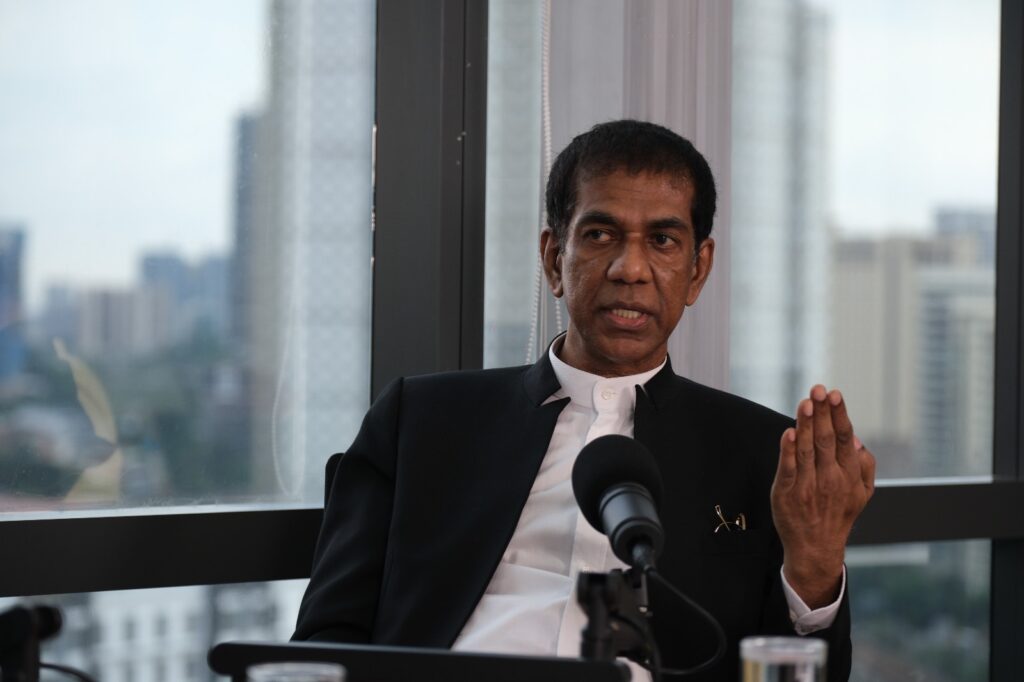
“Therefore, we cannot become too enthusiastic about taking sides, whether we are royalists or anti-royalists. In that respect, we have an advantage because the monarchy is above politics. It provides an umbrella,” he said.
The podcast discussion also examined the monarchy’s involvement in certain executive appointments, including those concerning senior civil servants and the Malaysian Anti-Corruption Commission (MACC).
Jahaberdeen maintained that the Federal Constitution already provided a clear framework governing the monarchy’s authority, making public understanding of its provisions crucial.
“My view is that the Constitution is very clear. It clearly states what the monarchy can and cannot do. So, once again, it is a question of the maturity of the public,” he said.
He nevertheless expressed concern that the Sedition Act could restrict legitimate debate about the monarchy, including proposals to improve the institution.
“Because of the Akta Hasutan, or Sedition Act, many legitimate concerns about the monarchy cannot be openly discussed. People are afraid that they could be investigated or charged under the relevant provisions,” he said.
While welcoming the government’s 3R policy as a means of addressing sensitive issues involving race and religion, he said restrictions under the Sedition Act could make it difficult to have constructive discussions about constitutional monarchy reform.
“I think the 3R policy is a very good policy. I believe it is one of the best policies introduced by this government to curb issues involving race and religion.
“However, when it comes to the monarchy, I think the Sedition Act becomes an obstacle to having a proper discussion about how the institution can be improved for the betterment of the country,” he said.
Asked whether calls to reform the monarchy could themselves be considered seditious, Jahaberdeen said he did not believe that was the case, arguing that the objective was to strengthen the institution rather than undermine it.
“You are asking about reforming the monarchy, which means enhancing the institution,” he said.
“We want to enhance the monarchy and put everything in its proper place. This means that instead of people having misconceptions about the monarchy, reforms would help clarify the institution’s role and responsibilities.”
He said the monarchy continued to serve important constitutional functions, including its role in appointing the prime minister and granting consent for the dissolution of Parliament.
“There are many positive aspects of having a monarchy. I think this is something we need to examine and reform so that the kind of allegations we make against the judiciary are not also directed at the royalty,” he said.
Beyond the monarchy, Jahaberdeen called for two other national commissions to undertake a broader review of Malaysia’s institutional framework, focusing on the judiciary and political system.
“I would again propose another National Commission for Constitutional Monarchy Reform, a National Commission for Judicial Reform and a National Commission for Political Reform,” he said.
He said the three proposed commissions could provide a structured platform for examining institutional weaknesses, identifying areas for improvement and fostering a more informed public. – November 16, 2026