


KUALA LUMPUR – DAP could lose as many as 15 parliamentary seats in the next general election, with party secretary-general Anthony Loke potentially stepping down if the party suffers a significant electoral setback, former lawmaker Ong Kian Ming predicts.
Ong forecasts that DAP’s current 40-seat representation could fall to between 25 and 30 seats in the 16th General Election (GE16), a result that could force the party to reassess its leadership and political strategy.
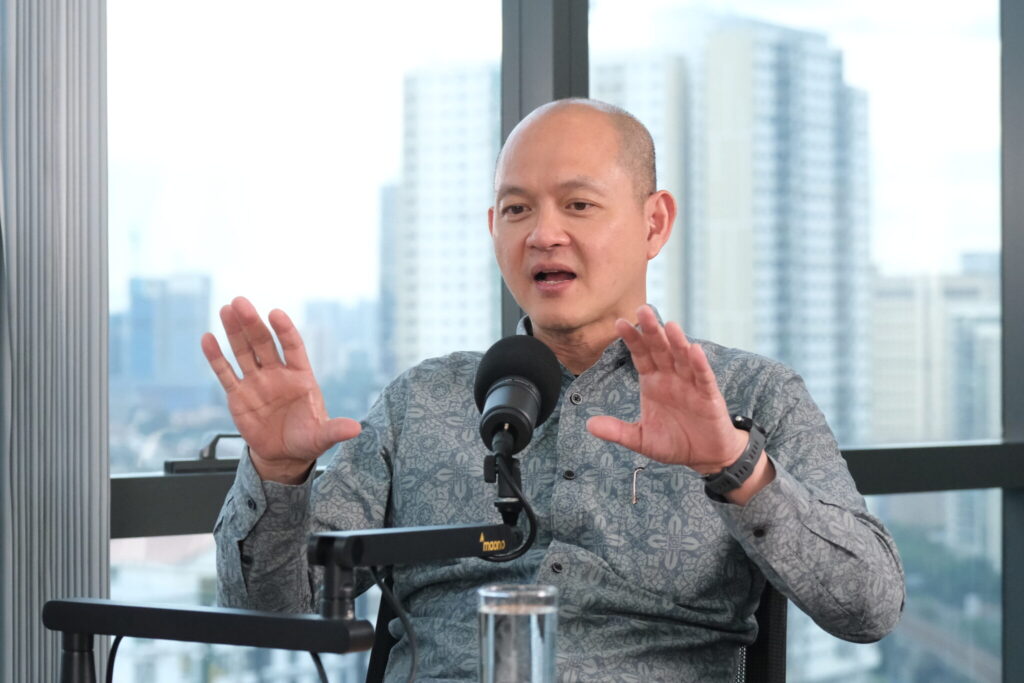
Speaking on the Trick Lama podcast hosted by Big Boom Media chief executive officer Datuk Zainul Arifin Mohammed Isa and Editor-in-Chief Terence Fernandez, Ong questioned whether Loke would be willing to continue leading the party following such a decline.
“The more important question to me is, will Loke remain as secretary-general of DAP? If, let’s say, DAP goes down from 40 to 25 seats,” he said.
Although Ong acknowledged that DAP’s central executive committee (CEC) would likely want Loke to remain, he believes the secretary-general could decide against serving another term.
Drawing parallels with Loke’s response to DAP’s poor electoral performance in Negeri Sembilan, Ong said the party leader might opt to relinquish his position, either immediately or when his current term ends in 2028.
“Either case, knowing Loke, and knowing what he did in Negeri Sembilan, with a bad DAP election result, I think his tendency would be to not continue as secretary-general, whether it’s immediate resignation, three months, or not continue after 2028,” he said.
Ong attributed DAP’s vulnerability to waning support among non-Malay voters, uncertainty over its standing with the Indian community and the possibility of Barisan Nasional (BN) and Perikatan Nasional (PN) joining forces.
He singled out Raub, Bentong, Labis and Kampar as constituencies where DAP could face difficulties defending its seats.
Beyond DAP’s electoral prospects, Ong expects BN and PN to emerge as the dominant political forces following GE16, potentially leaving Pakatan Harapan (PH) in opposition.
“When you look at the national picture, I think the more important question to ask is, who will likely be in government after GE16? And I think the answer is quite obvious. It will be BN and PN,” he said.
He said the two coalitions could potentially secure enough parliamentary seats in Peninsular Malaysia to form a government before seeking support from political parties in Sabah and Sarawak.
Should that scenario materialise, DAP would likely become the largest opposition party, but would face the challenge of determining its next leader and the direction it should take.
With Loke potentially leaving the top post, Ong identified Housing and Local Government Minister Nga Kor Ming and Human Resources Minister Steven Sim as possible successors.
“One person is Nga Kor Ming. The other person is Steven Sim,” he said.
However, Ong believes the two would offer contrasting approaches to DAP’s political future, with Nga likely to favour a stronger focus on its traditional Chinese voter base, while Steven could push for a broader, more inclusive appeal.
He suggested Steven might prefer to consolidate his political standing in Penang rather than contest the party’s top position, potentially leaving the way open for Nga.
“If I were to make an educated guess, I would say that Sim would prefer to consolidate his position in Penang as the next Chief Minister, and leave the secretary-general position to Nga,” he said.
Ong added that Nga’s influence within the CEC could work in his favour in the contest for the secretary-generalship, while Steven could concentrate on his political ambitions in the state.
He cautioned that a leadership under Nga could see DAP return to relying more heavily on its traditional Chinese support base, potentially narrowing its electoral appeal.
“Under Nga as secretary-general, DAP would go back to its base of appealing mostly to the Chinese voters in a shrinking voter base,” he said.
Steven, by contrast, could seek to preserve DAP’s role as a parliamentary check and balance while strengthening its engagement with communities beyond its traditional supporters.
“There can be ways in which we become more accommodating, we can become more inclusive, especially in terms of reaching out to other communities,” Ong said.
The former lawmaker also pointed to internal tensions within DAP, particularly in Penang, as another potential obstacle to a smooth leadership transition.
He warned that competition for influence could become increasingly intense as the party navigates the challenges of remaining in power.
“When you become in power, the stakes are elevated and it becomes much more sort of like a dirty fight, if you will,” he said.
Ong said GE16 would be a defining moment for DAP, with the outcome likely to determine not only the party’s electoral standing but also Loke’s political future and the identity of its next leader. – November 23, 2026