

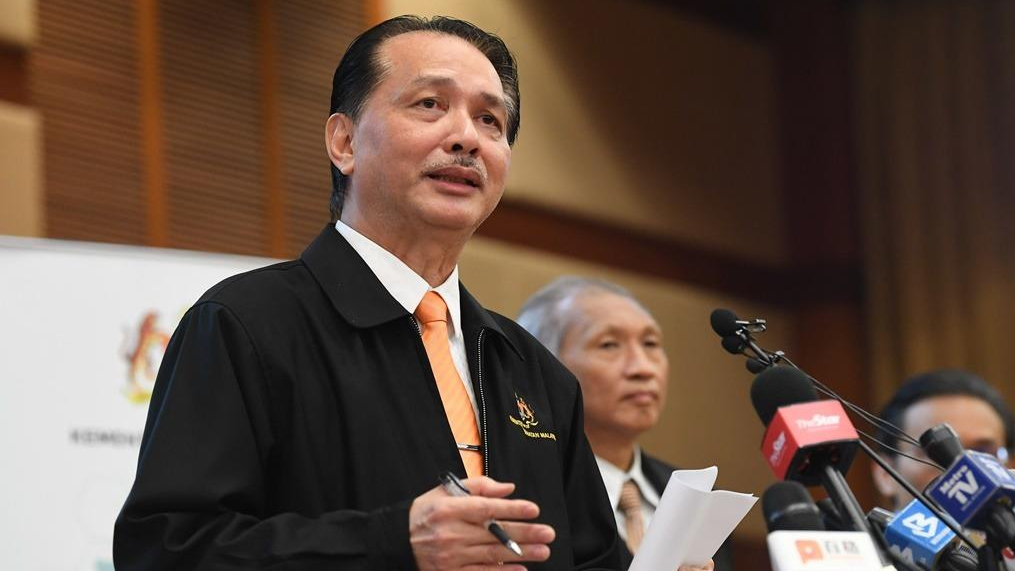

KUALA LUMPUR – Putrajaya should look into ways to implement a pooling system to procure medicines as a cost-cutting measure, said former health director-general Tan Sri Noor Hisham Abdullah amid increasing medical costs in the public and private healthcare sector.
Noor Hisham, who served as the health director-general for about a decade until April 2023, said that pooling of resources could be a way for the government to bring down medicine procurement costs.
Noting that the method was a lesson the government learnt during the Covid-19 pandemic, the retired civil servant advocated for higher cooperation between international bodies, government ministries as well as the public and private healthcare industries.
“During the pandemic, we bought 32 million Covid-19 vaccines for our population, but the European Union bought vaccines on behalf of 30 countries. When you purchase in big volumes, the cost will be much cheaper and the (procurement process) will be faster,” he told Scoop.
“We can also look at regional cooperation. Perhaps we can use Asean as a platform for medicine procurement to make costs cheaper.”
Noor Hisham also said that prior to his retirement, major savings were achieved when three ministries had pooled their medicine procurement resources, thus mitigating escalating medicine costs.
“We pooled together the Health Ministry, the Higher Education Ministry and the Defence Ministry to procure 82 medicines and managed to save about RM176 billion a year. This shows that if we can pool together, we can bring down costs,” he added.
On December 10, Prime Minister Datuk Seri Anwar Ibrahim told the Dewan Rakyat that drug procurements for the private healthcare sector should be done in bulk, as practiced by government hospitals, so that costs can be brought down by 20 to 25%.
He said that while the move will be presented as a choice for private hospitals, the government is working on introducing such cost control measures as part of its plans to establish regulations for Diagnostic-Related Groups (DRGs).
DRG, which is a system for classifying hospital patients into groups based on their clinical conditions and treatment needs, and thus the costs involved, are currently unregulated in Malaysia.
Commenting on the move towards regulating DRGs, Noor Hisham suggested that the government consider standardising treatment costs and non-professional fees in a way that takes into account hospitals’ varying localities.
“Investments for hospitals in urban areas are much higher compared to those in rural locations. (As such), the standard charges for hospitals in different locations have to be justified, which is where DRGs come in,” he said.
He added that while the regulatory move is likely to result in some stability for healthcare costs, the government should be urged to come up with other innovative ways to tackle rising medical costs.
“There are a lot of factors (affecting high medical costs) and we need to handle it well in order to strike a balance on how we can mitigate the increase in such costs,” he added. – December 19, 2024