


KUALA LUMPUR – Datuk Seri Tengku Zafrul Abdul Aziz has addressed long-standing perceptions surrounding the notion of “payung kuning”, or royal protection, acknowledging that he maintains relationships with members of the royalty but firmly rejecting claims that he is deployed by Prime Minister Datuk Seri Anwar Ibrahim to manage palace affairs during political or institutional crises.
Speaking on the Trik Lama podcast hosted by Big Boom Media Group editor-in-chief Terence Fernandez, alongside co-hosts group chief executive Datuk Zainul Arifin and group executive director Datuk Ahirudin Attan, better known as Rocky Bru, Tengku Zafrul said such narratives had taken on a life of their own despite not fully reflecting reality.
“Jokes aside, one of the coffee-shop perceptions is that I’m depended on to keep the royals happy. Whenever there’s a crisis, PMX sends Zafrul — the so-called ‘payung ‘kuning,” he said, referring to a label frequently attached to him in political discourse.
Describing the issue as “the elephant in the room”, Tengku Zafrul did not deny that he has relationships with members of the royalty, particularly in Selangor, Pahang and Johor. However, he stressed that these connections stem from professional, personal and historical circumstances rather than political orchestration.
“I can’t deny that I have relationships with many of them. Some are closer than others. Some are due to my ministerial role, some from my corporate life, and some due to blood relations,” he said.
However, he pushed back against suggestions that these relationships translate into political interference or a special role on behalf of the Prime Minister.
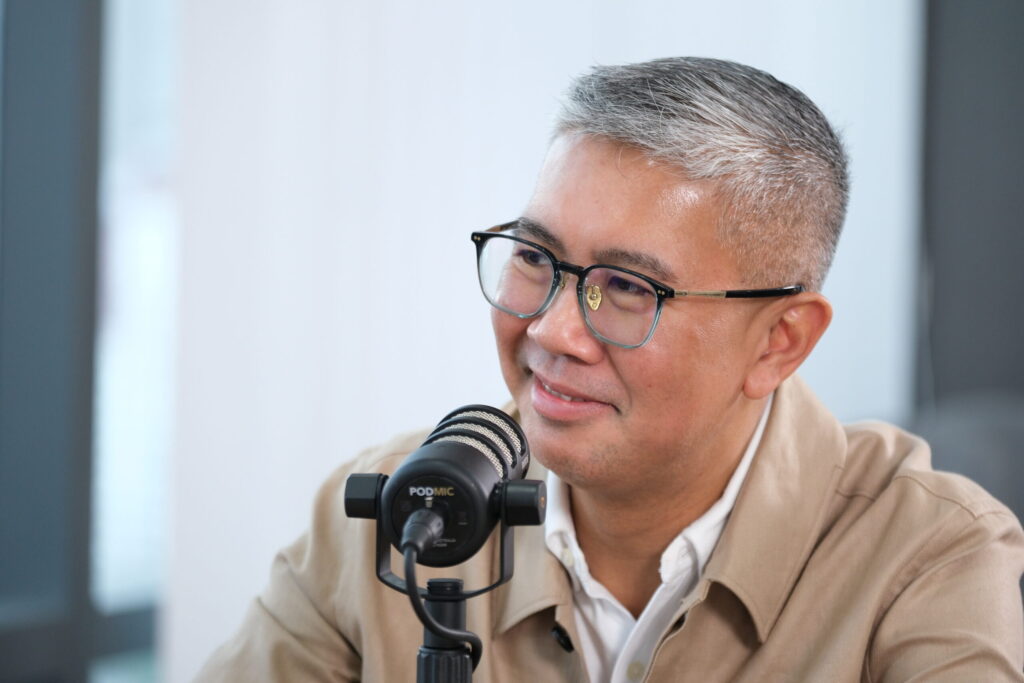
“To say that the Prime Minister sends me whenever there’s a problem is not accurate,” Tengku Zafrul said, adding that while members of the royalty had supported his work, they did not intervene in political decisions.
“They’ve supported my work, but they do not interfere in politics,” he said, stressing that his decision to join PKR and become more active politically was made independently.
“My decision to join PKR or to be more active in politics was my own. In fact, one of them advised me against being too involved.”
Tengku Zafrul said this underscored how perceptions in Malaysian politics often diverge sharply from reality.
“So yes, that perception exists, but it is not entirely true,” he said.
Responding to questions on whether palaces ever contacted him to relay messages to the Prime Minister, Tengku Zafrul said such interactions were limited strictly to official matters involving governance and state interests.
“Only on matters of work,” he said.
“When it concerns the interests of a state, the ruler will of course want to ensure those interests are protected together with the Menteri Besar.”
He cited disaster response and investment promotion as examples of legitimate engagement.
“If there is flooding, they will call the relevant minister. For investments, they want investors to come to their state. Johor, for example, has done very well,” he said.
While acknowledging that messages may at times be conveyed to the Prime Minister, Tengku Zafrul reiterated that perception often outweighs substance in the public imagination.
“Messages may be conveyed to the Prime Minister, but what matters most is perception,” he said.
“Sometimes that perception works in my favour, sometimes against me. People say, ‘That’s why he is close.’”
Ultimately, he said perceptions of elite backing or royal proximity could only go so far, with delivery remaining the true measure of political credibility.
“But it always comes back to delivery. You try to deliver as much as you can. Delivering 100 per cent is difficult,” he said.
Tengku Zafrul also addressed views about his apparent closeness to Anwar, noting that their frequent overseas appearances together were largely a function of his ministerial responsibilities rather than political favouritism.
“That’s also because of my role,” he said, cautioning against mistaking optics for influence.
In Malaysia’s current political environment, marked by coalition governance and heightened public scrutiny, he said leaders could no longer rely on perception alone.
“Perception may open doors,” Tengku Zafrul said, “but only delivery keeps them open.” — January 20, 2026