

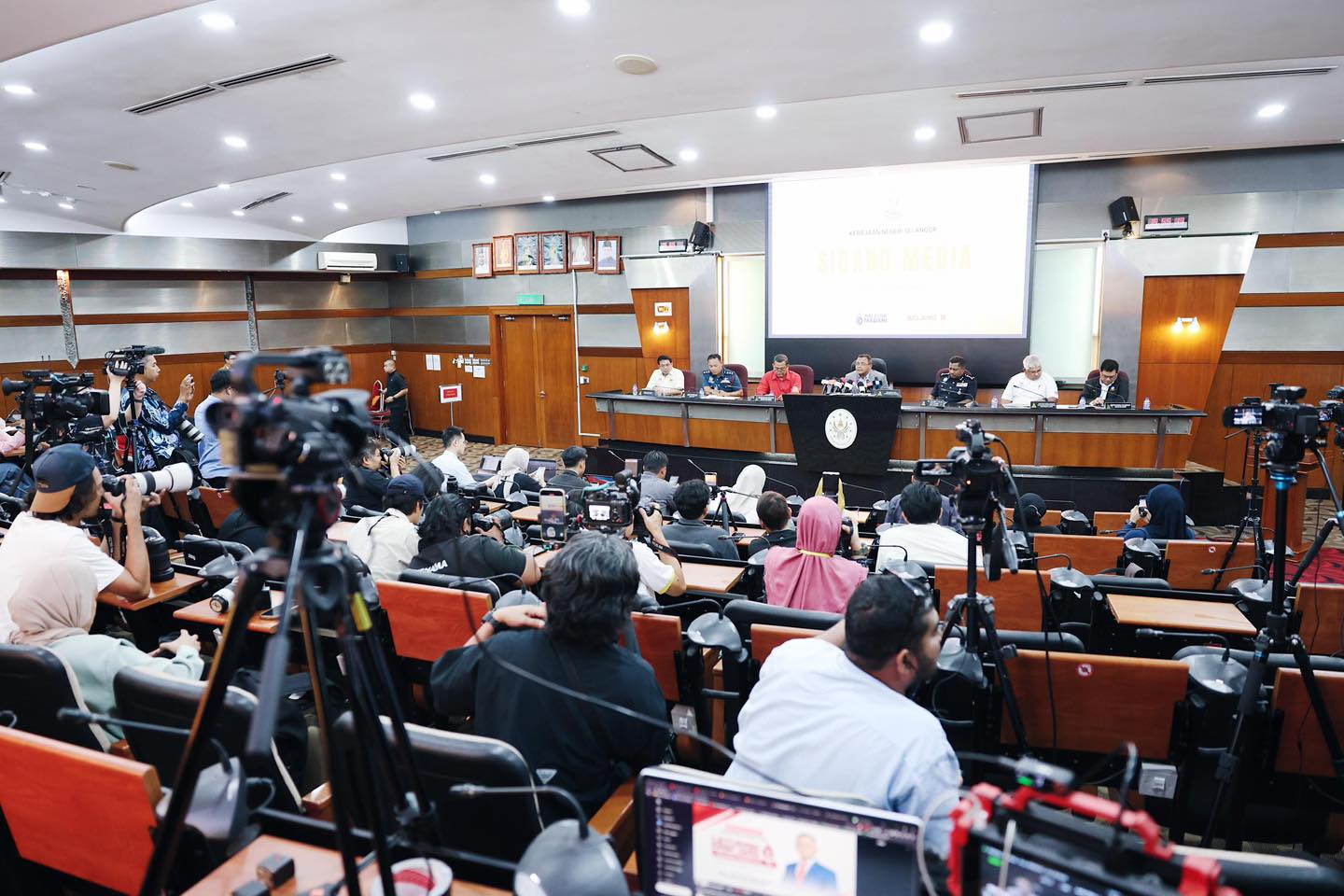
I RECENTLY watched the much-anticipated announcement of the Putra Heights pipeline blast inquiry results. I use the word “announcement” very deliberately because that’s exactly what it was: a formality devoid of genuine engagement or any meaningful attempt to help the public understand what really happened. For those of us who tuned in hoping for clarity and closure, we were instead handed a technical monologue wrapped in bureaucratic detachment.
Let’s start with the spokesperson from the Department of Occupational Safety and Health (DOSH). He appeared at the podium, presumably with a prepared script in hand, and proceeded to read it out with the energy and conviction of someone reciting terms and conditions for a toaster warranty. His delivery was so saturated with jargon that unless you were a geotechnical engineer or had a PhD in pipeline integrity, you’d be completely lost. Not once did he pause to explain the implications of what he was saying in plain language. This wasn’t a briefing — it was a public relations exercise disguised as a press conference.
Now, let’s talk about the content, or the lack thereof. The results of the inquiry were, frankly, disappointing. According to DOSH, the pipeline failure was due to “movement of soil” and “soft soil conditions underneath the pipe.” This is what I call a textbook case of stating the obvious without saying anything useful. When pressed by journalists to explain what caused this mysterious soil softening — rainfall? leaking water pipes? adjacent construction? a cosmic fluke, perhaps? — the spokesperson side-stepped the question like a seasoned ballroom dancer.
This is precisely where the public’s frustration lies. It’s not that we can’t accept the possibility of soil movement — Malaysia is no stranger to that. It’s the evasiveness in answering the most basic follow-up question: why did the soil move? What led to the weakening of the ground? Who might be responsible for that change in condition?
To pin the entire catastrophe on “soil” without elaborating is not only intellectually lazy, but frankly, insulting. Are we to believe that soil, acting entirely on its own volition, decided one day to sink or shift just enough to rupture a gas pipeline and set off an explosion? If that’s the story, we deserve more than vague descriptions and technical mumbo jumbo. We deserve the truth!
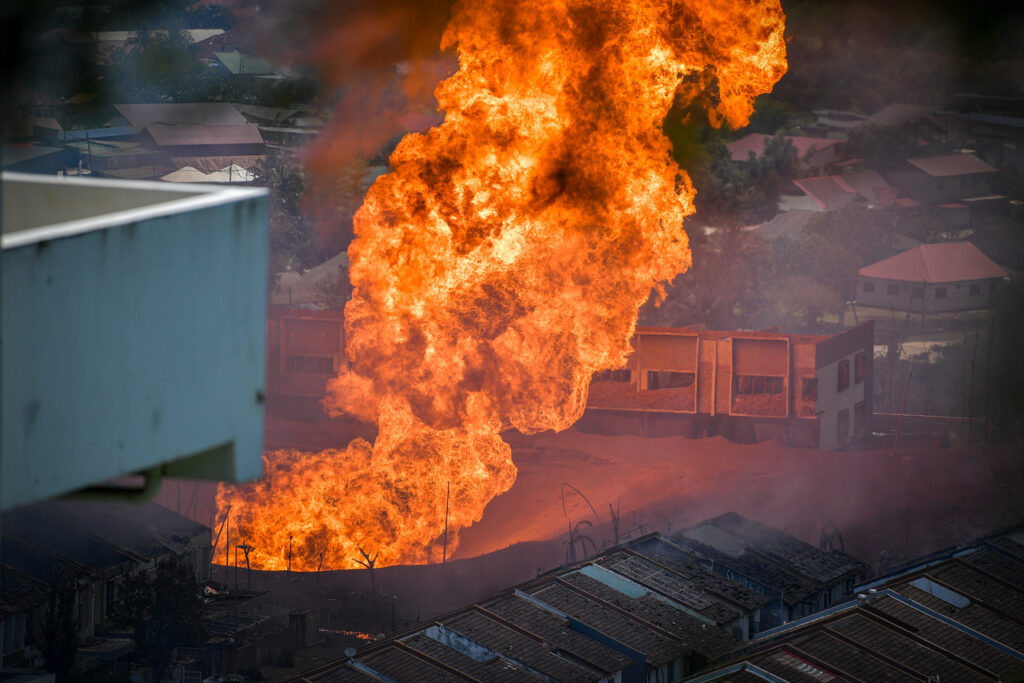
And if the authorities won’t say it, let me venture a theory that’s been circulating among the public for months: Could it be that developments approved too close to the pipeline corridor — housing areas, shop lots, or any recent groundworks — contributed to the soil instability? The pipeline has been there for decades without issue. What has changed in recent years? If there’s been excavation, construction, drainage diversion, or soil compaction nearby, the public has every right to know. If any of these had a role in weakening the soil, then we’re looking not at an unfortunate natural occurrence, but at the consequences of poor planning and oversight.
This selective storytelling reminds me all too well of the Highland Towers tragedy back in 1993 — a national disaster that many of us still remember vividly. There too, the explanation pointed to “soil movement” and “land instability.” But it later became clear that the real issue was water — water redirected, mishandled, and neglected as part of an uphill housing project approved with little regard for environmental consequences. Eventually, that water weakened the slope, leading to the collapse of Block One and the loss of 48 lives.
That tragedy, too, was cloaked in terms like “land failure” and “hydrostatic pressure.” But behind those terms lay a failure of judgment — approvals granted without enough scrutiny, developments permitted too close to danger, and agencies that responded only after disaster struck.
The Putra Heights incident may not have claimed lives, but it could have. And the parallels are too glaring to ignore.
Once again, we have a blast, damage to homes, fear in the community — and a suspiciously tidy conclusion that avoids the real question of how development decisions intersect with safety.
If we keep closing one eye — or both — to the bigger issue of how we allow development near critical infrastructure, this won’t be the last time we see disaster linked to “soil.” Be it on highlands or in dense urban areas, the soil doesn’t just move by accident. It moves when we disturb it. It weakens when we alter its drainage, dig around it, or build on it without understanding the consequences. And those consequences don’t just affect property; they threaten lives.
So to the authorities, if you’re going to hold a press conference, make it worth the public’s time. Don’t hide behind technicalities or feed us half-truths. We’re not asking for miracles — just accountability, transparency, and answers that treat the public with the respect we deserve. – July 3, 2025
***Rizal Ishak is a Scoop reader