

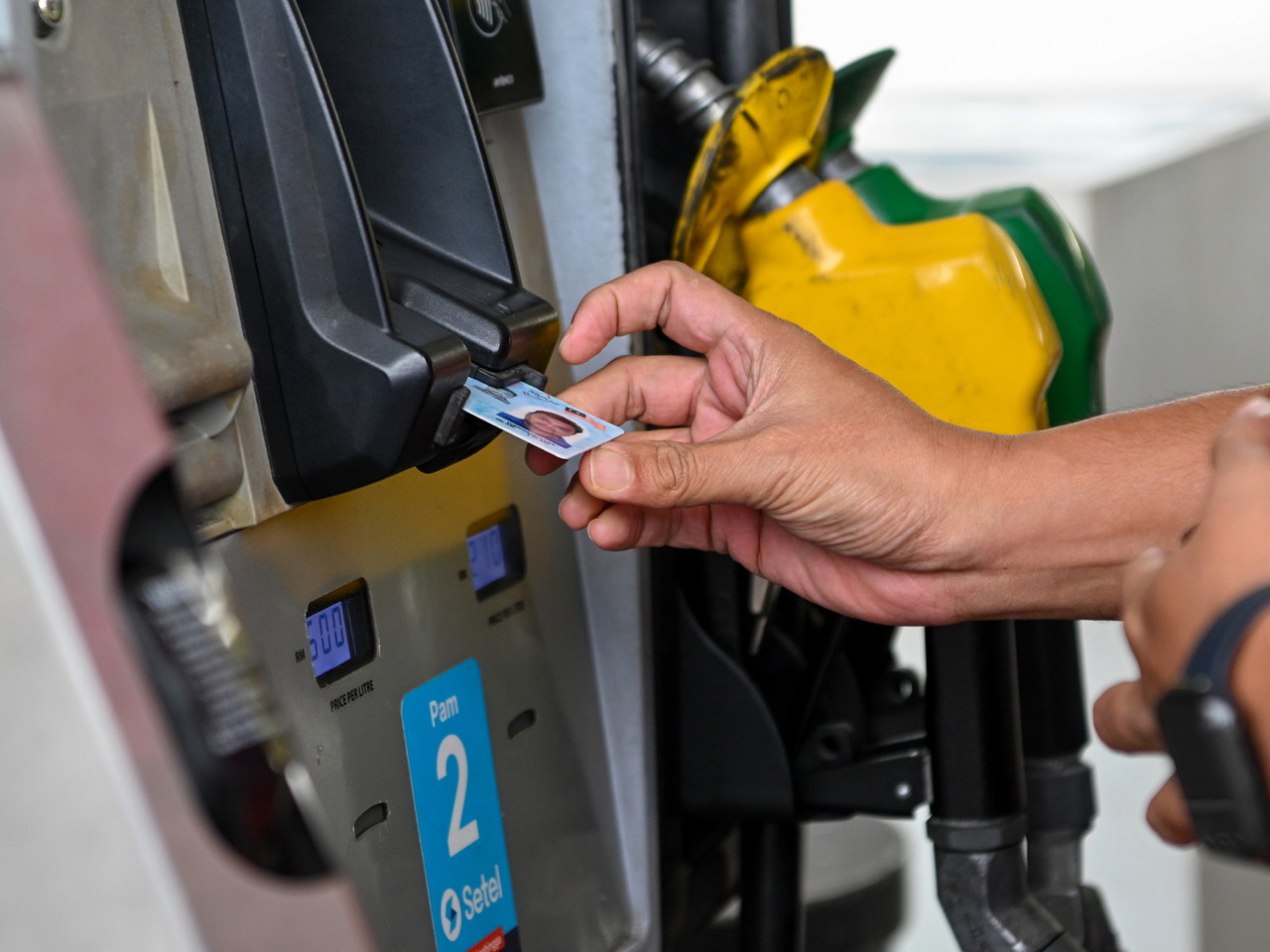
KUALA LUMPUR — Malaysia has expanded fuel subsidy benefits for e-hailing drivers and airport taxis under its targeted Budi Madani Ron95 (Budi95) programme, as part of ongoing adjustments to balance affordability and fiscal reform.
Prime Minister Datuk Seri Anwar Ibrahim said the government has agreed to raise the eligibility ceiling for qualified e-hailing drivers to 800 litres per month, up from the previous 600 litres, following appeals based on their actual fuel consumption.
The decision follows a review of the programme’s initial rollout in October, which saw active e-hailing drivers temporarily allowed a higher quota—from 300 to 600 litres—benefiting around 58,000 drivers nationwide.
“At the same time, the government has also agreed for airport taxis to be included among vehicles eligible for subsidised Ron95 under the Subsidised Petrol Control Scheme (SKPS),” Anwar told Parliament during the Ministers’ Question Time today.
The prime minister was responding to Syerleena Abdul Rashid (PH-Bukit Bendera), who had asked about the first month of Budi95’s implementation and its impact on groups such as airport taxi drivers, e-hailing drivers, and riverboat users.
Anwar revealed that in October alone, 13.1 million Malaysians purchased subsidised Ron95 petrol, involving government spending of RM2.6 billion, including RM800 million in subsidies.
He said the average usage among Budi95 recipients was 98 litres, equivalent to about a third of the 300-litre monthly quota, with fewer than 1 per cent fully utilising their allocation.
As of October 31, nearly 24,000 registered boat users without driving licenses had also been approved to receive Budi95 assistance.
Addressing concerns over the programme’s broad coverage, Anwar said the government’s current approach aims for practicality and gradual refinement rather than imposing complex income-based restrictions.
“When we want to define the T15 group, if we set the target at RM13,000 or RM20,000 a month, it would still burden the upper-middle class. From the enforcement standpoint, the cost would be high,” he said.
“For now, our view is to proceed with the current implementation, and if needed later, we can refine it for truly high-income earners or luxury vehicle owners.”
Responding to Datuk Awang Hashim (PN-Pendang), Anwar added that the government is monitoring the potential impact of external economic pressures—such as new United States tariffs on Malaysian goods—on domestic costs, including transport and logistics.
He said Malaysia’s recently signed Agreement on Reciprocal Trade (ART) with the US has already reduced the average tariff rate from 25 to 19%, providing broader access for key exports such as semiconductors and palm oil.
“Although tariffs have been reduced, we are still monitoring the cost impact. If costs rise, the government will review certain policies to ensure the people are not burdened,” Anwar said. — November 4, 2025