

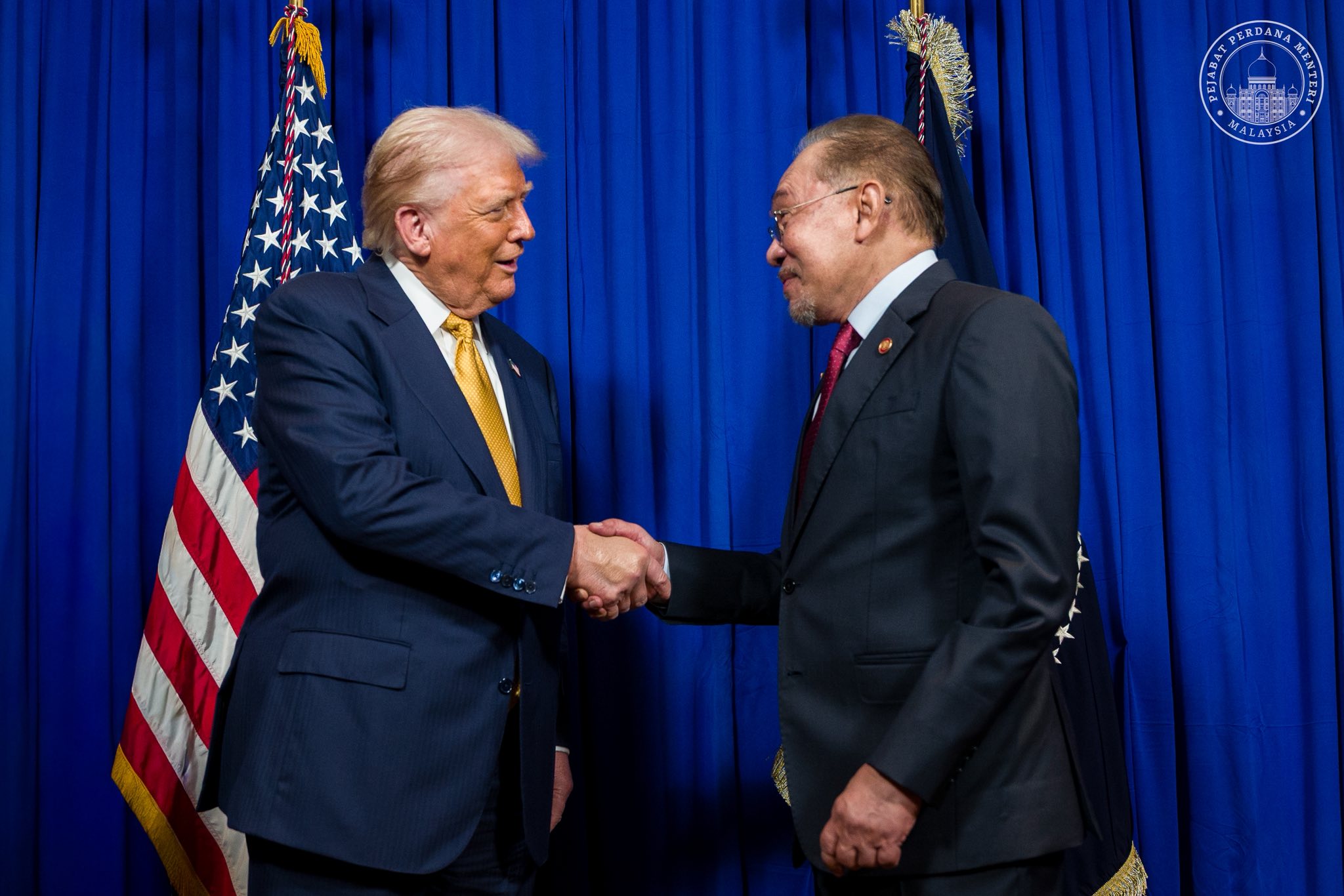

HOW much of the opposition to the trade deal between Malaysia and the United States is politics and how much is it a concern for the sovereignty of the country?
I believe it is both, but politics seems to weigh more on the matter and it is the hammer used to hit the Prime Minister, his ministers and the government for selling out the country.
Ironically for those rejecting the trade deal, also known as Agreement on Reciprocal Trade (ART), signed in October, offered no solution on how to deal with the proverbial 800-pound gorilla throwing its weight around.
It is, of course, unpleasant to have your arms twisted by the nastiness of the unilateral act of a man bent on upending the world order, whether in politics, diplomacy, or trade. US President Donald Trump, in his attempt to Make America Great Again, is punishing the country’s trading partners with a regressive and anachronistic tariff regime.
In early April, he announced the US’ Liberation Day by introducing a sweeping tariff on US imports—10 per cent tariff on almost all imports and additional duty for country-specific tariff—aimed at addressing the country’s trade deficit as well as perceived unfair trade deals. It caught everyone by surprise, especially due to the arbitrariness of the quantum to be charged, as well as perhaps its meanness and how xenophobic it was.
The US’s new tariff regime was also meant to crowbar open markets for US businesses, as well as to obligate trading partners to invest in the country.
One of the first to sign a deal was the United Kingdom, with Prime Minister Keir Starmer also stroking Trump’s ego by bringing along an invitation from the King for Trump to visit the country. The US, being one of the biggest destinations for exports, also saw a series of leaders traipsing to Washington to strike deals and avoid punitive US tariffs for their products.
The US would soon sign many bilateral agreements, upending decades of multilateralism that were supposed to define the 21st century.
With the US being its largest trading partner, Malaysia was also caught in the middle. For the record, the US was the largest market for Malaysia in 2024, importing US$52.5 billion (RM215 billion at the current exchange rate) worth of our goods, while it exported US$27.6 billion (RM113.2 billion). Malaysia’s trade surplus of US$24.9 billion (just over RM100 billion) bothered Trump, hence the proposed hike in tariff.
Is ART a deal we would want to make? I don’t think so.
Yet imagine the chain reaction if the RM200 billion worth of imports were reduced because of the tariff. Malaysian exports would be less attractive, companies would be less profitable, and these could have a compounding effect on the economy, investment, the survival of businesses, all the way to employment, among others.
In a period of uncertainty, with Washington coming up with one thing after another, it is necessary to extract some stability and predictability.
ART locks in a reciprocal tariff rate of 19 per cent on most Malaysian goods entering the US, down from potentially 25 per cent. It also provides zero tariffs for significant volumes of Malaysia’s exports, like electronics, semiconductors, palm oil, rubber, and pharmaceuticals. Electronics and electricals account for 60 per cent of Malaysia’s exports to the US.
What is Malaysia supposed to do? Trump will be in office for over three more years, and he can wreak more havoc, especially with a pliant Congress too willing to do his bidding. An agreement will presumably lower the risks of further action by Washington.
The main argument against ART is that, by signing it, we are surrendering our sovereignty. Also, domestic strategies like having a say on key sectors like oil and gas, for instance, or the Bumiputera agenda, will also be at risk. Having to invest in the US will also affect the ability of our companies, for instance, to channel their funds domestically.
It is also argued that being too close to the US will affect our ability to remain “neutral,” especially with the emergence of China as now the US’s main competitor on the global stage.
These are, of course, real issues that carry risks to the government and country, but they are also issues that must be managed and viewed within the context of the current situation.
It must be said that ART is not Prime Minister Datuk Seri Anwar Ibrahim or former Minister of International Trade and Industry Datuk Seri Tengku Zafrul Abdul Aziz’s deal. They may be the face of it, but we should not be too quick to dismiss the work and expertise of our trade negotiators and facilitators, just because our political rivals champion it.
I also like to imagine a situation where we do not have the proverbial gun pointed at our heads. ART is a necessity, given the current scenario, as the implications to the economy could be greater. We are dealing with an administration that dances to its own beat, and we can only hope that saner heads will be in the White House after this and undo the nastiness.
Of course, sovereignty is of utmost importance to a nation, and there is nothing more emotional to a citizen than the suggestion that his country’s independence and the right to self-determine are being compromised.
However, in all the criticism of the deal, there are little to no tangible solutions being offered by ART’s critics. A solution that is better than ART is what we need, but none is forthcoming for now. – December 16, 2025
***Datuk Zainul Arifin is the Chief Executive Officer of Big Boom Media which publishes Scoop.my