

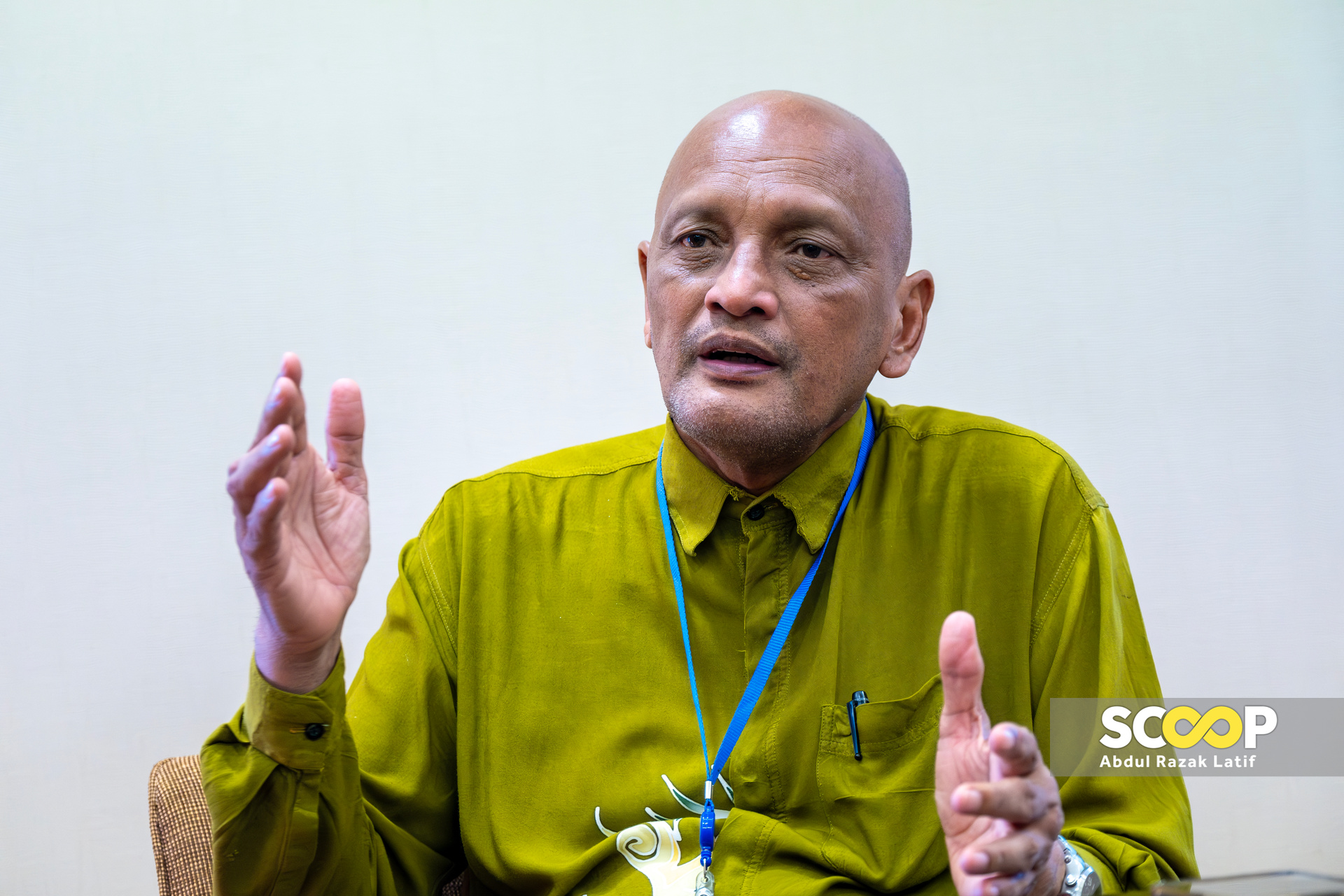

KUALA LUMPUR — The Football Association of Malaysia (FAM) risks struggling to deliver the governance reforms recommended by the Asian Football Confederation (AFC) if familiar faces continue to dominate its leadership, a senior sports analyst said.
Datuk Dr Pekan Ramli questioned whether the upcoming election will bring the sweeping transformation Malaysian football needs.
Speaking to Scoop, Pekan said he had hoped at least 60% to 70% of the candidates would be new faces, arguing that the election provides FAM affiliates with an opportunity to make a decisive break from the past.
“Based on the list of candidates, there is indeed potential for the affiliates to make a change. But the knife is in their hands, and the cucumber is also in their hands. They have the power to choose, so they should make that choice themselves,” he said.
However, Pekan said he remained unconvinced that the election would result in major changes, warning that the incoming leadership could simply continue the pattern established by the previous administration.
“I am less confident that there will be major changes. The leader who eventually takes charge will only continue the previous leadership pattern,” he said.
The senior lecturer at Universiti Teknologi MARA’s (UiTM) Faculty of Sports Science and Recreation was commenting after FAM released the official list of candidates for its election, scheduled for Sept 17.
The presidential contest will be a two-way battle between Malaysian Football League (MFL) president Datuk Ab Ghani Hassan and Football Association of Selangor (FAS) deputy president Datuk Seri Shahril Mokhtar.
Candidates are also contesting the vice-president and executive committee positions.
While the election will usher in a new president, several familiar figures from Malaysian football administration remain in the running for positions within FAM, raising questions over whether the election represents a genuine break from the past or merely a reshuffling of the existing establishment.
The absence of several prominent figures from the previous leadership, including former FAM president Tan Sri Hamidin Mohd Amin, former deputy president Datuk Wira Mohd Yusoff Mahadi and former deputy president Datuk Sivasundaram, marks a change at the top.
Hamidin had led FAM since 2018 before making way for new leadership, while Yusoff Mahadi and Sivasundaram had served as the association’s two deputy presidents.
However, Pekan believes their departure alone does not necessarily amount to the transformation FAM requires.
He also questioned whether there had already been some form of early compromise in the contest for FAM’s top positions, although he stressed that it remained unclear whether any such arrangement carried conditions that were not publicly known.
“On top of that, it appears that there may already have been some form of early compromise in the contest for the top positions in FAM, although we do not know whether there are any hidden conditions attached to those arrangements,” he said.
Pekan said the real test would come after the election, when the new leadership would have to demonstrate whether it had the freedom and courage to establish a genuinely new direction for FAM.
“Sweet promises will certainly be made once the election is over. However, how much freedom and courage will this new team actually have to set a new direction for FAM and have the dynamics to do so?” he said.
He questioned whether decisions taken by the new leadership would require endorsement from parties outside FAM, warning that such a situation could make the transformation expected of the new administration considerably more difficult.
“This would certainly make the transformation that should be carried out by the new FAM management much more difficult,” he said.
Pekan was also sceptical about the implementation of governance improvements associated with the AFC, arguing that some of the recommendations themselves deserved closer scrutiny.
“Many of the improvement recommendations said to have been proposed by the AFC for FAM itself can be questioned. In fact, some of them appear to further strengthen an impenetrable wall around FAM,” he said.
“So, how can we expect a comprehensive transformation to take place within FAM after the election of its new leadership?”
He challenged every FAM affiliate to use its vote to push for more radical change in leadership, even if doing so meant the incoming administration would have to face resistance and difficulties.
“I challenge every FAM affiliate to make a drastic decision this time by choosing new faces, even if the new leadership has to go against the tide and face difficulties in doing so,” he said.
“Or will the new FAM team simply maintain the comfort of the past, sitting comfortably with the current and going along with the flow without having to row?”
Echoing Pekan’s concerns, senior sports analyst and UiTM sports science lecturer Sadek Mustaffa said whoever emerges from the election must have the courage and determination to implement the changes needed to reshape Malaysian football.
“Whoever is elected must have the courage and a strong spirit to change the landscape of Malaysian football, from grassroots development and the youth levels all the way to the senior national team, towards giving more opportunities and exposure to local players, even if we have to wait until doomsday to qualify for the Olympics or reach the FIFA World Cup,” he said.
Sadek warned that the election must not result in a superficial change that merely gives the impression of transformation without actually changing the way FAM operates.
“I hope this FAM election will not be like a snake shedding its skin — changing its appearance without bringing about any real change,” he said.
He also highlighted the limited number of FAM affiliates as one of the key governance issues that must be addressed by the incoming leadership.
“FAM affiliates currently consist of only 18 members, which is certainly one of the major weaknesses in FAM’s governance that has been acknowledged by the AFC,” he said.
Sadek said FAM should open its doors to new affiliates, pointing out that similar moves had been made in other Asean countries.
He argued that greater openness should become a central part of the new administration’s reform agenda.
“This openness should be one of the main agendas for the new leadership to pursue in improving FAM’s governance going forward. Ultimately, everything is in the hands of the FAM affiliates to choose those who are capable of carrying out the changes recommended by the AFC,” he said.
“For me, it depends on who is elected and what their main agenda will be.”
Sadek summed up the challenge facing the incoming leadership with a warning that meaningful reform would require the courage to confront difficult circumstances rather than simply follow the existing current.
“If you want to build a house by the beach, you must be brave enough to face the tsunami,” he said. — September 7, 2026