

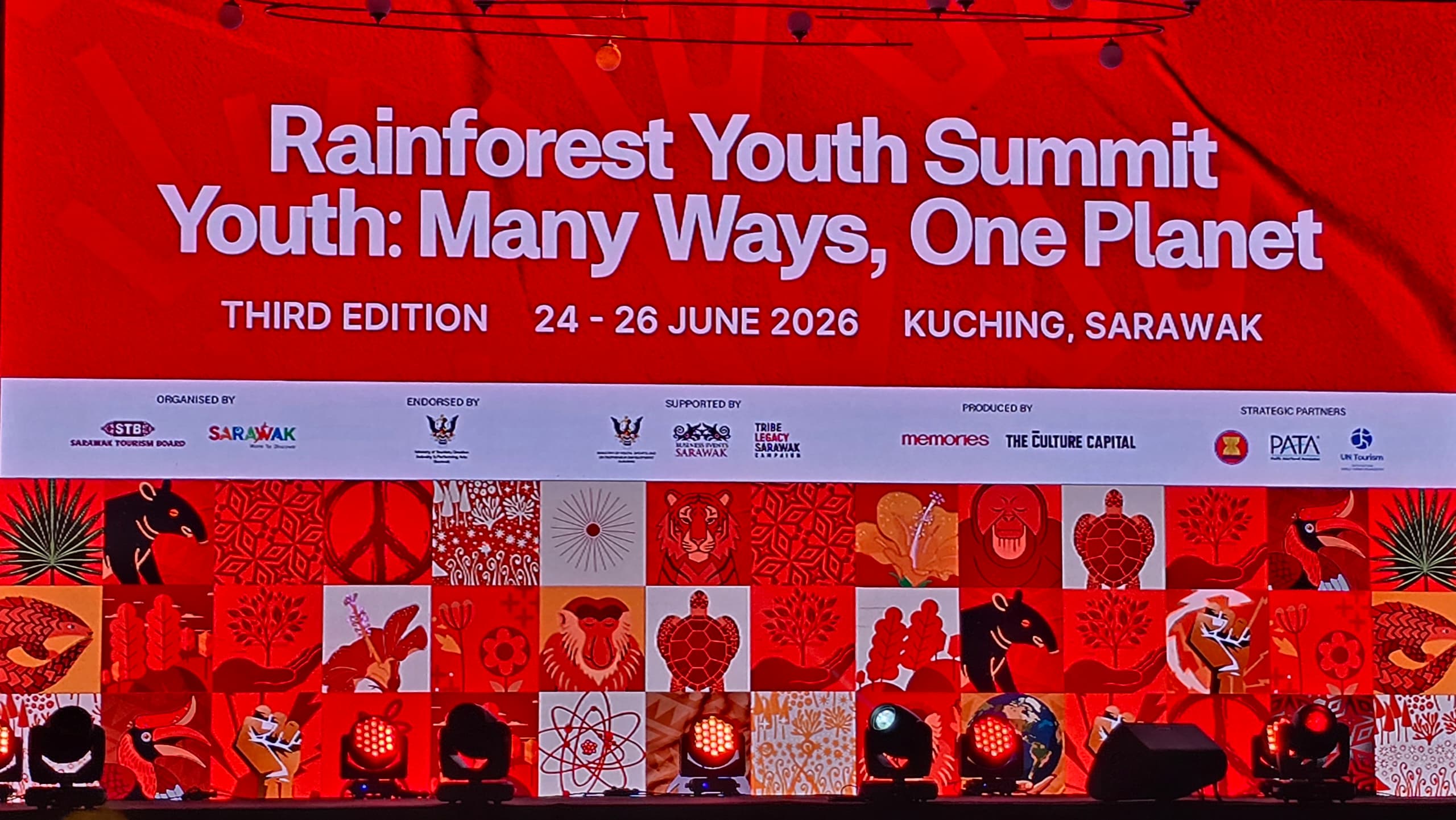
KUCHING – As young leaders gathered at the Rainforest Youth Summit (RAYS) 2026 to discuss climate action and sustainability, an unexpected concern emerged alongside conversations about forests, biodiversity and conservation: the future of storytelling itself.
For Indigenous leader and conservation advocate Diwigdi Valiente from Panama, protecting nature and culture begins with protecting the stories that connect communities to them.
“With a phone and social media, anyone can tell a story today,” he said. “But if people do not understand how to respect traditions, we risk losing authenticity and seeing culture appropriated or misrepresented.”
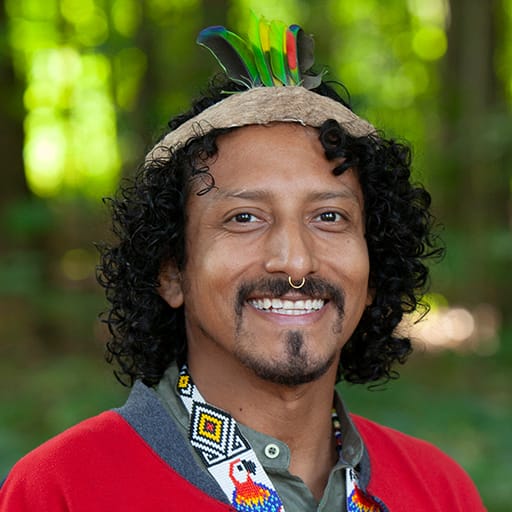
His warning resonates far beyond Indigenous communities. As artificial intelligence, social media and digital content reshape how people consume information, speakers at RAYS argued that the struggle to conserve rainforests, languages and cultures is increasingly tied to who controls narratives and how they are shared.
Environmental campaigner Tori Tsui described technology as both an opportunity and a threat. While social media has democratised storytelling and given marginalised communities a platform, it has also fuelled misinformation, denial and the spread of narratives disconnected from the people most affected.
“We are living in a time of deepfakes, misinformation and censorship,” she said, adding that the question is whether technology amplifies authentic voices or instead fuels propaganda against climate action while creating new ways to extract, commodify and profit from cultures and communities.

The issue is particularly relevant to Sarawak and Borneo, where Indigenous knowledge, oral traditions and cultural practices remain deeply intertwined with environmental stewardship.
Valiente however opined that AI could be a way to revive disappearing Indigenous languages. He noted that when these languages disappear, entire systems of knowledge disappear with them – traditional songs, stories and chants often contain generations of observations about wildlife, forests, governance and community life.
Award-winning Kelabit filmmaker Sarah Lois Dorai offered a local example. She spoke of traditional songs that describe hornbills gathering in large numbers – scenes that many younger people have never witnessed themselves.
“These stories show us what the world once looked like,” she said. “Without them, we lose not just language, but our memory of the landscape.”

For Sarah, technology places enormous power in people’s hands.
“The same phone or device in hand can help build understanding or destroy it,” she said. “Before telling a story, we must ask ourselves: Am I the right person to tell it? Who benefits from it? Does it honour the community where it comes from?”
Those questions sit at the heart of this year’s RAYS theme, “Youth: Many Ways, One Planet.” As delegates explore climate governance, sustainability and leadership, organisers hope young people will also consider how stories shape public attitudes, policy decisions and conservation efforts.
That challenge is becoming increasingly important not just for Sarawak, but for ASEAN and the wider world. As technology accelerates and cultures become more connected, the risk is that local stories become diluted, commercialised or detached from the communities that created them.
Yet the speakers also saw hope. AI may threaten authenticity, but it can also help revive endangered languages. Social media can spread misinformation, but it can also connect communities across borders. Technology itself is neither hero nor villain.
The real question, they argued, is whether the next generation chooses to use it to extract stories in the right way and to protect them.
As Sarah put it: “We have the power to build, and we have the power to destroy. We must always choose to build.” – June 27, 2026