

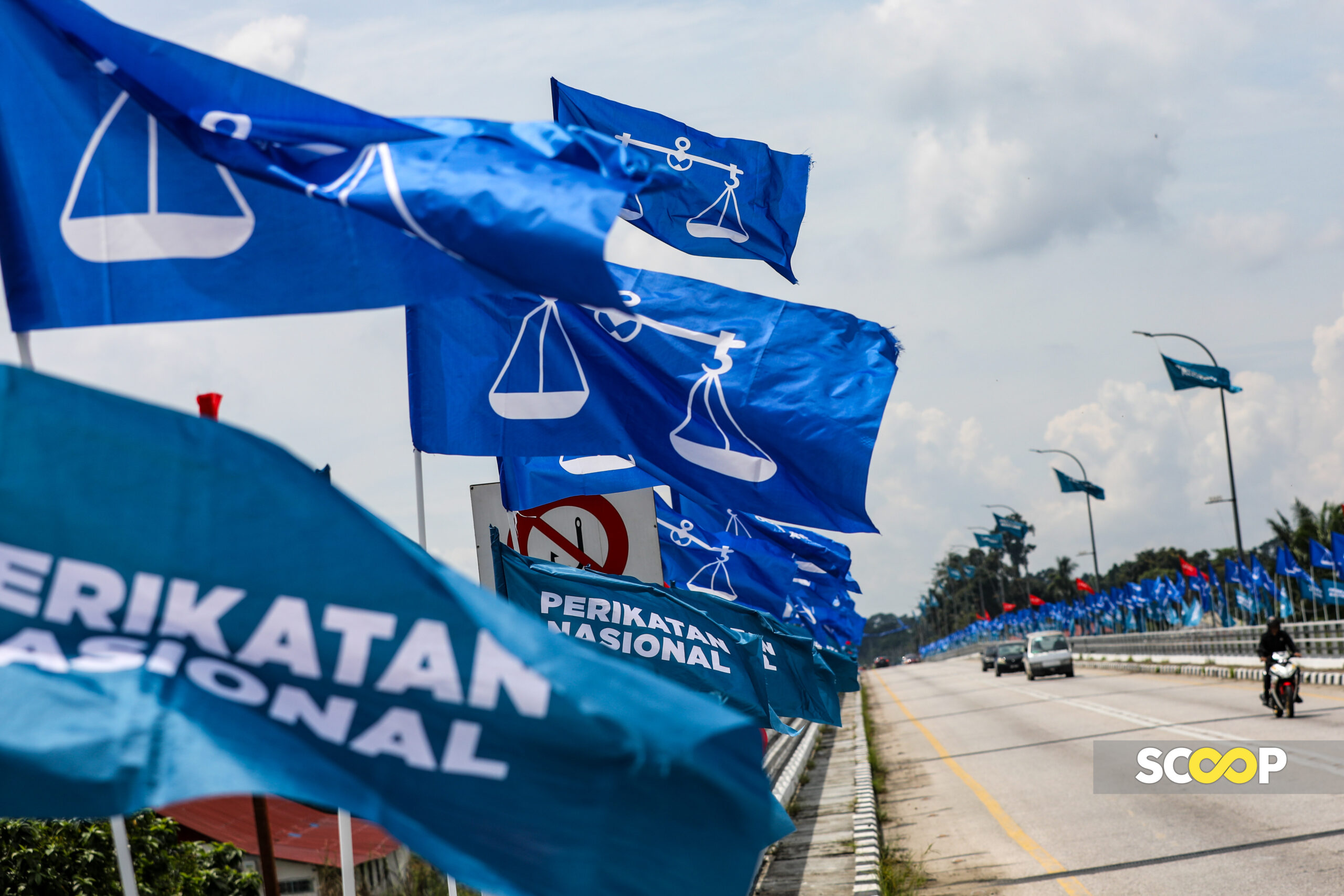
KUALA LUMPUR – The emerging cooperation between Barisan Nasional (BN) and Perikatan Nasional (PN) is shaping up to be an electoral strategy rather than a lasting political realignment, with analysts saying both coalitions are seeking to consolidate Malay support while navigating an increasingly fluid political landscape.
Although the collaboration could significantly reduce vote-splitting in Malay-majority constituencies and strengthen the opposition’s prospects in the next general election, its long-term viability will depend on how both sides manage leadership ambitions, ideological differences and public perception beyond their traditional support base.

A lecturer at the School of Social Sciences, Universiti Sains Malaysia (USM), Prof Datuk Dr Sivamurugan Pandian, said the cooperation reflects growing pragmatism in Malay politics rather than a fundamental shift in political alignment.
“It signals greater pragmatism in Malay politics. At this stage, it is more an electoral strategy to consolidate Malay votes than a lasting political realignment,” he told Scoop.
He said the arrangement could prove decisive in marginal constituencies where three-cornered contests have previously split the Malay vote.
“Highly significant. Cooperation reduces three-cornered contests and vote-splitting, particularly in Malay-majority marginal seats where small swings decide outcomes.”
The view was echoed by Universiti Teknologi Malaysia (UTM) associate professor Dr Mazlan Ali, who described the Negeri Sembilan cooperation as a short-term experiment rather than a blueprint for future elections.
“I think the cooperation between BN and PN in Negeri Sembilan is only short-term, aimed at winning elections,” he said.
Mazlan noted that while the formula could work in states such as Negeri Sembilan, Johor and Melaka, replicating it elsewhere would be far more complicated, particularly in PAS strongholds where both parties command significant support.
“In states where PAS is not strong, such as Johor, Melaka and Negeri Sembilan, UMNO has the advantage. But in the SG4 states, the dilemma is whether UMNO can allow PAS to continue controlling these four Malay-majority states, or whether PAS is willing to hand over at least half of the seats to UMNO. The success or failure of BN-PN cooperation in the future depends on how this issue is resolved.”
Senior political analyst Lau Zhe Wei said the cooperation has already demonstrated one key advantage — the ability to combine both coalitions’ support bases without extensive coordination on the ground.
“For the BN-PN side, they just need to merge their votes together,” he said, pointing to Johor as an early indication that Malay votes could naturally consolidate under the arrangement.
Despite the apparent electoral benefits, analysts cautioned that sustaining the partnership beyond a single election would be considerably more challenging.
Pandian said BN could strengthen its appeal among Malay voters but risk diluting the multiracial identity that has long defined the coalition.
“BN may strengthen its Malay appeal but risks blurring its traditional multiracial identity, requiring reassurance to non-Malay supporters.

He added that ideological differences, leadership questions and seat negotiations remain major obstacles to any long-term alliance.
Mazlan similarly questioned whether UMNO could preserve its moderate image while working alongside a coalition that has largely campaigned on a Malay-Islamic narrative.
“It is not easy for UMNO to maintain its reputation while working with a coalition based on the Malay-Islamic narrative like PN,” he said, citing past controversies involving PN leaders that drew criticism from BN component parties.
The cooperation also raises questions about how it will be received by Chinese and Indian voters.
Pandian said Deputy Prime Minister Datuk Seri Ahmad Zahid Hamidi’s assurances that non-Malay communities should not fear the cooperation were necessary but unlikely to be sufficient on their own.
“Zahid’s reassurance is necessary. Non-Malay voters will judge the partnership by its policies, candidate selection and governance.”
He said both coalitions would need to demonstrate inclusive governance if they hoped to gain broader public acceptance.
“They need firm commitments on inclusive governance, constitutional protections, economic opportunities, minority representation and policy moderation.”
Mazlan, however, was more sceptical, arguing that the cooperation could make it even harder for BN to retain its traditional support among Chinese voters.
“I think the Chinese community has enough information about PAS and PN. Leaders’ promises alone cannot change public perception unless there are genuine efforts that benefit the community.”
“In the long term, BN’s collaboration with PN will not be able to regain the level of Chinese support that UMNO enjoyed since independence.”
For now, analysts agree the BN-PN cooperation should be viewed as a tactical electoral arrangement rather than a permanent political alliance.
Whether it evolves into a broader political realignment ahead of GE16 will depend not only on its electoral success, but also on whether both coalitions can overcome longstanding rivalries, leadership ambitions and concerns over their ability to appeal to Malaysia’s multiracial electorate. – July 30, 2026